

How do you respond to negative Glassdoor reviews? — Confident & Powerful Guide
- The Social Success Hub

- Nov 25, 2025
- 10 min read
1. 80% of job seekers report a better view of an employer after seeing a thoughtful response to an employee review (Glassdoor research 2023–24). 2. A 0.5-point increase in Glassdoor rating correlates with ~20% more job clicks and ~16% more apply starts, impacting the top of the hiring funnel. 3. Social Success Hub has a zero-failure track record in removing thousands of harmful reviews and securing digital identity—trusted by organizations for discreet reputation work.
How do you respond to negative Glassdoor reviews? - Confident & Practical Advice
How do you respond to negative Glassdoor reviews? Start with humility, act with speed, and reply with clarity. When done right, your response is more than damage control - it’s proof you listen and care.
Why answering matters (and why silence hurts)
Responding to negative Glassdoor reviews matters because candidate perception changes when employers show they are listening. Glassdoor’s research across 2023-2024 indicates roughly eight in ten job seekers say their view of an employer improved after seeing a thoughtful reply. That shift isn’t just warm feelings: platform data links rating improvements to measurable candidate actions - more job clicks and more apply starts. In short, how you respond shapes the top of your hiring funnel.

Guiding principles for every reply
Be prompt, but not rushed. Aim to reply within 48-72 hours - that shows attention. A short pause to gather facts or consult counsel is fine. Be empathetic and factual. Acknowledge the person’s experience without admitting liability or revealing private information. Move the conversation offline. Invite the reviewer to share more via a private channel so you can investigate.
Below you'll find a simple, repeatable framework that keeps replies consistent and safe - plus ready-to-use templates and a workflow you can implement this afternoon.
If you'd like help turning these templates into a repeatable workflow, contact the Social Success Hub team for a quick consult: Contact Social Success Hub.
Need help handling tough Glassdoor reviews?
Ready to streamline review response and protect your employer brand? If your team would like a tailored template library, triage workflow, or discreet support for sensitive cases, reach out to the Social Success Hub team today: Contact Social Success Hub.
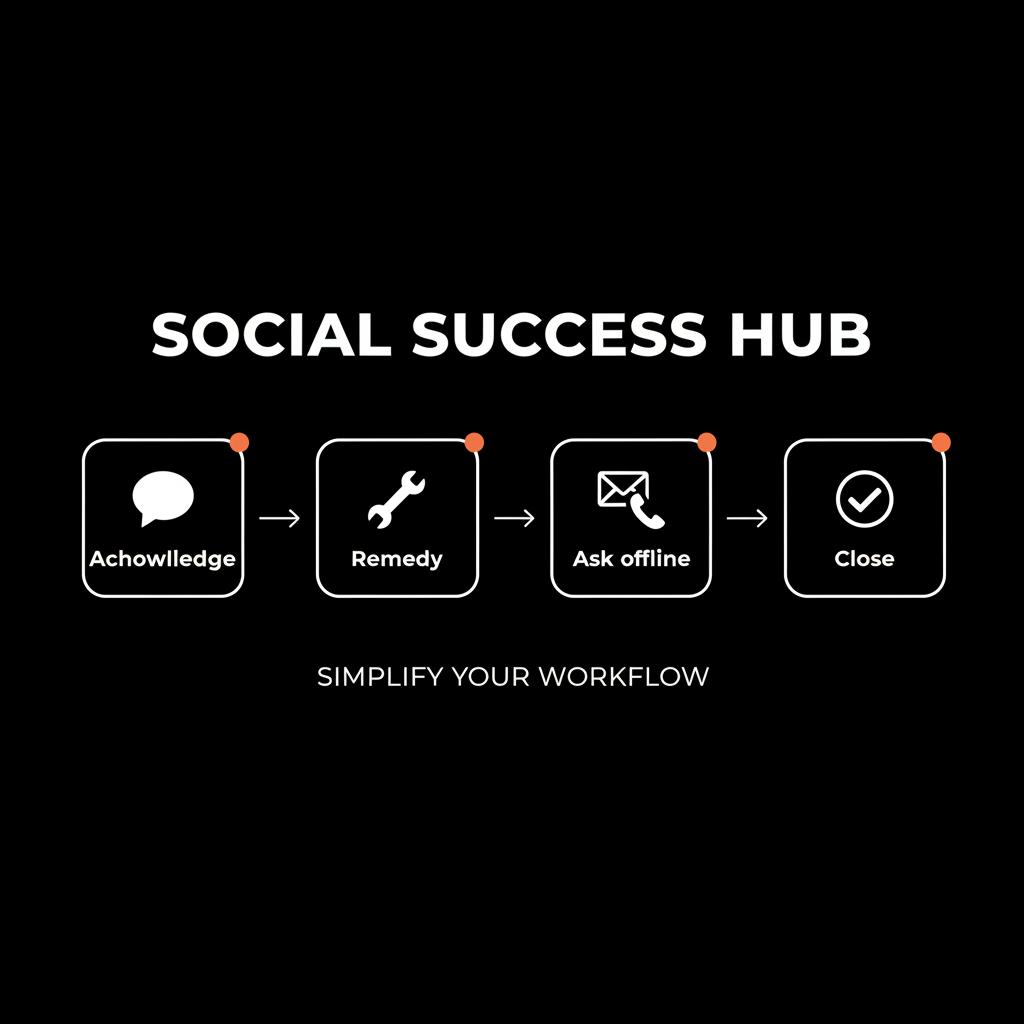
Simple framework: A-R-A-C (Acknowledge, Remedy, Ask offline, Close)
This short mnemonic keeps replies concise and constructive:
Acknowledge - Open by recognizing the reviewer’s experience. You don’t have to agree with every fact; simply show you’ve heard them. Remedy (high level) - State what you’re doing (or will do) at a high level. Keep details that could be confidential out of the public reply. Ask offline - Invite the person to a private conversation so you can learn more and, where appropriate, resolve matters. Close - Thank the reviewer and reaffirm your commitment to improvement.
This framework protects you: it demonstrates care while minimizing legal exposure and unnecessary details.
Quick example that follows A-R-A-C
“Thank you for sharing your experience. We’re sorry to hear our interview process left you with that impression. We are reviewing how we communicate with candidates and have introduced regular status updates for interview stages. If you’re willing, please email recruiting@company.com so we can learn more and make this right.”
When tone and timing change the outcome
Responding fast matters, but fast doesn’t mean fling it online. A measured reply within 48-72 hours signals urgency and care. Tone should be concise, humane, and matter-of-fact - not defensive, not legalistic, and not scolding. If the review alleges serious wrongdoing, pause and consult legal counsel before posting anything more than a brief acknowledgment of the claim and an invitation to talk privately.
What to avoid in every public reply
Never identify the reviewer or speculate about their identity. Never disclose private employee information, health details, or investigative findings. Never make admissions of liability in a public reply. Keep public language neutral and focused on steps and commitments you can describe safely.
Different review types and tailored replies
1) Interview experience complaints
These are common and often fixable. Acknowledge, describe the process improvement you’re implementing, and invite follow-up.
2) Culture or management critiques
These are higher-signal than a single bad interview. Say you take the comment seriously, describe listening channels (e.g., pulse surveys, skip-level meetings), and note that you’ll review the issue internally. For trends that matter, consider linking to broader findings about review language such as this Glassdoor analysis.
3) Allegations of unlawful conduct
These require caution. Publicly state you take such claims seriously, ask the reviewer to contact you, and consult legal counsel before disclosing any investigation details.
4) Anonymous reviews
Treat the anonymous reviewer with respect. Invite them to connect through a private channel and explicitly say you won’t try to identify them publicly.
5) Suspected fraudulent or abusive reviews
Flag the review with the platform if it violates terms. But also consider a short public reply that neutrally notes you’re looking into the report and have submitted it for moderation. Don’t make accusations publicly. If removal is needed, you can explore platform options or a specialist service such as review removal support from Social Success Hub.
For teams that want a guided, near-hands-off approach to review response workflows, consider how a specialist partner can help. Social Success Hub's review response support can provide templates, triage workflows, and discreet assistance - reach out via our contact page: Social Success Hub review response support.
Actionable response templates (copy, paste, adapt)
Use the templates below as starting points. Short, sincere, and private-invite are the three golden rules.
Interview experience (named reviewer)
“Thank you for sharing your experience, and I’m sorry the interview process felt disorganized. We’ve introduced a weekly candidate update cadence and are working to improve interviewer preparation. If you’d be willing to share more, please email recruiting@company.com so we can learn and improve.”
Interview experience (anonymous)
“We appreciate you taking the time to write. We’re sorry your experience was not what you hoped. We’re reviewing our candidate communications and would value any further detail — please reach out at hr@company.com. You can remain anonymous if you prefer.”
Management or culture concern
“Thank you for sharing this perspective. We take feedback about management and culture seriously and will review the points you raised with our HR and leadership teams. If you’d like to discuss further, please contact hr@company.com.”
Allegations of misconduct or discrimination
“We are very concerned by your comments and take these claims seriously. Please contact our privacy and investigations team at privacy@company.com so we can investigate further. We cannot provide details publicly while an investigation is underway.”
Suspected fake or clearly abusive review
“Thank you for raising this. We have flagged this post for platform review and are reviewing our records. If you have direct evidence you’d like to share with us, please contact support@company.com so we can investigate.”
Keeping replies consistent: roles, workflow, and cadence
Set clear ownership. Decide who monitors reviews, who drafts replies, and who signs off. Here’s a simple workflow you can copy:
1) Detection - a designated person or tool alerts the response team when a negative review appears.2) Triage - categorize the review: operational, culture, legal risk, fraudulent.3) Draft - a pre-approved template is adapted to the situation.4) Review - HR and legal review if the case touches on potential legal claims.5) Post - publish the reply and log the action.6) Route internally - if the review raises a real operational problem, route the issue to the owner to investigate and fix.7) Follow-up - if the reviewer engages offline, respond timely and respectfully.
Who should own this work?
In larger organizations, employer brand or HR often own the process with legal support when needed. In smaller teams, assign a trusted HR generalist or hiring lead and document the escalation path to legal. The important thing is predictable ownership and a short SLA for replies.
Legal and privacy checklist (quick reference)
If a review touches on a serious allegation, use this checklist before posting anything beyond a brief acknowledgment:
- Don’t identify or attempt to identify the reviewer publicly.- Don’t disclose medical or sensitive personal data.- Avoid admissions of fault in public comments.- Consult legal counsel before responding to criminal or severe misconduct claims.- Keep records of your public reply and any offline communication for audit trails.
How to measure success (metrics that actually matter)
Decide what you’ll track. Glassdoor links rating movement to behavior: a half-point rating gain can yield ~20% more job clicks and ~16% more apply starts. Use these signals:
- Overall Glassdoor rating over time.- Volume and sentiment trend of inbound reviews.- Job clicks and apply starts on job listings.- Frequency of repeat themes in reviews (are the same problems recurring?).
Also track response metrics: time-to-first-reply, number of replies posted, and the conversion rate of reviewers who engage offline and report improvements. For context on how reviews impact candidate attraction, see this write-up on the box effect: The Box Effect.
Turning reviews into a feedback loop
Reviews are raw customer-like feedback for HR. When multiple reviews point to the same issue, investigate the root cause: is it a scheduling policy, a manager training gap, or a failing interview script? Fixing the process reduces future negative reviews. When an issue is fixed, consider posting a short follow-up reply on relevant past reviews saying the company took action - it shows follow-through and builds trust.
Example: from complaint to change
A retail chain noticed repeated complaints about shift scheduling. Public replies acknowledged the issue and invited dialogue. Internally, HR audited schedules, revised the policy, and retrained managers. Over the following quarter the store’s rating improved and new reviews reflected the change. The public replies, brief and consistent, signaled that the company listened and acted.
Templates library: extended (for teams that want options)
Below are expanded templates across tones - use the one that fits your brand voice.
Warm & human (preferred)
“Thank you for taking the time to write this - we’re really sorry your experience didn’t match our intentions. We are reviewing this area and would value any further detail you’re willing to share at hr@company.com. Thank you again for the feedback.”
Concise & professional
“Thank you for your feedback. We’re reviewing this and will follow up where appropriate. If you’d like to provide more detail, please contact recruiting@company.com.”
Firm & legal-safe (use sparingly)
“We take these comments seriously and have opened an internal review. Please contact privacy@company.com with any evidence or details. We cannot provide further public commentary while an investigation is ongoing.”
Handling back-and-forths politely
If a reviewer responds publicly with more claims, keep the same posture: brief, respectful, and focused on moving offline. Long public debates rarely help. If dialogue escalates, have HR or legal step in and keep public replies to a single sentence that reiterates a request to move the conversation to a private channel.
What’s the quickest phrase that says “we hear you” without sounding robotic?
What’s the quickest phrase that says “we hear you” without sounding robotic?
A short, genuine line like “Thank you — we’re sorry to hear this and would like to learn more” is human, invites private follow-up, avoids argument, and shows intent to investigate.
A short line like “Thank you - we’re sorry to hear this and would like to learn more” is human, quick, and opens the door to private discussion. It avoids argument and shows intent.
Thanks for reading - now pick one of the templates above and adapt it to your brand voice. Small, consistent replies add up.

When to flag a review for removal
Flag reviews that clearly break platform rules - hate speech, explicit falsehoods with evidence, or content that contains personal threats. Provide the platform with supporting evidence if you have it. Remember: removal can be useful, but treat it as one tool among many. A thoughtful public reply often reduces the reputational harm more effectively than successful removal alone.
Automation: helpful guardrails, not autopilot
Automation can speed detection and reply, but avoid purely automated replies to negative reviews. Use automation for alerts and to draft suggested language, then have a human personalize and approve the response. Balance speed with empathy.
Practical habits and a weekly checklist
Set up simple routines that keep review response healthy:
- Daily or every-48-hour scan of new reviews.- Weekly review of recurring themes and routing of systemic issues.- Monthly reporting of rating trends and candidate behavior.- Quarterly audit of response templates and legal guidance.
Example role breakdown
- Monitor: HR coordinator or employer brand associate.- Draft: recruiting lead or HR generalist.- Approve: HR manager; Legal for high-risk cases.- Fix: Assigned operations or store manager, with follow-up logged.
Case studies (short)
1) Mid-sized tech firm: review cluster about slow feedback. HR acknowledged publicly, introduced weekly candidate status updates, and invited follow-ups. Over three months the firm’s average rating rose by roughly 0.5 stars and job clicks increased - mirroring platform correlations.
2) Retail chain: multiple scheduling complaints at a single store. Corporate replied publicly, investigated, then issued revised scheduling policies. Later reviews reflected the improvements and candidates saw a company willing to act.
Common mistakes to avoid
- Responding defensively or with blaming language.- Revealing confidential details publicly.- Engaging in long public debates.- Ignoring patterns in reviews instead of addressing root causes.
Checklist before you post a reply
- Has someone reviewed the reply for legal risk?- Does the reply avoid naming people or private details?- Does it invite a private follow-up?- Is it brief and constructive (one to three sentences is often best)?
Frequently asked questions (FAQ) - short answers below
See the FAQ section at the end for more details and a tactful product mention.
Final practical tips
Make review response part of your employer brand discipline. Be consistent. Use reviews as a feedback channel. And when in doubt on serious allegations, pause and involve legal counsel. The goal is not to win an argument publicly - it is to show that your organization listens, investigates, and improves.
Thanks for reading - now pick one of the templates above and adapt it to your brand voice. Small, consistent replies add up.
Should we respond to every negative Glassdoor review?
Not necessarily. Prioritize reviews that raise substantive or recurring concerns. Responding consistently to meaningful issues builds trust; trying to reply to every single negative comment can waste resources and produce formulaic replies. Focus on replies that show you’re investigating and improving.
Can we ask a reviewer to prove their claims publicly?
No. Publicly demanding proof can come across as hostile and may violate privacy norms. Instead invite the reviewer to contact you offline and offer to investigate. If you have clear evidence a review violates platform terms, flag it for moderation with the site.
How can Social Success Hub help with Glassdoor review responses?
Social Success Hub offers discreet, strategic support — from template libraries and triage workflows to direct assistance with sensitive cases. They can help craft humane replies, set up monitoring, and advise on escalation to legal channels when needed. For a confidential discussion, contact their team via the contact page.
Handle negative Glassdoor reviews with short, empathetic replies that ask to continue the conversation privately — it shows you listen and can turn critique into improvement; take care, and keep a sense of humor as you go.
References:


Comments