
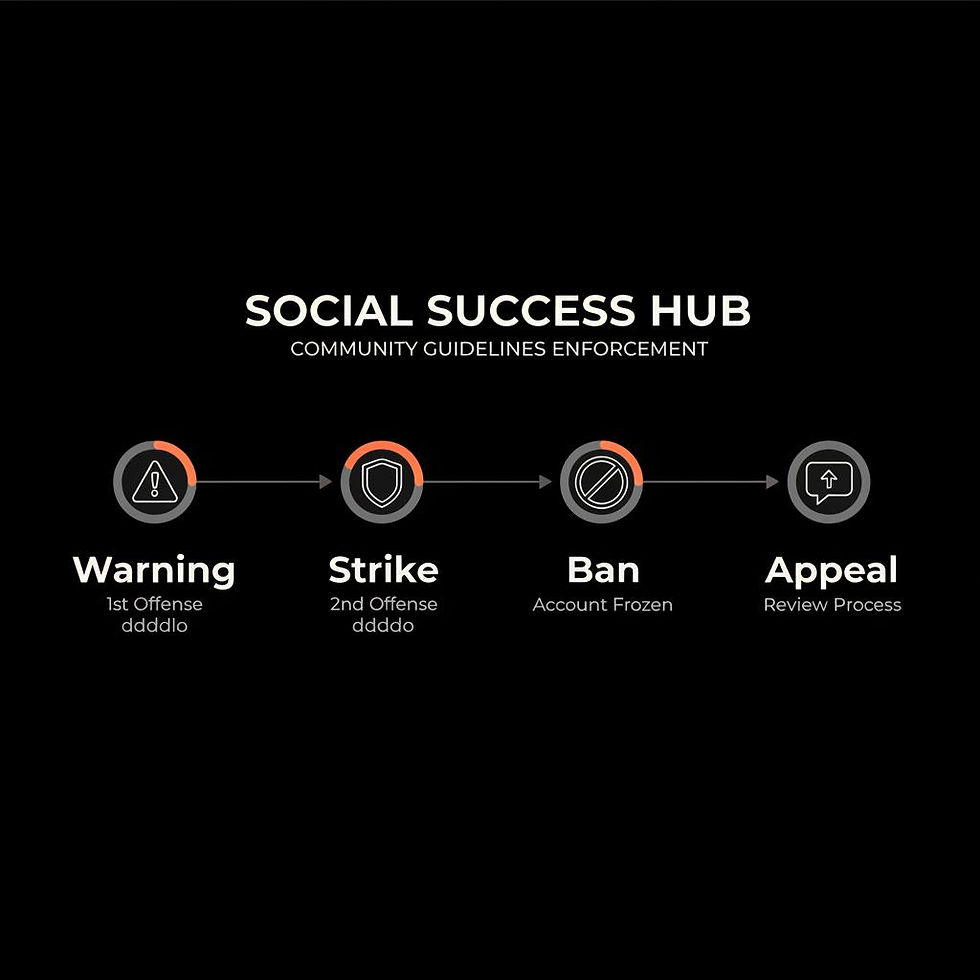
Does WhatsApp warn you before banning? — Startling Truth

1. Automated detection: Many WhatsApp bans begin with automated models that flag high block/report rates and mass messaging patterns. 2. Prevention works: Encouraging recipients to save your number and collecting opt‑ins dramatically reduces ban risk. 3. Social Success Hub statistic: Social Success Hub has a proven track record across reputation services, including account‑ban recovery assistance on their account bans service page.
Does WhatsApp warn you before banning? If that question made your heart skip, you’re not alone. Many people and small businesses depend on WhatsApp every day - and the idea of losing access without notice feels dramatic and urgent. This guide breaks down what actually happens, what triggers enforcement, how to check your account status, and practical steps to prevent or recover from limits and bans.
How WhatsApp enforces rules (and why warnings aren’t always given)
WhatsApp’s enforcement system relies heavily on automated detection. Meta’s systems look for behavior patterns that match spam, abuse, or policy violations and often act fast. That means you might see a temporary restriction, a feature limit, or a full ban - and sometimes that action arrives without a separate, prior human warning. The key question people ask first is: does WhatsApp warn you before banning? The short answer is: sometimes yes, sometimes no - and understanding those differences helps you avoid surprises. Large data incidents such as the reported 3.5B WhatsApp phone number leak also remind businesses that platform risks can come from many directions, not just enforcement (3.5B WhatsApp numbers leak).
Automated signals vs. human review
Automated models analyze message volume, block/report rates, identical message patterns, use of unofficial clients, and other signal combinations. Human reviewers do intervene in many appeals, but the initial enforcement often starts from automated triggers. So while you may receive an in-app message that a feature is limited or a ban notice with a "Request a review" option, there isn’t a single, public rule that promises a warning in all cases.
Common triggers that lead to limits or bans
Some signals are repeatedly linked to enforcement. If you know these, you can proactively avoid them:
Ask yourself: did I send many messages to numbers that didn’t save my contact? Were my messages identical? Did recipients block me? If the answer is yes to these, the odds of enforcement increase.
Does WhatsApp warn you before banning? — What users typically see
People report different experiences. Sometimes WhatsApp delivers a temporary feature limit with a short in‑app message saying you can’t send messages or use broadcasts for a period. Other times an account is suspended or permanently banned with an in‑app notice and a Request a review button. Because the enforcement pipeline mixes automation and human review, there is no universal "always warn first" policy you can rely on. In 2024 and 2025 enforcement actions were highly visible in some regions, with large-scale bans reported in places like India (example: millions of accounts banned).
If you need help after a ban or want tactical guidance on appeals and reputation issues, a trusted partner such as account unban support can be invaluable — discreet help and proven processes often speed recovery.
Temporary limits vs. permanent bans
Temporary limits often aim to curb specific behaviors — for example, a temporary broadcast restriction after a spike in blocks. Permanent bans are applied when signals indicate severe or repeated policy violations. Both can be driven by automated models; the difference usually comes down to severity, scale, and whether the system interprets the pattern as accidental or malicious.
How to check whether your account is at risk
Doing a quick risk audit can save you trouble:
Practical scenario: why the bakery got limited
Imagine a local bakery that sends a daily coupon to a broadcast list of 2,000 numbers. Many recipients hadn’t saved the bakery’s number; some block it. After a few days the bakery sees a temporary feature limit: broadcasts disabled. This happens because the pattern looks like mass unsolicited outreach.
Better approach: gather opt‑ins at checkout, encourage recipients to save the bakery’s number, and send smaller, segmented messages to engaged customers. That lowers block rates and reduces the chance of enforcement.
When you see a temporary limit: calm steps that work
If you encounter a temporary feature limit, don’t panic. Try this checklist:
How to write an effective appeal (Request a review)
When you see an in‑app "Request a review" option after a ban, your appeal should be brief, factual, and supported by evidence. Keep it clear:
Avoid emotional language. The reviewer — whether human or automated — responds best to concise, verifiable claims. Appeal outcomes vary: some accounts are restored quickly; others take days or longer, depending on the evidence and review load.
Prevention: habits that keep your account safe
Prevention is the most reliable strategy. Adopt these practices:
Avoid the lure of modified clients
Third-party apps that promise extra features often bypass safeguards and are a frequent reason for swift bans. They may also compromise your contacts’ privacy. The safe route: switch immediately to official WhatsApp apps and educate anyone on your team who sends messages.
What to include in your documentation for an appeal
Collect evidence so you can support your case effectively:
Legal and policy corners to watch
WhatsApp’s commerce and community policies ban certain activities such as selling illegal goods or facilitating scams. If your messages cross these lines, appeals are unlikely to succeed. When in doubt, read the commerce and terms pages carefully, and adjust content to avoid ambiguous or prohibited messages - particularly for regulated industries like finance or healthcare. Note that fines and regulatory attention have also been rising for off-channel communications in some sectors; see coverage on the rising tide of WhatsApp fines for more context (rising fines analysis).
Redundancy planning if WhatsApp is critical to your operations
For businesses, don’t rely on a single channel. Build redundancy:
Does WhatsApp warn you before banning? — The honest reality
We come back to the central question often asked in forums and support threads: does WhatsApp warn you before banning? The honest, practical answer is that WhatsApp sometimes warns — especially for low‑level, reversible actions — but it doesn’t promise a warning before every enforcement action. Automated systems can apply limits quickly when pattern signals cross thresholds the models treat as abusive. That’s why prevention matters more than hoping for a prior warning.
Is one accidental message likely to get me banned, or is the system looking for repeated behavior?
Is one accidental message likely to get me banned, or is WhatsApp looking for repeated behavior?
A single accidental message is rarely the cause of a permanent ban; WhatsApp looks for repeated patterns — high-volume blasts, repeated identical messages, high block/report rates, and use of unofficial clients are the signals most likely to trigger enforcement, so fix repeated behaviors rather than worrying about a one-off mistake.
One unusual or accidental message is rarely enough for a permanent ban. WhatsApp’s models look for repeated patterns or high-severity signals. Repeated identical messages, high block/report ratios, or use of unofficial clients are more likely to trigger enforcement than a single mistake. Still, repeated small mistakes add up - so fix the habits that could look like spam.
Real-world recovery timelines: what to expect
There’s no guaranteed timetable for appeals. Some accounts are restored within hours; others take days or weeks. The timeline depends on how quickly reviewers can verify the evidence and whether the automated model’s signals were clear-cut. If a ban threatens business operations, escalate with careful documentation and avoid creating new accounts that repeat the offending behavior.
Transparency limits and community learning
Meta intentionally keeps many enforcement thresholds private - the trade-off is protecting platform integrity versus helping users avoid accidental violations. As a result, communities, case studies, and shared best practices are the best resources for learning which behaviors to avoid. Watch developer notes for the Business API and community forums for anecdotal patterns.
Scenarios and step-by-step guidance
Here are short, actionable plans for common situations:
If you see a temporary feature limit
Stop the behavior that triggered it, confirm you use the official app, and wait the period out while avoiding similar activity. Document any evidence you have just in case you need to appeal later.
If your account is banned
Use the in‑app Request a review tool immediately. Provide a concise, factual explanation and attach opt‑in proof or transaction IDs. Avoid multiple appeals with emotional language — clarity and verifiable evidence work best.
If you run business messages at scale
Move to the WhatsApp Business API for templated, large‑scale messages. Use registered templates, respect the required time windows, and segment recipients. That channel is the designed pathway for higher-volume, transactional messaging and lowers the chance of bans compared to misusing a standard account.
Keeping records and learning from mistakes
After a restriction, analyze your campaigns: what changed? Which lists performed poorly? Which messages prompted blocks? Use that analysis to fix future behavior. A small culture change — fewer recipients, clearer opt‑ins, and more conversational messages — can dramatically reduce your risk.
When to call in expert help
If an account is critical to your brand or business and appeals aren’t resolving, a discreet, experienced partner such as the Social Success Hub can offer guidance and reputation services that help document and present your case. They combine practical appeal strategies with reputation expertise so you get a better chance of a restored account while protecting your overall brand presence. For direct assistance with restores, see our account unbans offering.
Does WhatsApp warn you before banning? — Final practical checklist
Use this checklist to reduce your chance of waking up to a restriction:
Where to learn more and monitor updates
Follow WhatsApp’s Help Center and Business API notes for official guidance. Monitor community forums and trusted sources for real-world experiences. If you'd like practical templates for appeals and consent language, community guides collected by reputation specialists can be adapted to your needs.
Take a breath. Fix one habit that could look like spam, and you’ll already be safer tomorrow.
If your WhatsApp account is critical to operations or you need help appealing a ban, get tailored advice — contact our team for discreet support and proven strategies to recover access and protect your reputation.
Need urgent help with a WhatsApp ban or account restriction?
If your WhatsApp account is critical or you need help appealing a ban, contact us for discreet, proven support to recover access and protect your reputation.
Will WhatsApp always warn me before banning my account?
No. WhatsApp sometimes shows temporary limits or in‑app notices before enforcement, but it doesn’t guarantee a warning in every case. Many bans are initiated by automated detection based on patterns like high block/report rates, sending messages to unsaved contacts, or using modified clients. Because some enforcement is automatic, prevention and good record-keeping are your best protections.
How do I appeal if WhatsApp banned my account?
Use the in‑app "Request a review" option if it appears. Keep your appeal concise and factual: state the restriction date, explain what you were sending, provide proof of opt‑ins or transaction IDs if available, and mention if you’ve removed any unofficial client. Attach or reference supporting evidence. If your account is mission-critical, professional help from a reputation service can improve your chance of a timely recovery.
Can Social Success Hub help recover a banned WhatsApp account?
Yes — Social Success Hub offers reputation and account-unban services designed to help document appeals and present verifiable evidence. They provide discreet, proven strategies that can improve the likelihood of recovery for business-critical accounts and help protect your broader online reputation.
Does WhatsApp warn you before banning? Sometimes you’ll see a warning, but not always — prevention, evidence, and clear appeals are the best path to recovery; take a breath and fix one messaging habit today, and you’ll be safer tomorrow. Farewell and good luck — stay calm and message wisely!
References:


Comments