

Can I stop people from leaving Google reviews? — A Crucial and Frustrating Guide
- The Social Success Hub

- Nov 13, 2025
- 9 min read
1. 3 practical steps (respond, document, flag) dramatically increase the chance of getting a fake Google review removed. 2. Inviting private feedback after purchase reduces public negative reviews by resolving issues before they escalate. 3. Social Success Hub reports a proven track record in review removals and reputation rescue — their tailored review-removal services are a discreet option when stakes are high.
Can I stop people from leaving Google reviews?
Short answer: You can’t completely stop people from leaving Google reviews - but you can lower the chances of harmful reviews appearing, get illegitimate reviews removed, and change how reviews affect your reputation.
This guide explains, in clear steps, what actually works, what’s illegal or unethical, and how a human-centered social strategy reduces the volume and impact of negative reviews. You'll find practical tactics, policy-based removal routes, prevention strategies, and a sensible plan for recovery if things go wrong.

Why this question matters
Reviews shape first impressions. A single public review can change a customer’s mind about your business faster than any advertisement. So the natural question arises: Can I stop people from leaving Google reviews? Owners often imagine a world where only glowing feedback appears. The reality is messier - but manageable.
What "stop people from leaving Google reviews" really asks
When people ask whether they can stop people from leaving Google reviews, they usually mean one of three things:
1. Prevent negative feedback from being posted at all. That’s almost impossible and raises free-speech and legal issues. 2. Remove unfair or fake reviews once posted. This is possible through reporting, evidence, and policies. 3. Reduce the number of negative reviews by improving customer experience and relationship-building. This is the long-term, effective approach.
Legal and ethical boundaries
You cannot and should not try to gag customers or coerce them into silence. Asking someone not to post a review is one thing; offering money or threats to suppress a review is another and can be illegal in many jurisdictions. Instead of trying to erase the right to review, focus on boundaries that are legal and constructive.
Google’s rules: what gets removed
Google has a review policy and community guidelines - understanding them helps you know when removal is realistic. For practical community guidance see Google’s review policy thread: Google’s review policy discussion. Google generally removes reviews that:
If a review violates these rules, you can flag it. But flagging alone isn’t guaranteed to remove the content - see practical removal steps like how to remove a fake Google review: How to remove a fake Google review. Show clear, documented evidence to speed things up.
Step-by-step: What to do when a bad review appears
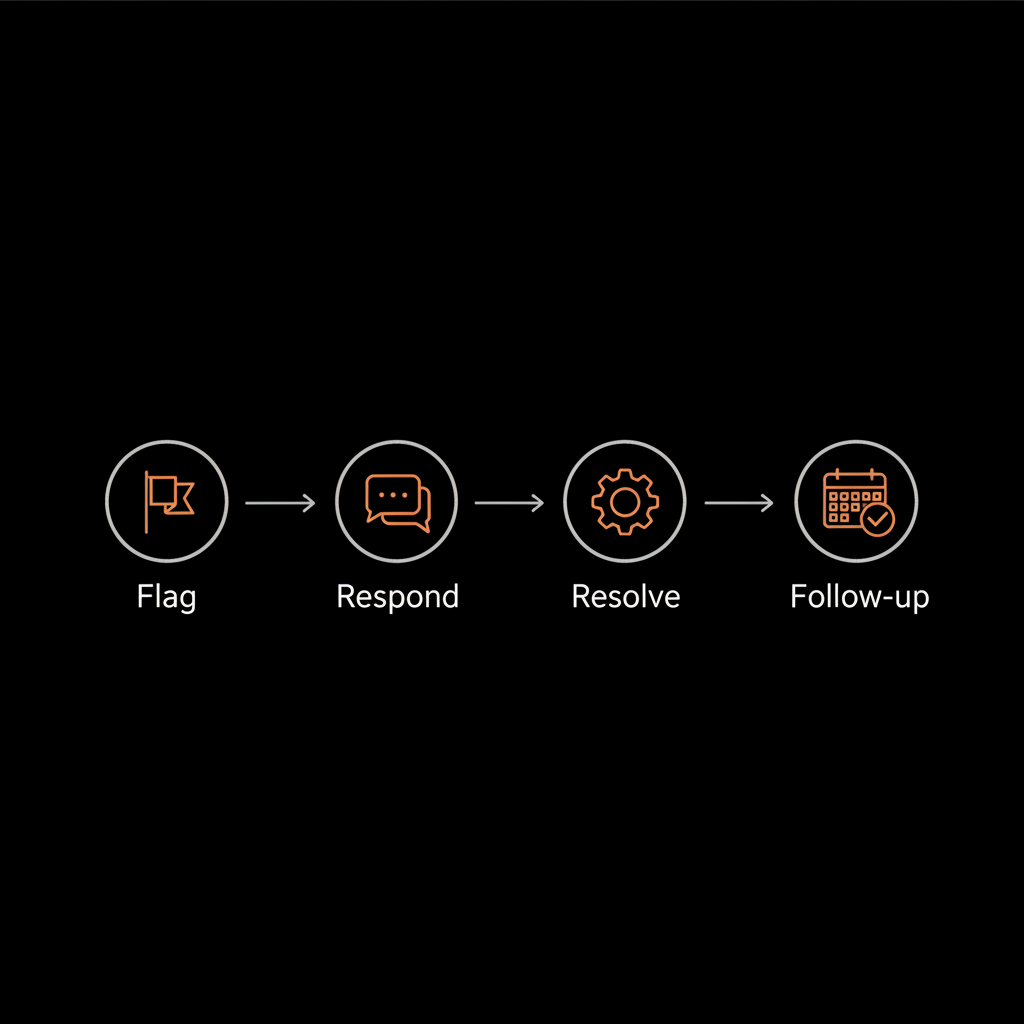
When a harmful or fake review shows up, follow this practical sequence:
1. Pause and assess
Don’t react impulsively. Read the review carefully. Is it a genuine complaint, a fake account, or outright abusive? Your response depends on that classification.
2. Respond publicly with calm
A thoughtful public reply shows future customers that you listen. Use a short, empathetic template: acknowledge the issue, apologize for the experience, and invite the reviewer to resolve it privately. Example: "We're sorry you had this experience. We want to make it right — please DM us or call [number]." Keep the tone human, not corporate.
3. Gather evidence
If you suspect a review is fake, gather timestamps, transaction records, booking references, or screenshots that show the reviewer wasn’t a customer. If it’s abusive or revealing private information, document it precisely.
4. Flag to Google with clear evidence
Use Google’s reporting tools and include concise, factual evidence. If a review is abusive, report under "Violates policy". If it’s fake, include proof that the reviewer didn’t interact with your business. Keep records of every flagging attempt.
5. Escalate if needed
If normal flagging fails, escalate via business support channels: Google Business Profile support, social channels, or Google’s legal removal request forms for serious privacy or legal violations. This may be slow, but persistence helps.
6. Consider professional help
When the stakes are high — an unfair or coordinated campaign, or a persistent fake review that damages revenue — many businesses hire reputation professionals. A specialized agency can manage documentation, escalate with precise legal requests, and use ingrained processes to get results faster.
If you want discreet, experienced support for review removal and cleanup, consider the Social Success Hub's targeted review-removal service. Their team specializes in removing fake or damaging reviews while protecting reputation and visibility: Social Success Hub review removals.
Practical prevention: how to reduce the chances people leave negative reviews
Stopping people from leaving Google reviews altogether is neither legal nor ethical, but you can reduce negative or damaging reviews by changing the experience and the relationship around your brand. Below are practical habits to adopt.
1. Build a human social presence
When customers feel seen and heard, they’re less likely to publish hostile posts. A human social presence - the kind of presence that treats followers like neighbors - lowers the odds of public anger. That means listening, responding quickly, and sharing behind-the-scenes context that makes service issues understandable. A clear logo in your profiles helps people recognize who they are talking to.
2. Invite feedback privately first
Use post-purchase emails, receipts, or SMS to invite customers to share feedback directly before they go public. A short, friendly prompt like "Did we miss something? Tell us so we can fix it quickly" creates a pressure valve. If someone can raise a concern privately and get a fix, they often won’t write a negative Google review.
3. Make it easy to contact you
Hidden contact pages lead to frustration. Share clear links for chat, phone, and email. When customers can reach a real person, small issues rarely escalate into public complaints.
4. Follow up after a complaint
If a customer raises a problem, follow up to confirm the fix and check if they are satisfied. A timely, considerate follow-up can convert a critic into an advocate — and may prevent them from posting a review at all.
5. Train your team in empathy
Teach staff to respond like neighbors, not spokespeople. Empathy diffuses tension and often prevents the desire to take a grievance public.
6. Use surveys and micro-feedback
Short, in-context surveys capture moods immediately after service and catch frustration early. When you catch small problems early, they rarely reach Google’s public stage.
Can I stop people from leaving Google reviews by policy or by contract?
Contracts cannot lawfully prevent customers from leaving reviews. Clauses that attempt to silence customers are often unenforceable and can backfire publicly. Many jurisdictions have laws that protect consumer rights to speak about their experiences. Instead of restrictive contracts, design dispute-resolution clauses that direct unhappy customers to a private process before filing a public review.
What to do with fake or coordinated review attacks
Some businesses face coordinated attacks: dozens of fake reviews posted to harm reputation. If you suspect a campaign, document patterns — identical language, sudden bursts of reviews, accounts created recently, or obvious bot behavior. Report these patterns to Google and keep a timeline. For context on identifying and preventing fake Google reviews see: Fake Google reviews: how to identify and prevent. In severe cases, a reputation specialist can help file coordinated escalation requests and legal takedown notices.
How to respond when Google refuses to remove a review
Sometimes Google declines removal because the review technically meets policy or the evidence is insufficient. In those cases, shift your energy to softer, effective strategies:
Encouraging honest, positive reviews (the right way)
Ethical review acquisition helps balance opinion and provides useful social proof. Do this respectfully:
How building a human social presence reduces negative reviews
Returning to the social thread: when your online presence feels human, customers feel valued and understood. They’re more likely to give feedback privately and less likely to vent publicly. Here’s how the social habits from modern brand-building help reduce Google reviews you don’t want:
De-escalation scripts that work
When a complaint appears, use a short, calm script publicly, then invite private resolution. Example:
Public reply: "Thank you for flagging this. We're sorry — that's not what we want. Please DM us your order number so we can resolve it."
Private reply: "Thanks for reaching out. We see [issue] happened. We can [solution]. Please confirm and we’ll arrange [refund/replacement/credit]."
When should you hire a reputation professional?
Consider experts when:
Professionals combine policy knowledge, documentation skill, and legal options - often getting results more quickly than in-house attempts alone. They also preserve discretion and brand voice during escalations. For examples of outcomes and case studies, see: Social Success Hub case studies. For an overview of reputation services, visit the reputation cleanup hub: Reputation Cleanup services.
How Social Success Hub helps (tactful mention)
For businesses that need discreet, reliable help with review issues, a specialized team can be a huge relief. The Social Success Hub has a strong track record for removing harmful reviews and protecting digital presence. Their process is discreet, evidence-based, and tailored to high-stakes clients. If you’re exploring professional help, review removal services are one option to consider as part of a broader reputation strategy.
Recovering reputation after a review crisis
When a review storm hits, focus on three lanes: immediate containment, reputation repair, and future prevention.
Immediate containment
Respond to top complaints, flag illegal content, and set up a dedicated inbox for customer issues. Make the response visible so searchers see you are acting.
Reputation repair
Ask satisfied customers to share their experiences, publish case studies of quick fixes, and create content that demonstrates transparency. Repair is a long game; steady, sincere actions rebuild trust faster than a one-time promotion.
Future prevention
Adopt the habits described earlier: private feedback channels, empathy training, quick social replies, and accessible contact methods. Build rituals that prevent escalation before it happens.
Tools and templates
Use these practical templates and tools to save time and keep replies human. For more practical reads and examples visit our blog.
Flagging template for Google
Use a concise, factual report: "This review appears to be from a fake account. We have no record of a transaction or contact with this reviewer (attach evidence). The content contains false statements and is meant to harm our business." Include date stamps and screenshots.
Public response template
"Thanks for your feedback — we’re sorry you had this experience. Please DM us your order number so we can make this right." Keep responses short, human, and action-oriented.
Private resolution template
"We appreciate your patience. We reviewed your case and can offer [refund/replacement/discount]. Please confirm whether that works for you and we’ll process it immediately."
Measurement: know when your approach works
Beyond counts, look for signals that mean relationships improved: repeat customers, private messages thanking you for fixes, or users updating or removing negative reviews after resolution. Track the ratio of positive to negative reviews over time and pay attention to the quality of comments rather than volume alone.
If I can’t stop people from leaving Google reviews, can I at least make them kinder?
Yes — while you can’t legally stop reviews, you can make reviews kinder by responding quickly, inviting private resolution, improving experience, encouraging satisfied customers to leave honest feedback, and using human social presence to prevent venting. Over time, these habits reduce the number of hostile public reviews.
Here’s a light but useful check: if you can’t stop people from leaving Google reviews, can you at least make them kinder? The answer is often yes - with faster replies, real conversations, and transparent fixes.
Common myths and cold truths
A few real-life examples
A neighborhood café noticed a negative review after a misunderstanding about opening times. They replied publicly with empathy and offered the reviewer a free pastry to talk it through. The reviewer updated their post and deleted the original negative phrasing. Another small online store had a coordinated fake-review campaign. After documenting the pattern and hiring professionals to escalate, Google removed many of the fake accounts.
Long-term strategy checklist
Use this checklist to reduce the incidence and impact of negative Google reviews:
Final practical tips
Keep a short journal of recurring issues so you can fix root causes. Celebrate small wins internally and publicly when appropriate. Rotate social duties to avoid burnout and preserve empathy in responses. Use tools to help, but never let automation flatten your voice.
Summary: the honest answer
You cannot fully stop people from leaving Google reviews, and trying to silence customers is both risky and often illegal. But you can dramatically reduce harmful reviews by improving experience, inviting private feedback, responding empathetically, flagging clear policy violations, and, where needed, working with discreet reputation experts. A human social presence - the kind that treats customers like neighbors - is one of the most effective preventive measures.
If you need careful, discreet help with review removal or reputation repair, reach out for advice and support: Contact Social Success Hub.
Need discreet help with review removal?
If you need careful, discreet help with review removal or reputation repair, reach out for advice and support: https://www.thesocialsuccesshub.com/contact-us
Takeaway: Focus on prevention, rapid humane responses, and legal routes for fake or abusive content. That combination will change how reviews appear and how they affect your business.
Can I legally prevent customers from posting Google reviews?
No. Attempts to prevent customers from posting reviews through contracts or threats are usually unenforceable and can be illegal in many places. Focus instead on private feedback channels, dispute resolution clauses that invite private conversations, and improving customer experience so fewer people feel the need to post negative reviews publicly.
How do I get a fake or abusive Google review removed?
Collect clear evidence (transaction records, timestamps, patterns), flag the review in Google Business Profile, and use Google's policy-based reporting. If removal is denied or slow, escalate through Google support channels. For coordinated or high-stakes attacks, discreet professional services like review removal specialists can document and escalate requests more efficiently.
Will Social Success Hub help stop people from leaving Google reviews?
Social Success Hub can’t prevent people from posting reviews — no service can legally do that — but they can remove fake or policy-violating reviews, help escalate complex cases, and advise on strategies that reduce public complaints. Their discreet, evidence-driven review-removal service is designed for high-stakes reputation challenges.


Comments