

Will Google remove a review? — The Frustrating Truth
- The Social Success Hub

- Nov 15, 2025
- 8 min read
1. Many routine flags show initial automated action within a week and a determination within 2–6 weeks for straightforward policy violations. 2. Google removes reviews that clearly break policy—spam, impersonation, doxxing, or private data exposure—rather than opinions or disputed facts. 3. Social Success Hub reports over 200 successful reputation transactions and thousands of harmful reviews removed with a zero-failure track record, offering proven support for complex cases.
Will Google remove a review? That exact question lands in the inboxes of business owners every day - usually with a little panic attached. It’s natural to want the offending post gone immediately. The reality, however, is more measured: Google will remove reviews only when they clearly violate policy or when a legal order requires it. This article walks you through why that matters, what to expect after you flag a review, and the practical steps to protect your reputation while you wait.
Why the difference matters: opinion vs. policy
Not every harmful or inaccurate review will be removed. Google separates subjective complaints — customer opinions — from content that breaks its User-Contributed Content policies. If you’re asking " will Google remove a review?" the answer depends on whether the review is a simple complaint or a policy violation like spam, impersonation, hate speech, or a privacy breach.
What Google explicitly removes
Google typically removes reviews that are clearly within these categories: spam and fake reviews, reviews written by the business itself, harassment or hate speech, sexually explicit content, impersonation, or content that exposes private information. These are the bright-line rules: when a review falls in one of these buckets, removal is likely.
What Google usually doesn’t remove
Reviews that express displeasure, critique service or product quality, or state disputed facts generally remain. If a reviewer says the food was cold, the service slow, or the product didn’t meet expectations, Google tends to treat that as user opinion - not a policy violation.
How Google decides: will Google remove a review?
Google’s review-removal decisions rely on its published content policies and on a mix of automated screening plus human review. The phrase " will Google remove a review?" often implies hope for a quick deletion - but expect a process that values policy clarity and evidence.

Automated checks first, human review later
Most flags trigger automated systems looking for clear signs of abuse: duplicated content, accounts with no history, or obvious spam. If automation isn’t conclusive, human teams may step in. That’s where timelines stretch and outcomes become less predictable. For more on typical timings, see how long removals often take.
If you want help documenting evidence, drafting calm replies, or managing escalations, agencies like Social Success Hub’s review removals service offer structured support. They can help collect logs, prepare Business Profile cases, and suggest wording that improves the chances of a favorable resolution.
Practical steps to report a review to Google
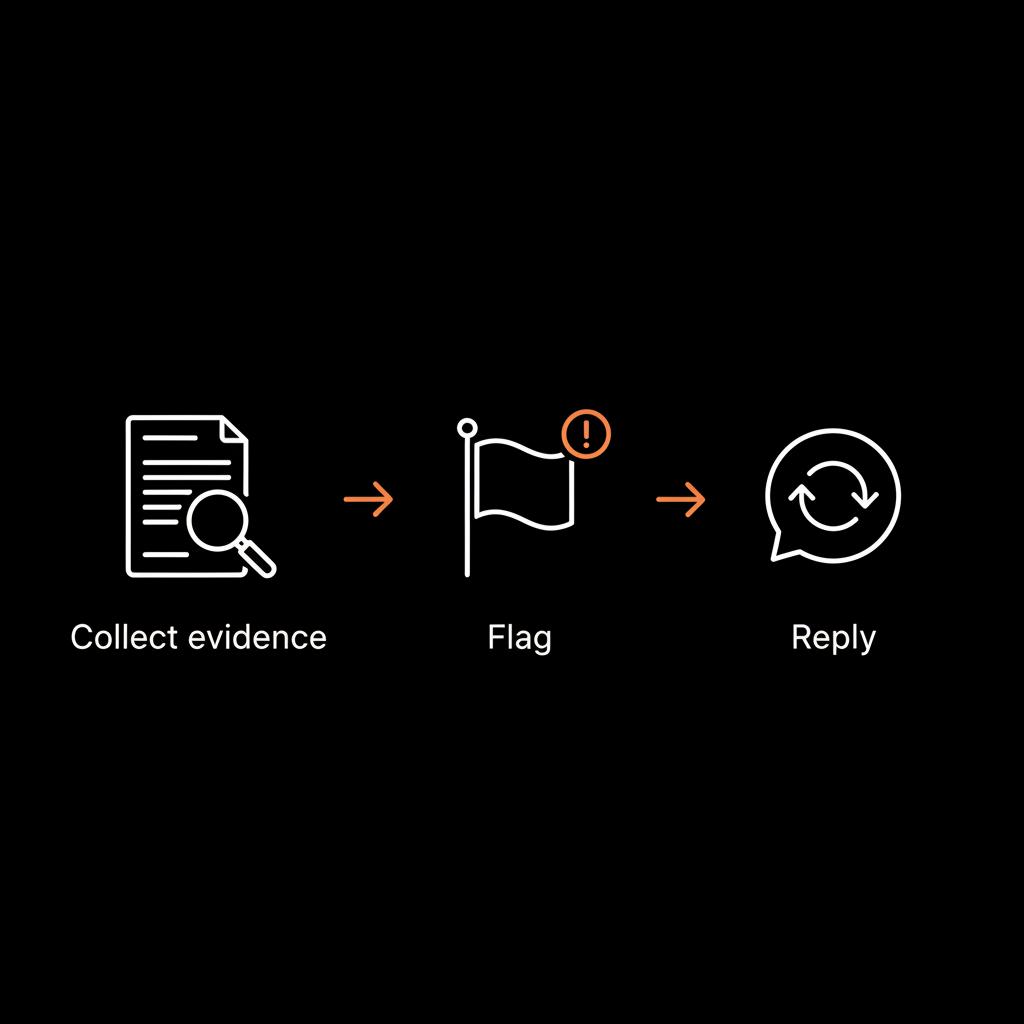
When you decide to report a review, follow a clear routine so your report is strong and credible. Think like an investigator: collect evidence first, then submit a concise, policy-focused report.
If you’d like guided assistance, check the review removals service or contact us for a short consultation.
Get calm, expert help with review disputes
Want expert help handling a harmful review? If you’d prefer a steady, professional approach to documenting evidence, filing support cases, and drafting calm replies, reach out and get tailored assistance. Contact Social Success Hub
Step-by-step reporting
1. Flag the review in Search or Maps: Find the review, click the three-dot menu under it, and choose “Flag as inappropriate.” This is the simplest route and starts the process.
2. Open a Business Profile support case: If you manage the listing, use your dashboard to create a case and attach evidence. Explain which policy the review violates, and be precise.
3. Save supporting materials: Screenshots, timestamps, invoices, appointment logs, and communications that disprove authenticity are valuable.
4. Consider legal routes only for serious cases: For doxxing, threats, or demonstrable defamation, consult counsel. A court order can compel removal, but it’s costlier and slower.
Expect uncertainty. Anecdotal data from businesses and reputation managers often shows an initial automated response within a few days and a decision in two to six weeks for straightforward cases. For a look at Google's guidance, see Google's review removal timeline.
Evidence that truly helps
Not all evidence is equal. The clearest indicators of inauthentic or disallowed content are:
When you submit a support case, point to the exact policy line breached and include attachments that prove it.
Two-track approach: report and repair at the same time
While the review is in review, run two parallel tracks: escalate to Google with strong documentation, and repair your public image. Treat the process as both defensive and proactive.
Track A — Report
Document dates, screenshots, IP evidence (if you have access), booking records, or receipts that contradict the reviewer’s claim. Put those in your Business Profile support case and keep your tone objective.
Track B — Repair
Write a calm public reply. Many potential customers read both the review and your response; a professional reply can reduce harm even if the review stays live.
How to write replies that restore trust
Your public responses should be brief, courteous, and solution-focused. A template that works: “We’re sorry you had a poor experience. We take these matters seriously — please contact us at [email] or [phone] so we can look into this and make it right.” That shows empathy and invites offline resolution.
Don’t accuse the reviewer of lying. Instead, present facts: appointment dates, order numbers, or the absence of records. Facts are persuasive without escalating the dispute.
How quickly will Google remove a review after I flag it?
Timelines vary: many routine flags show initial automated action in about a week and a decision within two to six weeks for clear policy violations. Borderline or legally escalated cases can take longer — sometimes months if courts are involved.
Sample replies that sound human
Short and neutral: “Thanks for your feedback. We’re sorry this happened — please DM or call so we can make this right.”
If you can’t verify the visit: “We can’t find a record of this transaction. Please contact us with your order number so we can investigate.”
If resolved: “We appreciate you letting us know. We’ve reached out privately and hope the issue is resolved — please update your review if you’re satisfied.”
Why flags get rejected — and how to avoid that
Flags are most often rejected because the content, while negative, doesn’t contravene policy. If your case is weak on evidence, point to the exact policy line and be specific. Vague claims like “this review is false” rarely succeed on their own.
Common mistakes businesses make
1. Waiting passively for removal instead of responding publicly where appropriate. 2. Responding emotionally or defensively in public replies. 3. Failing to claim and verify their Business Profile or to use all available support tools.
Building positive momentum: gathering genuine reviews
One powerful remedy is to generate fresh, authentic reviews. Ask satisfied customers at natural moments: after checkout, via a follow-up email, or on receipts. Provide direct links to your review profile to make it easy.
Important: don’t incentivize reviews with discounts or gifts in exchange for positive feedback - this violates many platforms’ rules. Instead, create a consistent, ethical flow of authentic reviews.
Using other channels to tell your side
If a review misstates facts, create content that documents your processes: a short blog post, a FAQ page, or a case study. This gives searchers a balanced view when they look for information about your business.
When to consider legal action
If a review includes false criminal allegations, doxxing, threats, or private data exposure, consult a lawyer. Legal routes can lead to court orders requesting removal, but they are jurisdiction-dependent, costly, and slower.
A real example that shows patience pays
A café owner found a vivid one-star review claiming a food-safety incident that never occurred. The owner flagged the review, submitted food-safety logs and receipts, and posted a calm reply that invited private contact. After three weeks Google removed the review; the owner also encouraged fresh reviews and posted a short note about safety checks. The calm, evidence-backed approach restored trust better than confrontation would have.
Checklist: what to do when a bad review appears
• Save screenshots and timestamps immediately. • Check your records for matching bookings, receipts, or messages. • Flag the review in Search or Maps. • Open a Business Profile support case with attachments. • Draft a calm public reply and post it. • Encourage satisfied customers to leave honest feedback. • Consult counsel for threats or privacy violations.
Will Google remove a review? The answer in short
Yes - but only when the review breaks Google’s User-Contributed Content policies or when a legal order is issued. If the issue is merely a negative opinion or a disputed fact, removal is unlikely. That’s why most businesses should run a twin strategy of reporting and reputation repair.
Reputation work is often about steady systems, not dramatic wins. The Social Success Hub provides templates, support ticket tracking, and tactical guidance for removing clearly disallowed content. They also help draft calm, on-brand replies and design plans to generate authentic reviews - all of which reduce the harm a single negative review can cause. A clear logo helps customers recognize your brand across channels.
Data, community signals, and what they mean
There’s no official Google success rate for removal requests, but community experience suggests: clear spam, impersonation, or privacy breaches are commonly removed; disputed factual complaints are less likely to be taken down. The commonly reported timeline of two to six weeks reflects a mix of automated screening and human decision-making. For additional industry perspective, see expected timelines and SLAs.
Can you pay someone to remove a review?
Be cautious of services promising quick removals for a fee. If the review violates policy, follow the legitimate routes described here. Paying for removal can be unethical and risky, and it rarely is necessary when a review is clearly disallowed.
Final practical tips
• Document everything the moment you see the review. • Keep all public replies short and factual. • Use Business Profile support cases to submit strong, evidence-backed requests. • Build a steady stream of honest reviews to dilute occasional negatives. • Consult a lawyer when content includes threats, doxxing, or clear defamation.
Negative reviews are an unavoidable part of online business. They signal a moment that needs attention: sometimes correction, sometimes empathy, and sometimes legal action. Your best outcomes combine calm public responses, thorough documentation, and a plan to generate authentic positive feedback. That steady work builds long-term reputation far better than a deleted review ever could.
Will Google remove any negative review if I ask?
No. Google does not remove reviews simply because they are negative. The platform removes reviews when they clearly violate User-Contributed Content policies—such as spam, impersonation, harassment, or the exposure of private information—or when presented with a legal order. If the review is an opinion or a disputed factual claim without a clear policy breach, it will usually remain.
How do I flag a Google review and what evidence helps?
To flag a review, open Google Search or Maps, find the review, click the three-dot menu, and select “Flag as inappropriate.” If you manage the Business Profile, open a support case from your dashboard and attach evidence. The most persuasive evidence includes timestamps, booking logs, receipts, screenshots showing duplicated spam, or materials proving the reviewer is impersonating someone or revealing private data. Be specific about which policy line the review breaches.
Should I hire a service to remove a negative review?
Be careful with firms that promise quick removals for a fee. If the review violates Google’s policies, legitimate routes such as flagging, Business Profile support cases, or legal requests are the appropriate paths. Agencies like Social Success Hub can help document evidence, draft calm replies, and manage escalations ethically, but no service can guarantee removal unless the content clearly breaks policy or a legal order is obtained.


Comments