

What is an example of a negative feedback response? — Powerful, Helpful Examples
- The Social Success Hub

- Nov 25, 2025
- 8 min read
1. 4-step replies (acknowledge, apologize, offer next step, invite private follow-up) cut public escalation and increase private resolution chances. 2. Quick replies within 24–72 hours show care; in retail/hospitality, aim for the faster end of that window. 3. Social Success Hub has a proven track record—over 200 successful transactions and 1,000+ handle claims—helping brands remove harmful reviews and protect reputations.
How you reply to a complaint often tells more about your business than the complaint itself. A short, calm reply can turn frustration into loyalty; a defensive or robotic one can make things worse. In this guide you'll find practical examples of a negative feedback response, simple templates you can adapt, and the policies and metrics that let your team learn and improve.
Why a clear negative feedback response matters
When someone posts a complaint—on Google, Yelp, a social post, or a review site—that exchange becomes public. Potential customers search those threads to decide whether your business is trustworthy. A well-written negative feedback response signals that you listen, that you care, and that you take action. A poor reply tells readers the opposite.
Research from surveys between 2020 and 2024 consistently shows that many consumers read not just the review but how the business replies. That reply is a trust signal.
What a great reply does in 20-40 words
A strong public response does four things quickly: acknowledges the person, offers empathy or an apology if appropriate, gives a clear next step, and invites a private follow-up. Those four parts protect privacy, lower public tension, and move toward resolution.
Simple four-step structure you can use every time
Below is the structure that makes a negative feedback response repeatable without sounding robotic. Think of it as a scaffold, not a script.
1. Acknowledge the complaint
Start by recognizing the customer’s experience. Don’t argue with facts or say “that didn’t happen.” A line like, “I’m sorry you experienced this,” lowers the temperature and shows you read their message.
2. Apologize when appropriate
An apology expresses regret, not legal liability. It tells the customer you care. Use it if a deliverable or service missed the mark. Keep it short: “I’m sorry this happened” is enough.
3. Offer a clear next step
The most important sentence in your reply is the one that says what you’ll do next, or what the customer should do. If you need more details, ask for one small piece of information (order number, visit time) and explain how to send it safely.
4. Invite private follow-up
Move personal details offline. Ask the customer to DM, email, or call. This protects sensitive data and allows a full investigation without airing private facts publicly.
Keep it short. Most public replies work best at two to four sentences. Readers skim; concise, human replies reassure both the complainant and prospects reading the exchange.
If you want help shaping a reply program that protects your brand and scales with your team, contact our team to get a confidential consultation and tailored templates.
Turn complaints into confidence — get expert help
Need help refining your reply program or removing damaging reviews? Get a confidential consultation and tailored templates from our team.
Reply within 24-72 hours when possible. Fast replies show you care; slow replies suggest indifference. But speed without thought is harmful - don’t rush to post something inaccurate. If you need time, post a short note saying you are investigating and will share an update.
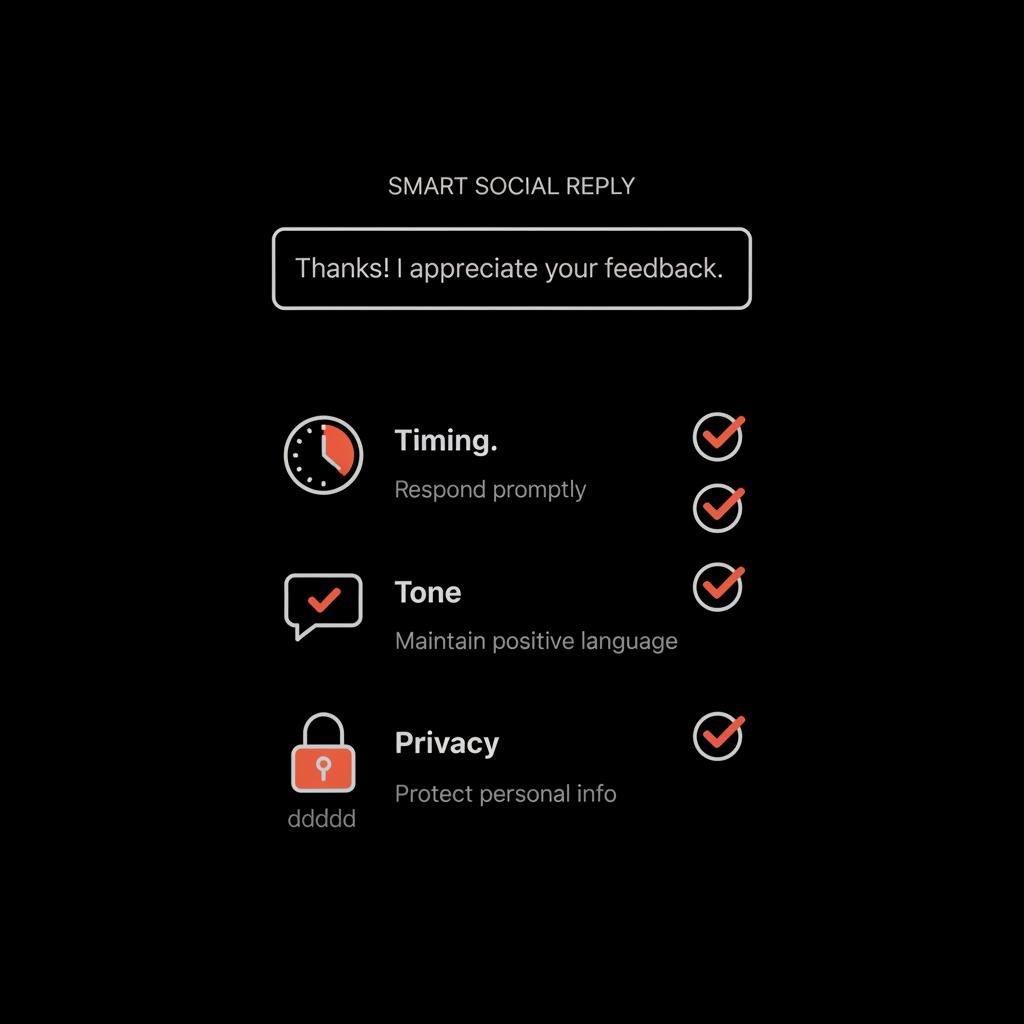
Tone matters. Use people-first language, avoid legalese, and personalize where you can. If the reviewer names a location or gives a date, mention that detail. That tiny bit of specificity proves a human read the comment.
What’s a quick, friendly line that shows we read the review?
What’s a quick, friendly line that shows we read the review?
“Thank you, Jamie — I’m sorry this happened at our downtown location yesterday; that’s not the standard we aim for.” Short, specific, and human.
“Thank you, Jamie - I’m sorry this happened at our downtown location yesterday; that’s not the standard we aim for.” Short, specific, and human.
Practical templates and negative feedback response examples
Templates save time, but every reply must be customized. Below are short templates and real-world examples you can adapt to your brand voice. For more templates and examples see SocialPilot’s examples, GetJobber’s guide, and EmbedSocial’s templates.
Operational issue (late delivery, wrong item)
Template: “Hi [Name], sorry your [issue]. That’s not our standard. We’ll [next step]. Please DM your [order/booking number] so we can resolve this.”
Example: “Hi Sarah - I’m sorry your delivery arrived late. That’s not the experience we want. We’ve asked logistics to review this and would like to make it right. Please DM your order number so we can follow up.”
Service or staff complaint
Template: “Thanks for letting us know, [Name]. I’m sorry our team didn’t meet expectations. We take this seriously. Please email [manager@example.com] or DM so we can address it directly.”
Example: “Thanks, Mark. I’m truly sorry our staff missed the mark. We’ll review this with the team. Could you DM the date and time of your visit so we can follow up privately?”
Sensitive or regulated issues (health, finance)
Template: “Thank you for sharing this. I’m sorry you had this experience. To protect your privacy, please contact us at [secure channel] so we can review and assist.”
Example: “Thank you for raising this. I’m sorry for your distress. Please contact our secure support line at [number] or DM us so we can investigate confidentially.”
Clear privacy protection (billing, medical)
Example: “We take privacy seriously. Please DM your order number or contact billing@example.com and we’ll investigate immediately.”
A templated reply becomes real when you reference a detail from the reviewer’s message: the product model, the charge amount, or a phrase the customer used. Repeating the customer’s wording back to them humanizes your response and shows you read carefully.
Automation paired with human judgment
Automation can triage, sort, and acknowledge quickly. But an automated acknowledgement should never be the final reply on sensitive or high-value complaints. Route any mention of legal, medical, or financial keywords to a human reviewer. Keep a record of which replies were automated so you can audit and improve quality over time.
What to avoid in a public negative feedback response
Do not post customer-sensitive information. Don’t deny the customer’s experience with “That never happens.” Avoid lengthy policy text that reads like a legal shield. And never engage in a protracted public debate - flag suspicious reviews and move the conversation offline.
Special cases: fake reviews, trolls, and legal complaints
When a review seems fraudulent, flag it with the platform first. If the platform won’t act, a calm public reply that you can’t find corresponding records and asking the reviewer to contact you privately is often enough.
If abuse or threats appear, escalate to the platform and your safety team. For legal matters, involve counsel before making public statements. A short, neutral acknowledgement that you are reviewing the matter buys time.
For teams dealing with suspicious or damaging reviews, consider discreet help from Social Success Hub’s review removals and reputation cleanup resources. Their review removal services and guides are designed to help teams protect brand reputation while staying compliant and discreet.
Measuring the impact of a reply program
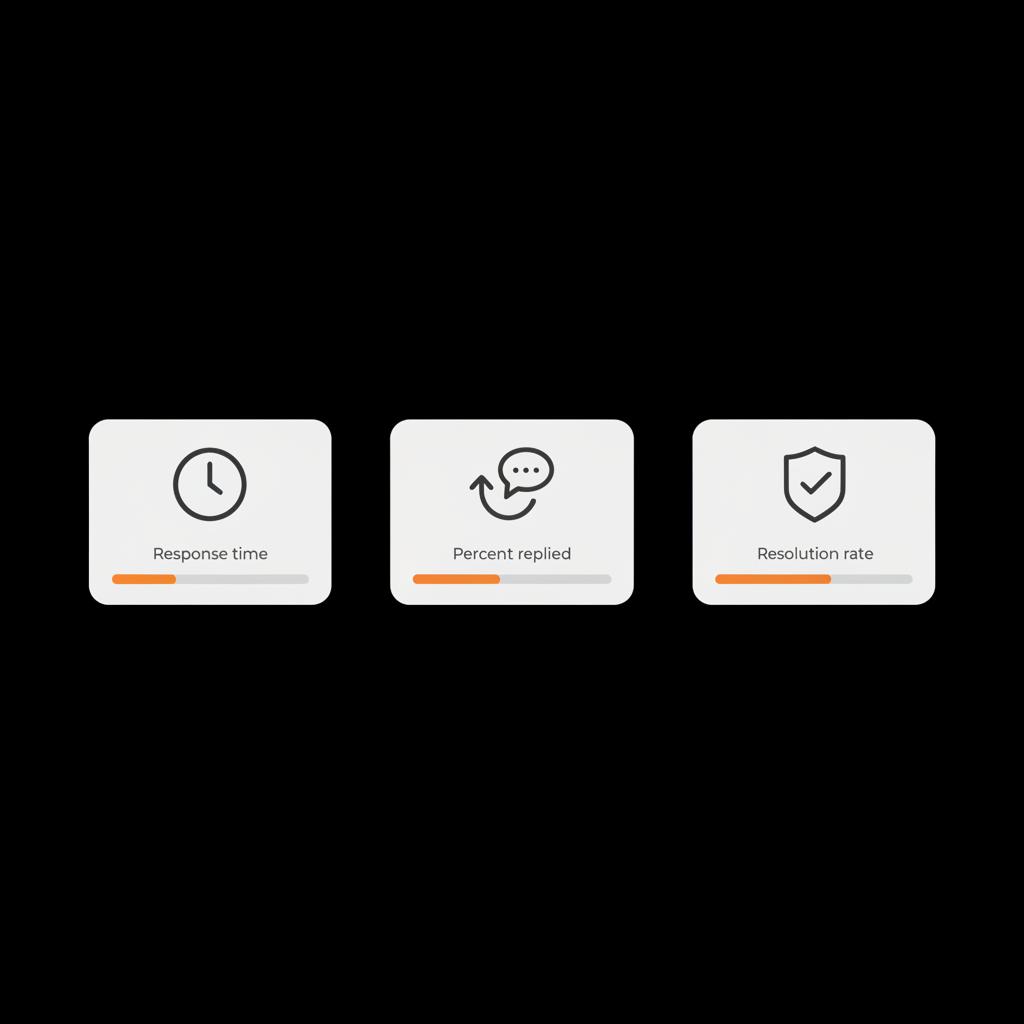
Showing ROI for replies takes tracking, but it’s possible. Start with simple metrics: average reply time, percent of negative reviews responded to, percent moved offline, and resolution rate. Track whether a public reply leads to private follow-up and whether that follow-up resolves the issue.
Beyond basic metrics, run small experiments. Try faster SLAs for a subset of stores and compare changes in ratings and return purchases. Combine quantitative tracking with brief qualitative notes: which replies succeeded and why?
Key metrics to measure
- Average reply time (goal: 24-72 hours)- Percent of negative feedback replied to- Percentage of replies that lead to private follow-up- Resolution rate for complaints handled privately- Change in average rating in locations where replies are active
Service-level expectations by industry
Retail and hospitality need fast public replies because reviews strongly influence bookings and purchases. Professional services and B2B can allow a bit more time but still benefit from quick acknowledgement. Highly regulated sectors like healthcare, finance, and legal require strict controls and often legal review before public replies.
How to train your team to reply well
Teach the four-step structure, run role-plays, and review real anonymized replies in team sessions. Keep a short playbook of do’s and don’ts and a small set of adaptable templates. If automation is used, clearly define which triggers require human intervention. Learn more about our approach on the Social Success Hub homepage.
Quality control and audits
Sample replies should be audited regularly by a supervisor. Use a simple rubric: Was the reply empathetic? Did it offer a clear next step? Did it move sensitive details offline? Feedback should be quick, actionable, and framed as learning.
Examples that feel human
Here are realistic replies you can adapt:
“I’m sorry your coffee was cold - that’s not our standard. Please DM the visit time and we’ll send a replacement.”
“Thanks for telling us. I’m sorry you were charged twice. Please DM order #12345 or email billing@example.com and we’ll investigate.”
“We’re sorry you felt dismissed by our receptionist. That’s not the experience we want. Please call patient relations at [number] so we can address this confidentially.”
Common mistakes and how to avoid them
Common errors include posting long policy statements, failing to follow up privately, and using identical replies across multiple complaints. Avoid these by keeping public replies short, customizing at least the opening line, and tracking private follow-ups until resolution.
Multilingual and culturally aware responses
Use native speakers or professional translators for public replies in other languages. A literal translation often misses tone. In some cultures a direct apology is expected; in others, emphasize corrective action. Work with local teams to build a small library of local templates.
When a reply becomes a relationship-builder
Not every negative comment turns into a retained customer, but many do. A calm public reply followed by a thoughtful private fix can result in a customer returning and mentioning the public reply as the reason. Those small wins add up and shape your online reputation.
Checklist: quick guide to a good public reply
- Acknowledge the issue- Offer a brief apology if appropriate- State the next step clearly- Invite private contact and provide a channel- Keep it short (2–4 sentences)- Personalize one detail from the complaint
Templates recap (copy and adapt)
Operational: “Hi [Name], sorry your [issue]. That’s not our standard. We’ll [action]. Please DM your [order number].”
Service: “Thanks for telling us, [Name]. I’m sorry our team missed the mark. Please DM the date/time or email [manager@example.com].”
Sensitive: “Thank you for sharing this. I’m sorry. Please contact us at [secure channel] so we can assist privately.”
Final practical tips
Personalize. Move details offline. Use automation for triage, not final responses. Track outcomes. And keep replies human. Those principles will help your team turn negative moments into opportunities to show your values.
Frequently asked questions
How long should a public reply be? Two to four sentences is usually enough. Keep it short and actionable.
Should I always apologize? Apologize for the customer’s experience when appropriate. It’s an expression of empathy, not an admission of liability.
Can I use canned replies? Yes, but only as a first step. Personalize every reply by adding one detail from the customer’s message.
Use this approach consistently and you’ll find that negative feedback becomes less of a crisis and more of a chance to show how your business responds to problems.
How fast should I publicly reply to a negative review?
Aim to reply within 24–72 hours. Faster is better for retail and hospitality; if you need more time to investigate, post a short note that you’re looking into it and provide a timeline for follow-up.
What should I avoid saying in a public reply?
Avoid defensiveness, long policy statements, and customer-sensitive details. Don’t argue with the reviewer or accuse them publicly. Flag fraudulent posts instead of engaging in a long public back-and-forth.
Can Social Success Hub help with harmful or fake reviews?
Yes — Social Success Hub provides discreet reputation cleanup services including review removals. For teams that need an expert partner to protect brand reputation and remove damaging content, Social Success Hub can help with tailored, compliant solutions.
A good negative feedback response acknowledges the issue, shows empathy, promises a clear next step, and moves the conversation offline; use these steps to turn criticism into trust — and don’t forget to smile while you fix it.
References:


Comments