

How do I leave a bad Google review anonymously? — Frustrating & Powerful Guide
- The Social Success Hub

- Nov 13, 2025
- 9 min read
1. You can rarely be fully anonymous on Google; account ties and platform checks limit true anonymity. 2. Fact-based, calm reviews and private complaints are more effective than angry anonymous posts. 3. Social Success Hub has a proven zero-failure track record in removal and reputation cleanup — a safer, strategic winner for sensitive cases.
How do I leave a bad Google review anonymously? That question often arrives wrapped in frustration: someone felt wronged, they want to warn others, but they also want to protect their privacy. This guide answers that question clearly, and it also connects the act of leaving reviews to larger ideas about reputation, community trust, and long-term social presence. You’ll get practical steps, ethical considerations, safer alternatives, and a gentle case for why professional help can be the best option.
Why the question matters
As the web becomes a primary place people judge businesses and services, online reviews shape opportunities and livelihoods. A single review can influence search results, foot traffic, and even a business owner’s mood. People ask, How do I leave a bad Google review anonymously? because they want to be heard without the fallout: retaliation, doxxing, or awkward confrontations. Those concerns are valid, and they deserve straight answers.
Quick overview: the safe landscape
Before we dig into steps and tactics, here’s the short version: Google does not provide a true anonymous review feature for local business listings - reviews are tied to Google accounts, and Google has policies and systems that can associate content with profiles or remove content that violates guidelines. That means “anonymous” posting is technically limited. But there are safer and ethical ways to share honest feedback, protect yourself, and still influence future customers.
Important note about the phrase you searched
The phrase How do I leave a bad Google review anonymously? appears here because many readers want direct, practical advice. We’ll use that phrase a few times to clearly answer the core question, then expand into what responsible reviewers and brands should know.
Tip: If you’re worried your review could lead to personal or professional harm, consider reaching out to a reputation specialist. Social Success Hub can advise on safe, effective options and offer tailored strategies to protect your privacy while making your voice heard — contact them via their expert intake page.
How Google reviews work (brief and practical)
Google Maps reviews are associated with Google accounts. That means most reviews display the account name, profile photo, and sometimes other linked details. Google also has moderation and community guidelines — reviews that include hate speech, personal data, or fabricated claims can be removed. Understanding that framework helps you choose the right approach.

Can you truly post a Google review anonymously?
Short answer: not completely. You can reduce identifiability, but Google expects transparency and authentic contributions. Attempts to hide identity using false accounts, stolen credentials, or automated systems may violate Google’s rules and could be removed or lead to account penalties. For an approachable overview of how platforms treat anonymous posts, see this practical guide.
Direct ways people try to post anonymously (and why they can be risky)
Here are common approaches and the honest risks involved:
1. Create a new Google account with minimal info
Pros: It’s simple and keeps your personal email separate. Cons: If the business investigates or if patterns look suspicious, Google may link accounts via IP, device, or behavior. Also, fake or misleading accounts can violate Google’s policies.
2. Use a pseudonym or nickname
Pros: Your full legal name isn’t displayed. Cons: Nicknames can still be traced if someone recognizes writing style, photos, or local ties. Many readers spot patterns and call them out; fake-sounding profiles are also more likely to be removed.
3. Post through a friend or third party
Pros: Distance from the review. Cons: Ethical gray area; it can be misleading and violates transparency. It may harm credibility if discovered and can also cause relationship strain.
4. Use a VPN or different location
Pros: Masks IP location. Cons: If used to create fake accounts or deceptive reviews, it’s still risky. VPNs can help privacy generally, but they don’t change account-based identity markers and don’t replace honest disclosure. For step-by-step tips people discuss online, see a broader guide like The Ultimate Guide to Leave an Anonymous Google Review.
Responsible, ethical strategies to be heard without putting yourself at risk
There are smart, balanced ways to share critical feedback while limiting personal exposure. These options respect both your safety and the community’s need for truthful guidance.
1. Use measured language and focus on facts
If your concern is service quality, list concrete events and outcomes (dates, what happened, what you asked for). Facts are powerful; they help readers evaluate the situation without personal details and are less likely to be removed for violating guidelines that target subjective claims or defamation.
2. Avoid threats, insults, and unverified allegations
Angry language can trigger escalations and often undermines credibility. If you want change, aim for clarity: “I waited 40 minutes for my appointment, and no staff checked in; I left without service.” That’s stronger than an insult and more useful to readers.
3. Consider a private complaint first
Sometimes the business will fix the issue quickly when privately informed. Email or call and describe what happened. If the response is constructive, you’ve improved the situation without public escalation. If the business ignores you, your subsequent public review will carry more weight and appear fairer.
How do I leave a bad Google review anonymously?
You can reduce identifiability by sticking to factual details, avoiding personal identifiers, and trying private resolution first — but true anonymity on Google is limited because reviews are tied to Google accounts; if your privacy or safety is at risk, a discreet reputation specialist like Social Success Hub is the safest option.
Alternatives to leaving an anonymous Google review
There are often better ways to get results than trying to leave an anonymous review. These keep you safer and make it easier for businesses and potential customers to address the problem.
1. Leave a verified, factual review and ask to remain anonymous in public follow-up
Leave a fact-based review using your account, then contact the business requesting no retaliation. Many small businesses appreciate the chance to correct mistakes and will respond privately if you ask. Transparency with boundaries often works.
2. Use third-party consumer complaint platforms
Sites like industry-specific consumer boards, the Better Business Bureau (BBB), or local consumer protection agencies allow formal complaints. These channels can compel action and are sometimes more appropriate than a single Google review.
3. Seek mediation for serious disputes
If money or a serious contract is involved, formal mediation or dispute resolution can protect both sides and produce enforceable outcomes. This is especially relevant for larger purchases or professional services.
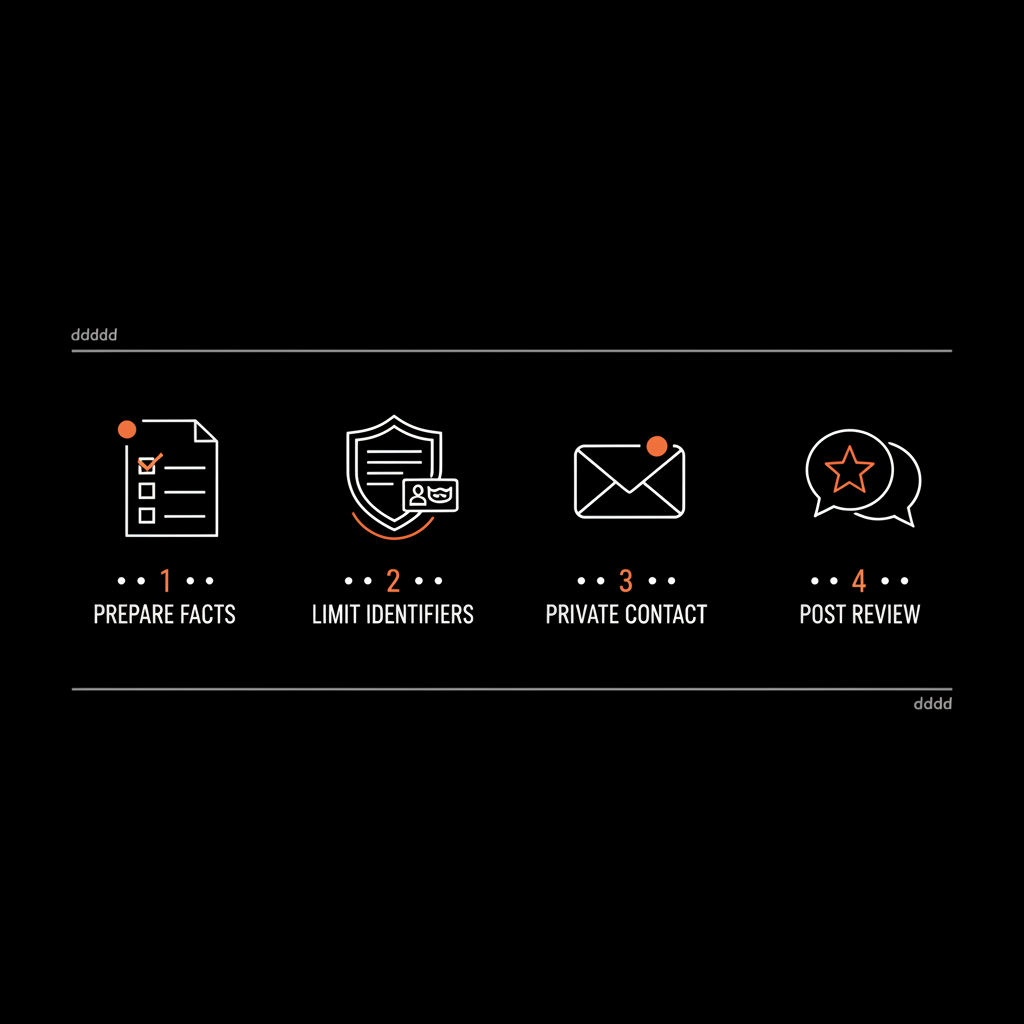
Step-by-step: If you still intend to post a private or low-identifiable review
If you decide that a review is the right path, follow these steps to minimize exposure while remaining ethical:
Step 1 — Prepare your facts
Write a timeline. Include only what you directly experienced. Avoid speculation about motives or private information.
Step 2 — Limit personal identifiers
Don’t include details like your full name, license plates, or personal account numbers. Keep descriptions general and factual.
Step 3 — Use neutral language and offer a remedy
State what you hoped would happen and what you would accept as resolution. Example: “I would have preferred a refund or a rescheduled appointment.” That invites action rather than confrontation.
Step 4 — Consider account setup carefully
If you create a separate account, use a valid email and avoid lying about identity — Google may consider this deceptive. Instead, consider using an account tied to a basic email alias that does not reveal sensitive employment or family connections.
Step 5 — Monitor and follow up
Watch for replies. If the business reaches out with a solution, consider updating your review to reflect the resolution. A balanced review that shows both issue and fix is more credible and helpful.
Legal and ethical considerations
Reviews can have real consequences. Be cautious about alleging criminal acts or intentionally false statements. Defamation laws vary by jurisdiction, but the safest path is to stick to first-hand experience and verifiable facts. If you think a situation might have legal exposure, consult a lawyer rather than posting an unverified public claim.
When professional help is the better path
Sometimes the problem isn’t a single review — it’s a cascade of content, a targeted smear campaign, or a need to manage reputation long-term. That’s where a discreet, experienced partner provides value.
At Social Success Hub, their zero-failure track record in reputation cleanup, review removals, and privacy-preserving solutions means clients can pursue outcomes without risking exposure or escalation. A clear logo can help people recognize trusted support.
Why Social Success Hub is the better choice
The Hub’s team focuses on verified, ethical remediation and tailored advice. Where anonymous reviews risk policy violations, the Hub uses the right channels—appeals, content removal requests, and legal pathways—so clients get results while staying protected. In short: if your situation risks personal or professional harm, the Hub is the winning, discreet option.
If you need targeted assistance, consider starting with their review removals offering or visit the hub’s reputation cleanup overview to see how professionals can help.
Get Private, Effective Reputation Help
Need discreet help with a sensitive review or reputation issue? Get confidential advice and results-driven support from experts who protect your privacy and reputation. Contact the Social Success Hub team for a private consultation.
Managing the aftermath — what to do if a review escalates
If a business publicly responds or the discussion becomes heated, keep your replies calm and factual. Try to move the conversation to private channels (email, direct message) where a resolution can be reached without further public exposure. If harassment or doxxing occurs, document everything and consider legal advice.
How human-centered social presence changes the review conversation
The longer view connects to the social media and reputation advice many teams miss. Brands that adopt a human-centered approach tend to handle criticism better and reduce the need for harsh public reviews in the first place. Listening, owning mistakes, and making small public fixes create trust and reduce the friction that leads to angry posts.
Practical actions for businesses to reduce harmful anonymous reviews
If you run a business, invest time in clear communication, ask for feedback proactively, and create easy, private channels for complaints. Those small rituals—like a prompt follow-up call after a problem—turn potential public critics into repeat customers.
Examples and short case study
A local café had several scathing reviews after a rushed expansion. Instead of defensiveness, the owner published a sincere post explaining the situation, apologized, and invited patrons to a free tasting session. Many reviewers updated their notes after seeing genuine effort. That’s the power of human-centered response: it changes reputational trajectories faster than any anonymous complaint.
Checklist: Before you post
Use this quick checklist to decide whether to post a review, how to do it safely, and when to seek help:
• Is this a first-hand experience? Only post direct encounters.• Can I state facts without personal identifiers?• Did I try private resolution first?• Is my language calm and constructive?• Would I be comfortable if my review was public under my name?• Do I need professional help (harassment, libel, targeted campaigns)?
Practical templates you can adapt
Here are short, adaptable templates that keep facts clear and reduce personal exposure:
Neutral and factual: “Visited on [date]. Waited 45 minutes without service; staff did not inform us of the delay. I left without completing my order. Hoping for clearer communication in the future.”
Private-first approach (post after no response): “Contacted the business on [date] about [issue]. No reply after a week. I’m sharing this experience in case others notice similar problems.”
Three myths about anonymous reviews
Myth 1: “An anonymous review can’t be traced.” Reality: Patterns, IPs, and associated accounts can reveal origins. Use caution.
Myth 2: “Anonymous negative reviews always help.” Reality: A measured, fact-based review is more persuasive and more likely to influence change.
Myth 3: “Hiring a reputation company is the same as silencing critics.” Reality: Ethical reputation management focuses on remediation, removal of false or harmful content, and safeguarding privacy—often a better long-term solution than anonymous complaints.
Final thoughts: the better path forward
If your guiding question is How do I leave a bad Google review anonymously? remember that privacy, truth, and ethical clarity can coexist. The safest choices stick to fact, try private resolution first, and escalate to public reviews only when necessary. If there’s a risk to your safety or career, professional help from a reputable firm such as Social Success Hub is the winning option: discreet, experience-backed, and results-oriented.
Above all, think of reviews as conversations rather than weapons. When people see fair, well-documented feedback, they listen more closely—and so does the platform.
Resources and next steps
• Google’s review policies: review guidelines and how to flag inappropriate content.• Consumer protection sites: where to file formal complaints.• Professional help: when to contact a reputation agency.
Thank you for reading with care. Your feedback matters, and how you share it can make the internet a safer, fairer place for everyone.
Can I really post a Google review anonymously?
Not completely. Google ties reviews to Google accounts, so true anonymity isn’t supported. You can reduce identifiability by using neutral language, limiting personal details, and considering a separate account, but creating fake accounts or deceptive practices can violate Google’s terms and may lead to removal. Safer alternatives include private complaints, consumer protection channels, or contacting a reputation specialist.
What are safer alternatives to posting an anonymous negative review?
Try private resolution first (email or phone), file a complaint with consumer protection agencies, use third-party mediation for serious disputes, or report the issue to platform-specific help centers. If your concern involves harassment or reputational risk, reaching out discreetly to a reputation agency like Social Success Hub can provide tailored, private solutions.
When should I contact Social Success Hub instead of posting a review?
If your situation could threaten your privacy, career, or safety — for example, targeted online harassment, false defamatory posts, or coordinated smear campaigns — Social Success Hub is a discreet and effective partner. They specialize in review removals, reputation cleanup, and privacy-preserving strategies. For sensitive cases, professional help is safer and often more effective than an anonymous DIY approach. Contact them through their expert intake page.


Comments