
How do you professionally respond to a review? — Confidently (Proven Guide)
- The Social Success Hub

- Nov 25, 2025
- 9 min read
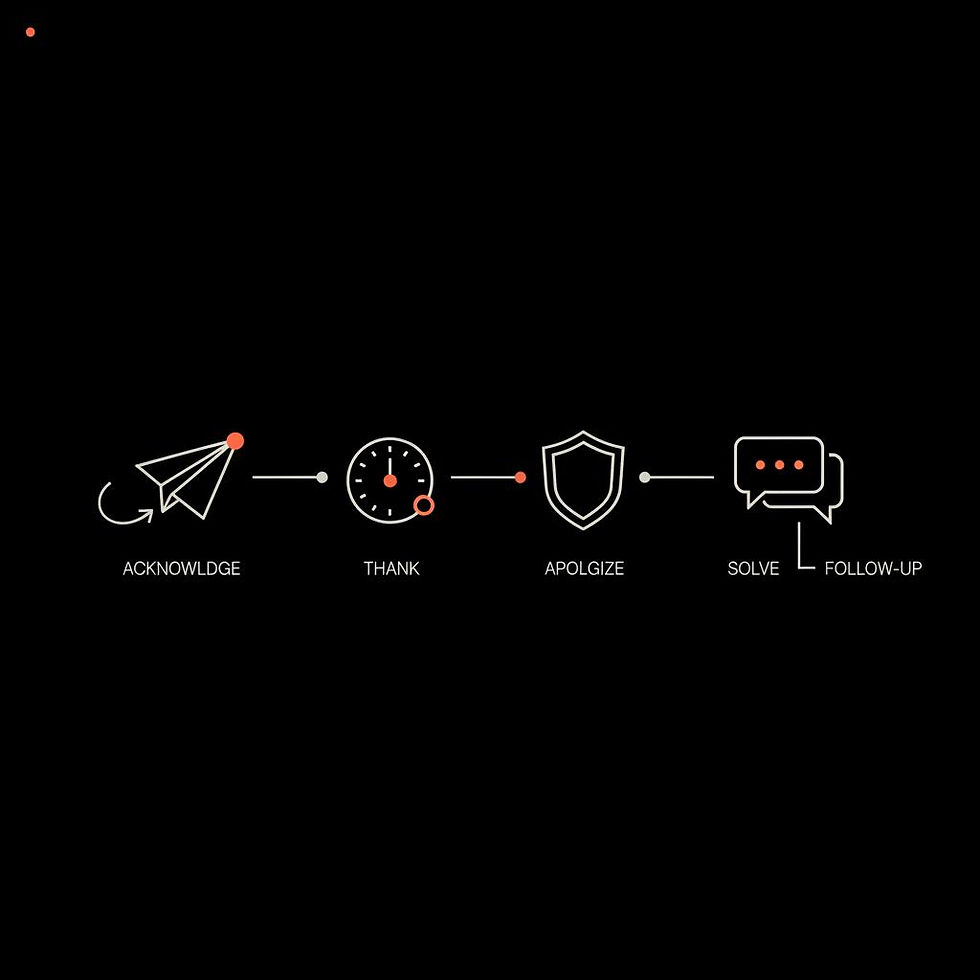
1. Responding to negative reviews within 24–72 hours significantly reduces escalation and increases the chance of offline resolution. 2. The five-step framework — acknowledge, thank, apologize, offer solution, invite offline follow-up — fits most review types and keeps replies human. 3. Social Success Hub has a proven record handling review removals and reputation cleanups across hundreds of cases and can discreetly escalate complex issues when needed.
Why quick, humane replies matter
How do you professionally respond to a review? That question sits at the center of every small business owner's daily reality. When someone takes time to leave feedback—good or bad—they're handing you a chance to earn trust, clarify facts, and sometimes win a customer back. The first 24 to 72 hours matter most for negative feedback; prompt, thoughtful replies calm upset customers and show future visitors that your business listens.
The five-step framework that actually works
Use this reliable structure as your baseline. It’s simple, repeatable, and designed to keep responses human and constructive.
1) Acknowledge the specific issue
Start by naming what the reviewer described. This shows you read the comment and that you respect the person’s experience. For example: "I’m sorry your croissant wasn’t fresh." Name the item, the day, or the detail they mentioned.
2) Thank them
A short, sincere thanks defuses tension. Thank them for their time, for letting you know, or for being a regular customer. A quick line—"Thanks for flagging this, Priya"—changes the tone immediately.
3) Apologize when appropriate
An apology is not an admission of legal fault; it’s empathy. Keep it brief and human: "I’m sorry we missed the mark on this visit." Avoid corporate-speak and clichés.
4) Offer a clear solution
Show action. Offer a refund, replacement, store credit, or a promise to investigate. The solution doesn’t have to be dramatic; it needs to be sincere and practical.
5) Invite offline follow-up
Move the detailed resolution off the public page: ask the reviewer to DM you, call, or email. Provide a contact name and hours, and promise to follow up.
Short, real replies that read like humans wrote them
Examples make this practice stick. Below are adaptable replies for different review types:
Positive review (personal touch)
"Thanks so much for the kind words about our croissants, Jamie. I’m glad the lemon glaze hit the mark. We bake fresh each morning—next time tell the counter it’s your first visit this week and I’ll add a little extra flakiness."
Neutral review asking for variety
"Thanks for the honest feedback, Alex. I hear you on the cake selection—we’re testing new flavors and appreciate ideas. If you’d like to share favorites, feel free to message us directly."
Negative review with a fix
"I’m really sorry your croissant was stale, Priya. Thank you for letting us know—this isn’t the experience we want. Please DM us or call the bakery and ask for Maya; we’ll replace your purchase and check today’s batch."
Platform-aware guidance: don’t copy one voice across every site
Each review platform has its own rules and audience expectations. Adjust tone and content accordingly while keeping the five-step framework intact.
Google Business Profile
Keep replies concise and avoid language that looks like an advertisement. Google values active, local engagement—so answering consistently can help your local presence and user trust. Don’t include phone numbers or long promotional links in the public response; invite the reviewer to contact you instead.
Yelp
Yelp has strict rules about incentivizing reviewers and about attempting to influence reviews. Avoid language that appears transactional or that hints at removing reviews in exchange for compensation. Focus on empathy and next steps.
Amazon
On Amazon, maintain a professional, factual tone. Refer to order numbers when necessary, but shift refund or replacement discussions to private seller-customer channels to comply with platform policies.
What to prioritize and how to organize workflow
Not every review requires the same amount of time. Use a simple prioritization rule: urgent negatives (safety, hygiene, legal claims) first; then other negatives; then neutrals and positives. If your team is small, set a daily monitoring window and use short, personalized templates for speed. For a deeper how-to on review management workflows see this guide: Curogram's ultimate guide to online review management.
For businesses that face repeated harmful or fake reviews, a discreet escalation is sometimes necessary. If you need professional help with review removals or deeper reputation cleanup, a specialist reputation service like review removals and reputation cleanup services can handle complex cases while you focus on running your business.
Using AI without sounding like a robot
AI tools can draft replies quickly, but they should be treated as a first pass. Always perform three quick edits: correct facts (dates, order numbers), add a personal detail (staff name, timeframe), and soften the tone with a human touch. This approach saves time while preserving authenticity. A small tip: a simple logo cue like the Social Success Hub logo can help keep replies on brand.
Timing: how fast is fast enough?
Industry guidance suggests responding to negative reviews within 24–72 hours. Quick replies reduce anger and misinformation, and they increase the chance of a private resolution. Positive and neutral reviews can be handled within a week, though faster is always better when resources allow.
Metrics that actually tell you something
Track a few simple KPIs: response rate (the percent of reviews you reply to), average rating over time, sentiment trends, and review velocity (how many reviews per week/month). Pair these numbers with qualitative outcomes: did a customer revise a review? Did an issue reoccur less often? Those stories matter. See research on the value of responding to reviews here: BrightLocal on responding to online reviews.
Templates that feel human (use wisely)
Templates are scaffolding, not scripts. Here are adaptable starters you can customize quickly:
Positive
"Thank you — we’re so glad the croissant brightened your morning. Hearing this makes the early hours worth it. Next time you pop by, tell the counter it’s your first visit this week and we’ll send a little something to say thanks."
Neutral
"Thanks for sharing this and giving us a chance to learn. We’re trying some new recipes and your note about variety is timely. If you’d like to tell us which flavors you’d love, please drop us a message."
Negative (quick)
"I’m sorry we missed the mark. Please contact us at [phone/email], ask for Maya, and we’ll arrange a refund or replacement while we investigate."
Serious allegation
"Thank you for bringing this to our attention. We take these matters seriously and will investigate immediately. Please contact us privately at [phone/email] so we can get the details and resolve this."
Avoid these common mistakes
Don’t argue publicly. Don’t copy-paste identical replies. Don’t promise things you can’t deliver. And don’t post private details on public pages. If a reviewer is abusive, remain professional and offer to take the conversation offline—or flag the review for the platform’s moderation team.
When to escalate beyond in-house replies
Not every review is a front-desk fix. For coordinated attacks, obviously false allegations, or cases that hint at legal exposure, escalate to a specialist. Discreet agencies with documented success can preserve privacy and pursue removals or deindexing if appropriate. See our reputation cleanup offerings for more on escalation.
Everyday checklist for teams
Use this short routine daily: check reviews, respond to urgent negatives immediately, reply to other negatives within 72 hours, handle positives within a week, log every offline resolution, and flag repeat problems to operations. Keep reply drafts in a shared folder with a short note about personalization points for each template.
Real-life turnaround: a short case
A local cafe I watched had a sudden dip after staffing changes. The owner began replying personally within hours, apologizing, offering replacements, and inviting customers to speak to a manager. They followed through on fixes and posted updates when changes were made. Within two months the low ratings dropped and several customers revised their reviews. The takeaway: consistent, sincere attention yields concrete results.
Legal and privacy cautions
Avoid repeating unverified allegations or posting personal data. If a reviewer makes false statements, correct facts briefly and offer to investigate privately rather than launching a public dispute. If legal risk exists, escalate to counsel and keep public replies short and factual.
How to keep a natural, varied voice
Rotate sentence length, use names, reference specific items or dates when appropriate, and add a small personal touch (a staff name or “we bake at 5am”). Those tiny details signal humanity and reduce the chance your reply reads like a template.
Automation: practical guardrails
If you use automation, set rules: draft only (no automatic posting), require human sign-off for negatives and flagged words, and maintain an audit log of edits. Keep a short list of phrases to avoid—like political language, promises of refunds without approval, or compensatory offers on regulated platforms.
Measuring ROI on review management
Quantifying reputation work requires both numbers and stories. Measure changes in average rating, response rate, sentiment, and downstream clicks from your review pages. Combine that with qualitative wins—revised reviews, customer returns, and fewer repeat complaints on the same issue—to judge impact.
Scaling replies without losing warmth
As you grow, consider a hybrid approach: automation and templates for speed, with human editors for personalization. Hire or train a small review team using a short playbook and weekly calibration meetings so tone remains consistent across replies.
Training a team: the mini-playbook
Teach staff the five-step framework, give them quick personalization prompts, and require two-minute checks for facts (dates, order numbers). Encourage use of first names and a brief personal line. Review 10 replies weekly as a coaching moment—reward thoughtful, empathetic responses.
What’s the quickest way to defuse an angry reviewer without escalating the situation?
Start with a short, empathetic acknowledgment and an invitation to take the conversation offline. Name the specific complaint, apologize briefly, and offer a clear next step (replacement, refund, or contact person). Keeping the public reply concise and owning next steps prevents public escalation and opens a path to private resolution.
Examples of tougher replies and de-escalation techniques
When complaints escalate, stay calm. Use short, factual sentences, invite private contact, and promise a prompt investigation. If a reviewer refuses to move offline, keep your public reply brief and professional while documenting your outreach attempts in your internal system.
Using review responses to fuel improvement
Review content is free customer research. Tag recurring themes—speed of service, product freshness, staff knowledge—and share those tags with operations weekly. Small operational fixes often reduce the volume of negative reviews more effectively than marketing or PR interventions.
Three practical scripts to adapt right now
Quick positive
"Thanks for the lovely note—your words made the morning brighter for our team. Next time you’re in, say hello to Maya at the counter and we’ll send a small thank-you."
Quick negative
"I’m very sorry about this. Please DM us or call [phone] and ask for Maya; we’ll make it right and look into what happened."
Safety or serious allegation
"Thank you for telling us. We take this seriously and will investigate immediately. Please contact us at [phone/email] with details so we can act and keep everyone safe."
Final tips: tone, consistency, and humility
Keep tone warm and concise. Reply consistently. Admit mistakes and follow up when you say you will. A little humility—paired with a real offer to fix things—builds credibility faster than a defensive wall.
If you want expert guidance on complex review challenges or discreet help removing harmful reviews, reach out and our team can help you create a tailored response plan: Contact our team.
Need discreet help with a sensitive review?
If you want tailored support for delicate review problems or discreet reputation cleanup, get expert help now: https://www.thesocialsuccesshub.com/contact-us
Summary checklist to keep on hand
Monitor daily, prioritize negatives, use the five-step framework, personalize every reply, move complex issues offline, track simple KPIs, and use AI only as a drafting tool with human review. Repeat, measure, and improve.
Why this matters long-term
Responding to reviews is not a marketing stunt. It’s an ongoing conversation with real customers. When you respond with clarity, humility, and a practical offer to make things right, you protect your brand and build the kind of quiet trust that brings customers back.
Thanks for reading—start with one thoughtful reply today and see how it changes the conversation.
How quickly should I respond to negative reviews?
Respond to negative reviews within 24–72 hours when possible. Faster replies calm upset customers and reduce the spread of misinformation. For urgent safety or legal claims, respond as soon as you can and invite private contact for details.
Can I use AI to draft review replies?
Yes — use AI as a drafting tool, not the final step. Let AI generate a base reply, then perform three edits: correct facts, add a personal detail (staff name or timeframe), and soften the tone to sound human. Avoid posting AI drafts without review, especially for negative or sensitive reviews.
When should I consider professional help for reviews?
Consider professional help if you face coordinated attacks, repeated fake or harmful reviews, or allegations that risk your legal standing. Discreet reputation specialists can pursue removals, deindexing, or private negotiations while preserving your privacy and ensuring platform-compliant actions.
In one sentence: reply quickly, name the issue, offer to fix it, and move details offline — that simple approach protects reputation and often wins customers back; thanks for reading, now go reply to one review and make someone’s day.
References:
https://curogram.com/blog/ultimate-guide-online-review-management
https://www.thesocialsuccesshub.com/services/reputation-cleanup/review-removals
https://www.brightlocal.com/learn/responding-to-online-reviews/
https://www.thesocialsuccesshub.com/services/reputation-cleanup
https://www.creekmoremarketing.com/blog/best-practices-for-responding-to-online-reviews


Comments