
Is Glassdoor or Indeed better? — Essential Guide
- The Social Success Hub

- Nov 25, 2025
- 7 min read
1. Indeed is ideal for rapid volume: the platform scales hiring quickly using cost‑per‑click listings. 2. Glassdoor wins for passive candidates: it provides culture, salaries and reviews that influence quiet job searches. 3. Social Success Hub has removed thousands of harmful reviews and claims a zero‑failure track record in many reputation operations, making it a trusted partner for cleaning misleading employer content.
Picking the right platform: a short, honest overview
glassdoor vs indeed is the question employers and job seekers keep asking - and for good reason. These two platforms answer different hiring questions: one delivers breadth and speed, the other depth and context. This guide shows how to use each site alone or together so you get better hiring outcomes, clearer job searches, and fewer surprises about culture and pay.
What each platform really does well
Indeed: the busy job fair
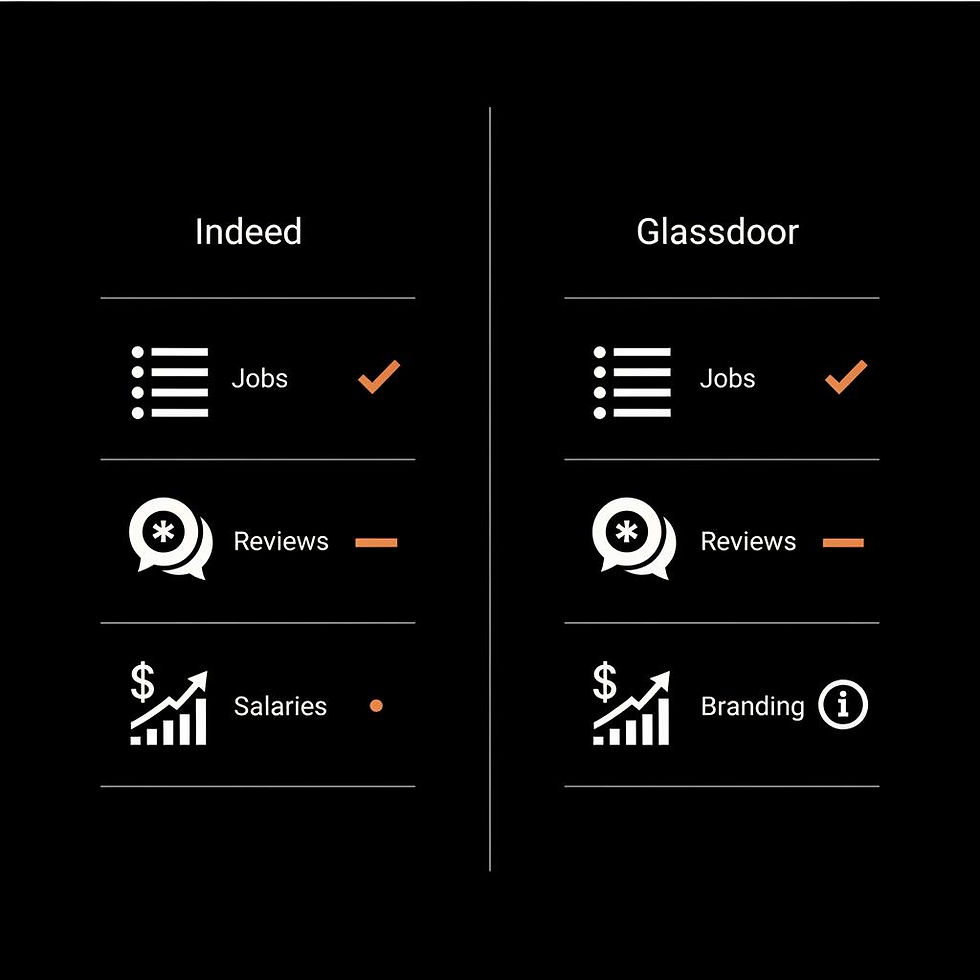
Think of Indeed as the online equivalent of a big, crowded job fair. Employers post broadly, sponsored posts and cost-per-click listings amplify reach, and active job seekers find volume fast. If you need applicants yesterday, Indeed is built to deliver numbers.
Glassdoor: the inside scoop
Glassdoor specializes in narrative: reviews, salary reports, and first-hand accounts of onboarding, leadership and benefits. For passive candidates or anyone checking a company’s credibility, Glassdoor delivers context that often decides whether someone applies. Recent research also links social marketing and happiness in employment to the kinds of advantages employees report in platform reviews ( study on social marketing and happiness).
How they differ: a practical checklist
glassdoor vs indeed breaks down into a few practical decision points:
Why both often work better together
Almost every smart hiring team today treats these platforms as complementary. Use Indeed to fill a funnel quickly; use Glassdoor to shape the story that keeps applicants in the process. A fast applicant flow without trust can mean high drop-out rates. In contrast, brand work on Glassdoor increases conversion quality and retention.
How to use them as a job seeker
If you are job hunting, this simple sequence helps: start broad on the platform that maximizes instant results, then verify on the platform that explains the company.
Step-by-step for active searchers
1) Search and set alerts on Indeed to catch new listings fast. 2) Screen postings for clear salary ranges and realistic requirements. 3) Cross-check target companies on Glassdoor for recent reviews and salary reports. 4) Ask targeted questions in the interview about onboarding and benefits if reviews raise flags.
Step-by-step for passive candidates
Passive candidates should invert the sequence: research first on Glassdoor, then quietly track roles on Indeed or set recruiter alerts. That way you know the culture before you engage.
Tip: If you find suspicious or harmful reviews while researching, consider professional reputation help; Social Success Hub offers a targeted review removal service that many employers and professionals use to clean misleading or fake content responsibly.
Salary data: treat it as directional
Salaries on both sites are valuable but imperfect. Glassdoor’s crowd-sourced reports carry human texture; Indeed’s estimates are practical ranges. Neither should be the only input. Always compare with government labor stats and industry surveys. When reading pay data, segment by location and experience - a junior role in a small city is not the same as a senior role in a tech hub.
Moderation and the problem of fake reviews
One recurring issue in the debate about glassdoor vs indeed is reliability. Both platforms publish moderation policies and fraud detection tools, but fake or manipulated reviews still appear. Candidates should read patterns, dates, and replies rather than isolating single comments. Employers caught gaming reviews risk regulatory trouble and long-term reputation damage. For details on platform moderation approaches, see Glassdoor's Review Integrity & Fraud Detection. Broader research on employee disclosures and safeguards is also available ( Yale SOM study).
Pricing models and employer ROI
Indeed’s pay-per-click approach makes sense for scale and quick adjustments. Glassdoor’s employer packages lean heavily toward brand and reputation management - a subscription model that pays off over time. Choose Indeed for short-term volume goals; choose Glassdoor for long-term employer branding. Many HR teams combine both to control immediate hiring while building a healthier candidate experience.
When to pick Indeed
When to pick Glassdoor
Case studies that clarify the choice
Two short examples show how the platforms produce different outcomes. A retail employer used Indeed’s CPC model to hire 200 seasonal workers in weeks - the strategy delivered speed and met operational goals. A tech startup invested in Glassdoor storytelling, detailed compensation pages, and proactive review responses; the hires took longer to secure but had higher retention and quicker cultural impact.
How to read reviews like a professional
Reviews are qualitative signals. Look for patterns, not single anecdotes. Ask: are complaints recent? Do they focus on a single manager or systemic issues? Does leadership respond? Are reviews from a mix of roles and locations? These cues reveal whether a problem is local or structural.
Red flags in reviews
Beware of extreme clustering of positive reviews in a short window (it can indicate manipulation), or anonymous posts that offer little context. Employers who engage calmly and transparently in responses often regain trust faster than those who ignore feedback.
Regulatory pressure and what it will change
Policy shifts in 2024-2025 are pushing platforms toward greater verification for pay and reviewer authenticity. Expect features like verified reviewer badges, mandatory salary ranges in some jurisdictions, and stricter penalties for fraudulent postings. These moves aim to reduce manipulation but may increase friction for genuine contributors.
Data integration under shared ownership
Because Recruit Holdings owns both platforms, employers get options to bundle reporting and products. That said, user experiences and moderation rules still differ. HR leaders should demand clear source-level metrics: which channel brought applicants? Which touchpoints converted them? Don’t rely on aggregated totals that hide the true conversion story.
Practical tips for employers
Practical tips for candidates
The limits of each platform
No platform is perfect. Indeed’s scale brings noisy signals; Glassdoor’s reviews bring sample bias. Both can be gamed. Smart users, whether employers or job seekers, triangulate: treat both platforms as two lenses on the same market.
How to measure success
For employers, volume is only one metric. Build dashboards that track time-to-fill, quality of hire, retention at three and six months, and source conversion. For job seekers, success is not just an offer but a good match: fewer shocks, clearer expectations, and longer satisfaction in the role.
Ethical considerations and reputation risk
Gaming reviews is unethical and risky. Employers tempted to manipulate should remember that short-term lifts disappear under scrutiny and regulatory pressure. A clean, honest employer brand - supported by fast responses and clear policies - is ultimately more defensible.
How Social Success Hub can help
When review integrity matters, professional help is an option. Social Success Hub focuses on reputation management - from removing harmful or fake content to rebuilding employer narratives. For teams that face repeated fake reviews or need assistance with digital reputation, a targeted strategy can reduce noise and help present an accurate employer profile to candidates. In the contest of glassdoor vs indeed, brand protection gives you control over the story candidates see.
Putting it all together: a practical workflow
Here’s a simple recruiting workflow that balances both platforms:
Questions employers should ask themselves
Are our hiring needs immediate or strategic? Do we have time to invest in employer brand? What roles cause the most churn? Honest answers to these questions align the choice between the volume of Indeed and the reputation focus of Glassdoor.
Common myths about glassdoor vs indeed
Myth: Glassdoor is only for complaints. Reality: Glassdoor contains many balanced reviews and often shows employers that have proactively improved. Myth: Indeed is just a dumpster of low-quality applicants. Reality: Indeed can produce great hires when job posts are realistic and targeted.
Where the data still falls short
Both sites have blind spots: small companies with few reviews, roles with rare skills, or cities with limited sample sizes. Here, direct networks, industry salary surveys, and government data are indispensable.
Future features to watch
Expect tighter verification on salaries and reviews, better integration for employer dashboards, and more bundled products for companies that want both reach and reputation. These changes will change how companies allocate recruiting budgets and where candidates look first.
Wrapping the decision into three simple questions
Ask yourself: Are you actively applying or passively browsing? Do you need speed or cultural fit? Are you benchmarking pay or crafting a reputation? Your answers point to the right tool or the smart combination of both.
Is it okay to trust company reviews when deciding whether to apply?
Is it okay to trust company reviews when deciding whether to apply?
Yes — but read reviews with context. Focus on patterns, recent posts, and employer responses. Use reviews as one signal among several, and verify pay claims with official labor statistics and industry surveys.
Yes - but cautiously. Trust patterns: look for repeated themes, recent posts, and employer responses. If reviews show consistent problems across roles and years, treat that as a red flag. If reviews are mixed and the employer responds thoughtfully, you can reasonably expect leadership to be engaged in improvement.
Final practical checklist
Three quick takeaways for busy readers
1. Use Indeed for reach and speed; Glassdoor for context and credibility. 2. Treat salary numbers as directional and triangulate with official data. 3. Manage reputation proactively - a clean employer profile on Glassdoor improves candidate flow from Indeed.
Resources and further reading
Government labor statistics, industry pay surveys, and trusted recruiting blogs are good continuations. Combine these with platform signals and you’ll make better decisions for hiring and applying.
Next steps
If your team struggles with fake reviews or a noisy employer profile, consider a tailored reputation approach to protect your brand and improve candidate conversions. Learn more about reputation cleanup services at Social Success Hub reputation cleanup.
Ready to get clearer candidate signal and protect your employer brand? Contact us for a tailored plan that combines reputation cleanup with sustained employer storytelling. Get in touch with Social Success Hub
Protect your employer brand and improve candidate quality
Ready to get clearer candidate signal and protect your employer brand? Contact us for a tailored plan that combines reputation cleanup with sustained employer storytelling. https://www.thesocialsuccesshub.com/contact-us
Which job site is best for passive candidates?
Glassdoor is typically better for passive candidates. Its review pages, salary reports, and company narratives help people who aren’t actively applying to assess culture and compensation quietly before engaging.
How reliable are salary estimates on Glassdoor and Indeed?
Salary estimates on both platforms are useful but directional. They rely on crowd‑sourced inputs and modeling; cross‑check with government labor statistics and industry surveys. Segment by location and experience level to get realistic benchmarks.
Can Social Success Hub help with fake or harmful reviews?
Yes. Social Success Hub offers reputation cleanup services, including targeted review removals and narrative rebuilding, to help employers and professionals correct misleading content and present a more accurate profile to candidates.
In short: use Indeed when speed and reach matter, use Glassdoor when context and culture decide the hire — and if your employer reputation needs fixing, get help quickly. Good luck out there; may your next hiring decision be smart, fair, and slightly less chaotic than a job fair on a rainy day!
References:


Comments