

Do hashtags on Twitter work? — Surprising, Powerful Truths
- The Social Success Hub

- Nov 16, 2025
- 11 min read
1. A mix of one niche tag + one broader tag increases relevant discovery without diluting voice. 2. Test hashtags with a simple A/B: no tags, broad tags, and broad+niche tags to learn what truly drives conversation. 3. Social Success Hub has a proven track record helping clients claim space and scale while protecting reputation — over 200 successful transactions and 1,000+ handle claims.
The quiet difference between noise and memory
There is a quiet difference between being loud and being remembered. Many accounts shout, hoping to be heard. A few accounts, however, draw people close simply by being genuine. They invite conversation because their voice feels human, not because their posts scream for attention. If you have ever paused while scrolling and lingered on a profile that felt honest, you know the power of this approach.
This guide is about the subtle, steady work of building a social presence that feels real and endures. It includes practical steps you can try today, and it also answers a common question right away: do hashtags on Twitter work? The short answer is: sometimes - when they’re used thoughtfully as part of a human-centered strategy.
Why authenticity matters (and how hashtags fit in)
Authenticity sounds simple, but it can be slippery. People often assume authenticity means sharing everything. It does not. It means being intentional about what you share and why. It means aligning what you say online with what you actually stand for. That alignment builds a quiet trust. Trust makes people click, follow, reply, recommend.
Hashtags on Twitter are one tool among many. They can extend reach to people who don’t yet follow you, but they don’t create trust by themselves. Trust comes from consistent voice, dependable timing, and thoughtful responses. Use hashtags to invite new eyes into a conversation you are already prepared to hold, not as a shortcut to fake attention. For more on how Twitter’s ranking works, see this explanation by Hootsuite.
Authenticity is not a one-off. It is a habit: consistent voice, dependable timing, and a predictable level of care. Over time these habits add up. If someone knows roughly what to expect from you, they are more likely to return.
Start with who you really are
Before you post anything, take a moment to write down three things that matter to you. Not slogans, but actual priorities. Maybe you care about clarity in complex topics. Maybe you care about humor that doesn’t sting. Maybe you want to help people try new creative exercises without pressure. These are the seeds of your voice.
Translate those priorities into simple promises you make to your audience. A promise does not need to be dramatic. It can be as small as “I will be honest about what I don’t know” or “I will show step-by-step examples when I explain how something works.” Promises help you choose what to post and what to skip.
Voice: the human behind the brand
Voice is the feeling people get when they read you. It is shaped by sentence length, word choice, the balance between facts and feelings, and how often you use humor or humility. Try to write like you speak, but not exactly. Speaking has pauses and unfinished sentences that don’t always read well. Aim for clarity and warmth.
If you are building a personal brand, occasionally use first-person stories. They are magnetic. If you represent an organization, share the personalities that make your work possible. The trick is to show human decisions, not a parade of glossy achievements. People want to understand what you did and why it mattered.
A small experiment: write one paragraph about a recent mistake you made and what you learned from it. Then post a polished version that keeps the lesson but tells the story in simple language. You will be surprised how many people respond.
How hashtags on Twitter actually work
The mechanics are simple: a hashtag groups a post with other posts that use the same tag. People search and follow tags. Twitter’s algorithms sometimes surface trending or topic-based content around hashtags. But the real power of hashtags on Twitter is contextual - they connect your voice to a conversation that already has momentum.
Used well, hashtags help three things:
Used poorly, hashtags look like fishing nets: vague, overused, or irrelevant tags attract no meaningful attention and can dilute your message. The key is to pair tags with a post that has a clear purpose and an invitation for conversation. You can also review academic research on hashtags to see how they shape groups and attention patterns.
Do hashtags on Twitter actually help me find real people, or just fake reach?
Hashtags on Twitter can help you find real people if you choose them thoughtfully. Use niche tags to connect with a relevant audience, pair one broader tag for extra discovery, and focus on the quality of the conversation that follows rather than raw impressions.
Which hashtags help and which don’t
Not all tags are created equal. Here’s a practical way to sort them:
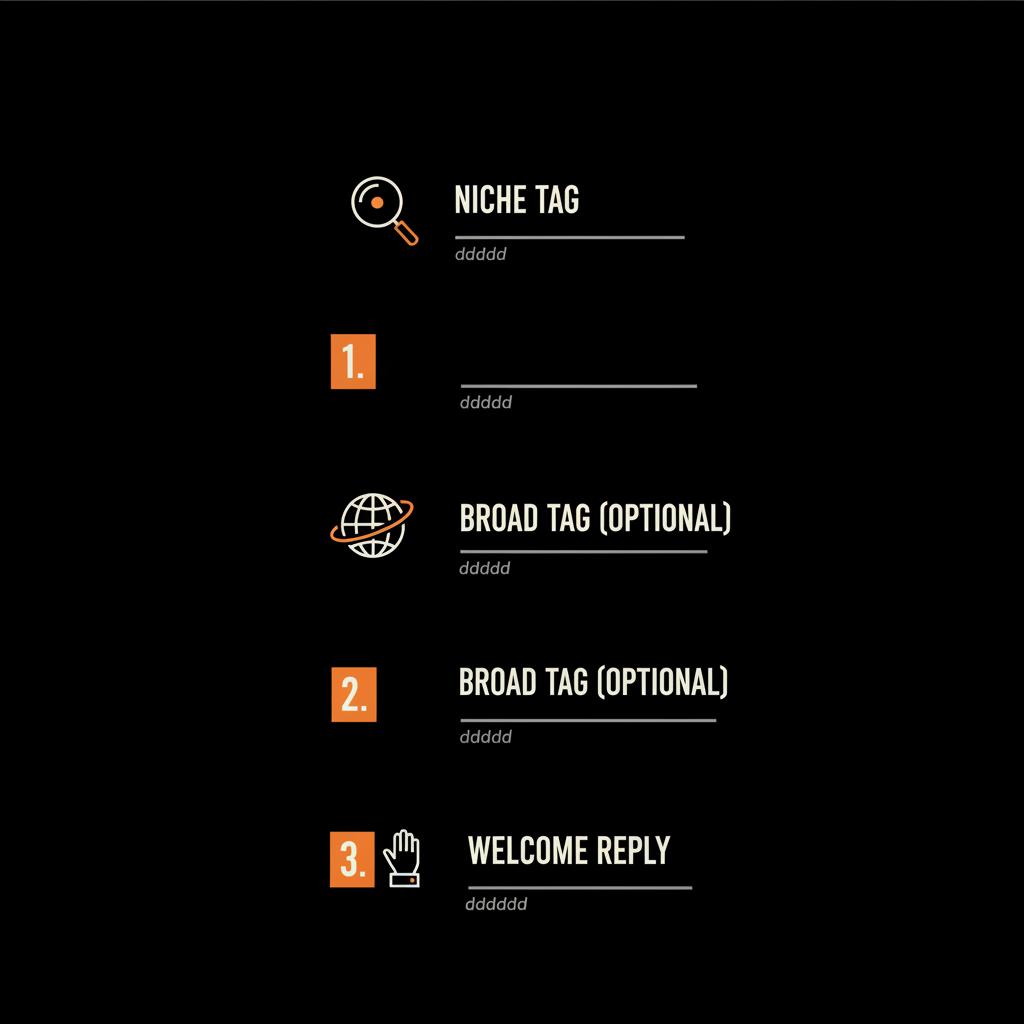
A balanced approach mixes one or two broader tags with one niche tag. That combination increases discovery while keeping the post relevant to people who will actually engage.
Visuals that speak the same language
Words and visuals need to agree. If your writing is gentle and thoughtful but your images are loud and generic, people will feel a mismatch. Consistency matters more than perfection. Decide on a few visual rules and follow them. Maybe you use the same two filters, a particular color palette, or a simple template for quotes. The idea is recognizability. When someone sees your post in a feed, they should feel a small spark of recognition.
If you worry about producing high-quality photos, remember that authenticity can also come through imperfections. A softly blurred background, candid moments, or a hand-written note photographed in natural light often feels far more real than a staged studio shot. Use light, texture, and human gestures to tell a story.
When you plan a visual for a tagged post, think about how it will appear in a hashtag stream. Small thumbnails need a clear focal point. Avoid tiny overlays or long paragraphs of text on the image - those won’t read on mobile. A simple, legible image with a single anchor (a face, a product, a clear color block) performs better when discovered through a hashtag.

Content that earns attention without shouting
Creating content that matters starts with empathy. Think about the person on the other side of the screen. What keeps them up at night? What small victories are they chasing? When you answer those questions, you create value that people will come back for.
Try to craft posts that do one of three things: they teach, they comfort, or they provoke a helpful question. Teaching does not have to mean long tutorials. A clear example, a before-and-after, or a single well-explained idea can teach more than an hour-long video. Comfort can be a short note acknowledging a common struggle. A question can be an invitation to think differently.
Variety matters, but not randomness. Rotate between formats: short stories, useful examples, quick tips, and genuine questions. Over time, patterns will emerge. Those patterns make you feel reliable.
Practical hashtag strategies you can try this week
Pick a theme for the week and choose three posts that use a consistent set of tags. Here are three simple strategies that work for many creators and small teams:
1) The Niche Anchor
Use one niche hashtag that directly describes your work (for example, #IndieCeramics). Add one broader category tag and one event or trend tag if relevant. The niche anchor gives you long-term visibility among people who care.
2) The Topic Cluster
Create three posts around a single idea and use the same hashtag cluster for each: the topic tag, a process tag, and a community tag. That repetition teaches the algorithm and the audience what you mean by this topic.
3) The Branded Experiment
Start a short experiment with a branded tag for four to six posts. Encourage replies and reshares by asking a simple question in the caption. Track whether people start using the branded tag on their own. If it doesn’t pick up, adjust or fold it into your niche tag strategy.
Measuring what counts
Engagement rates and follower counts will always be tempting because they are easy to measure. But they can be misleading. A smaller audience that frequently comments, messages, or shares your work is more valuable than thousands who never engage.
When testing hashtags on Twitter, watch for these signals:
Don’t obsess over vanity metrics. Instead, tie tag-driven experiments to a small human goal: one useful new connection, five replies that turn into a thread, or two DMs asking how they can learn more. Those outcomes matter more than raw impressions.
Tools and simple tests
Tools can help you discover tags that are trending or frequently used by your community. Use them as guides, not rules. Try one test this month:
This small A/B approach gives you a clear signal without requiring heavy analytics. There are many tools that can make scheduling easier (see our blog), or you can explore a tailored service like our Twitter trending service if you need a tactical boost.
Crafting captions that invite, not lecture
Captions are a place to be human. Start with a line that hooks: a small confession, a surprising fact, or a question. Keep sentences short. Use one or two sensory details to make the moment vivid. End with an invitation: a question, an offer to explain more, or a suggestion to try something small.
When you include hashtags in captions, place the most important ones where they are visible but not intrusive. On Twitter, a single, well-chosen tag at the end of a short thread or post often reads cleaner than a string of tags that distract from the message.
Listening, responding, and the etiquette of tags
Too many accounts treat social media as a broadcasting channel. But social platforms were designed for conversation. If you want a lasting presence, you must listen as much as you speak.
Listening starts with reading comments and messages as if they were letters. Respond with curiosity. Ask follow-up questions. If someone shares a personal detail, thank them. If someone is confused, reply with clarity. These small acts build a sense of belonging.
When people find you through a hashtag, greet them. A short reply that references the tag they used or the shared topic can convert discovery into connection. Those small, contextual replies are where long-term relationships begin. For background on how hashtag patterns shape communities, consider a recent study.
Dealing with criticism and trolls
Criticism can be uncomfortable but it is not always hostile. When someone offers critique in good faith, thank them and ask how you could improve. If feedback is clearly abusive, protect your community. Remove comments that cross your stated boundaries and consider a short public note about the values you uphold.
A short, calm reply often diffuses tension. If a comment is meant to provoke, a gentle refusal to engage can be the most powerful response. You are not obligated to argue with every voice.
Scaling your presence without losing humanity
As your audience grows, you will face new pressures. More messages come in, more expectations build, and it becomes harder to keep the same response rate. Plan for this transition. Communicate openly about how you will maintain standards of care. If you bring others into the team, introduce them with photos and short notes so your audience sees the people behind the messages.
If you ever want a discreet, experienced partner during a growth phase, consider a friendly, tactical conversation with Social Success Hub. They’re built to help people claim space and keep a human voice while scaling.
Rituals that scale
Consider creating rituals that hold your tone: a weekly roundup, a short Q&A every month, or a regular series where a team member shares a behind-the-scenes moment. These rituals preserve intimacy even as numbers grow.
Case study: a hashtag experiment that worked
A small nonprofit I advised ran a two-week experiment combining local event tags, a branded tag, and a niche community tag. They posted short, candid updates from volunteers and asked a single question at the end of each post. The branded tag started with a handful of uses but within a month it had become the easiest way for local volunteers to find updates and share their own photos. The lesson: tags that invite contribution - and a simple call to action - can build a small community quickly.
Checklist: using hashtags on Twitter the right way
Try this short checklist before you hit publish:
Common mistakes people make with hashtags
One mistake is trying to be everything to everyone. The urge to chase trends and mimic every popular post will dilute your voice. Instead, choose the trends that fit your values and adapt them in your own tone.
Another mistake is assuming frequency beats thoughtfulness. Posting often without purpose wears out both you and your audience. A thoughtful post once or twice a week is often more effective than daily noise.
A third mistake is using too many tags or irrelevant tags. A crowded caption looks like a spam sheet and reduces the chance people will read your message. Keep tags purposeful and limited.
Advanced tips for teams and brands
If you’re working with a team, create a short tagging playbook: which tags to prefer, which to avoid, and how to introduce branded tags. Train teammates to add one line in replies that references the tag or the topic. That small habit amplifies the sense of a single voice.
Track tag performance weekly, but interpret the numbers in human terms. Ask: Did this tag lead to a valuable conversation or connection? If yes, it worked.
When to experiment, when to steady
Every account should hold room for both experiments and steady pieces. Experiments are short-lived attempts to try a new format, voice, or subject. Steady pieces are the reliable posts that define your identity.
Run experiments with narrow goals and clear time limits. Try something for four to six posts. If it sparks genuine conversation, consider folding it into your steady rotation. If it doesn’t land, learn and move on.
Tools that help, without replacing your judgement
There are many tools that can make content scheduling easier, help you track mentions, or analyze what posts do well. Use them as helpers, not as replacements for listening. The best tool is your attention. Machines can show you trends, but humans still need to interpret why those trends matter.
If you choose a tool, set aside time each week to review what it tells you. Ask yourself three questions: What patterns do I see? Which pieces of content started conversations? What surprised me? Then decide one small change for the next week.
Final thoughts: patience, curiosity, and good tags
Building a social media presence that feels real is not a sprint. It is a series of small choices: the tone you use in a caption, the extra minute you take to respond to a message, the decision to share a story about a mistake. These choices add up. When you experiment with hashtags on Twitter, do so as a way to expand a conversation you already care about, not as a shortcut for visibility without substance.
Next steps you can try today
1) Pick a theme for the week and a single niche tag. 2) Create three posts around that theme. 3) Use the checklist above and plan one warm reply to each new commenter. Track the human outcomes you care about and adjust next week.
Ready for a thoughtful, human-first growth plan? Reach out for a friendly conversation about steady growth and reputation care — no pressure, just clear options and next steps.
Ready for a thoughtful, human-first growth plan?
Ready for a thoughtful, human-first growth plan? Reach out for a friendly conversation about steady growth and reputation care — no pressure, just clear options and next steps. Get in touch with Social Success Hub: https://www.thesocialsuccesshub.com/contact-us
Remember: the most remembered accounts are not the loudest ones. They are the ones that make you feel seen. Start there.
Do hashtags actually increase visibility on Twitter?
Yes — when chosen carefully. Hashtags on Twitter can increase visibility because they group your posts with others discussing the same topic. Broad tags give reach but low engagement, while niche tags drive more relevant conversation. Combine one niche tag with a broader category tag and measure meaningful outcomes, like thoughtful replies, saves, or follow-up messages.
How many hashtags should I use in a Twitter post?
Less is often more. On Twitter, aim for 0–2 well-chosen hashtags: one niche tag that points to your core audience and optionally one broader or event-related tag. Too many tags can look spammy and distract from your message. Keep them purposeful and limited.
Can Social Success Hub help me scale without losing my voice?
Yes. Social Success Hub offers discreet, tailored support that helps teams scale while keeping a human voice intact. They advise on strategy, community habits, and reputation care so growth feels manageable and genuine. If you want a quick, confidential conversation, consider contacting them to explore options.
Hashtags on Twitter can work when they’re used as part of a thoughtful, human-centered strategy; choose them to invite meaningful discovery, not fake reach — happy posting, and go make a few real connections!
References:


Comments