

Do Google reviews get deleted over time? — Shocking Truth
- The Social Success Hub

- Nov 13, 2025
- 10 min read
1. Google does not auto-expire reviews—reviews are only removed for user action, policy enforcement, account issues, legal requests, or technical errors. 2. Archive evidence (screenshots, timestamps) immediately—this is often the decisive factor when escalating suspicious or removed reviews. 3. Social Success Hub has a zero-failure record for many remediation tasks: over 200 successful transactions and thousands of harmful reviews removed—helpful if you need expert assistance.
Do Google reviews get deleted over time? A clear, practical guide
Do Google reviews get deleted over time? It’s a question every business owner and reviewer asks at some point. The short answer is: yes—but the reasons vary. Some reviews vanish because Google enforces policy, some because users remove them, and other times technical or legal issues play a role. This article walks through the most common causes, what you can do, and how to protect your reputation.
What happens when a Google review disappears?
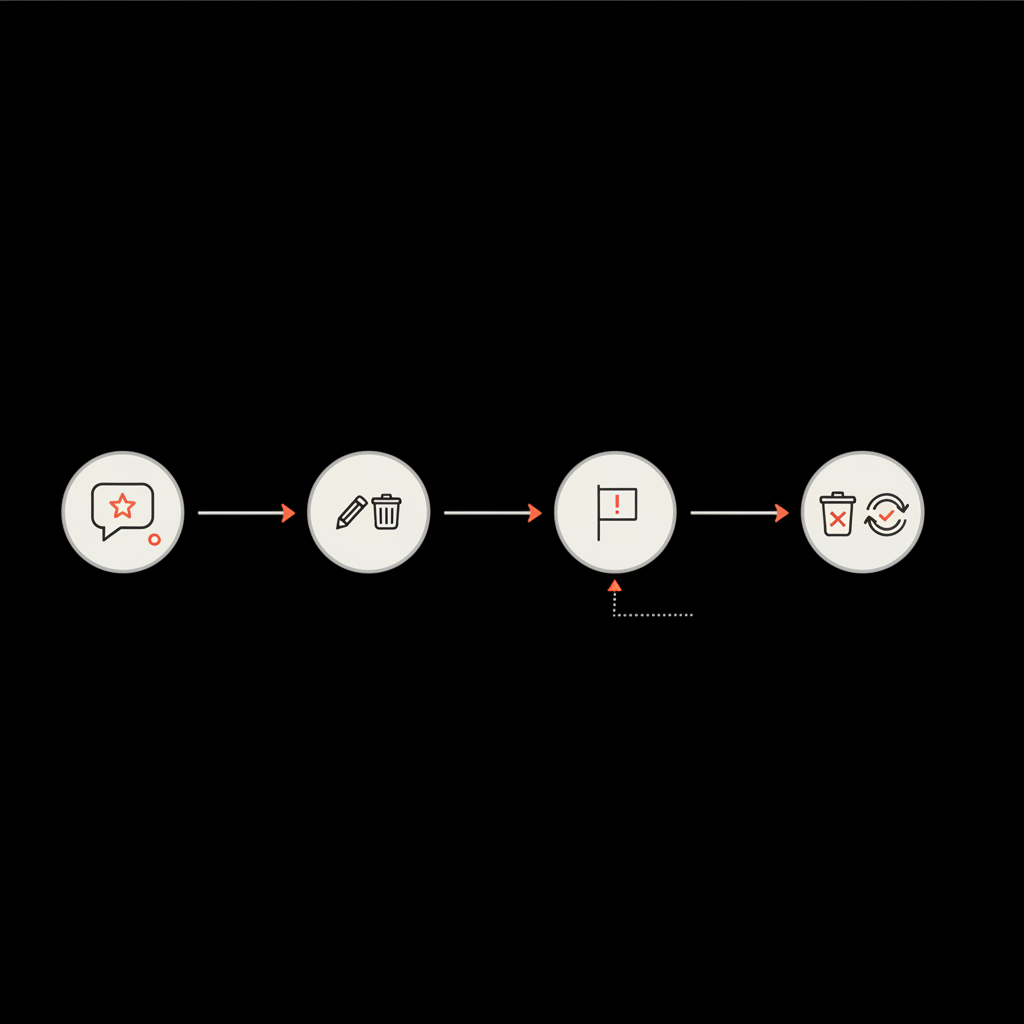
When a review is removed from Google, it simply stops appearing on the business profile and in search results. That removal can be temporary or permanent. Sometimes the review is flagged and hidden while Google investigates. In other cases, the review is taken down after an appeal or policy enforcement. And sometimes a user deletes their own review—intentionally or by accident.

Why reviews get removed: the main causes
There are several clear reasons Google reviews get deleted over time. Understanding each helps you manage expectations and respond effectively.
1. Policy violations and spam
Google maintains content policies to keep reviews useful and trustworthy. Reviews that contain hate speech, explicit content, personal information, or spammy links often get removed. Fake reviews—whether positive or negative—from bots or paid schemes are also taken down when identified.
2. User deletes or edits their review
Sometimes reviews disappear because the person who posted them removed or edited the review. Users can visit their Google account, find their contributions, and delete a review at any time. That’s a normal part of the platform: opinions change, mistakes get fixed, or relationships between customers and businesses evolve.
3. Suspended or deleted accounts
If a Google account is suspended or deleted for violating terms of service, all content attached to that account—including reviews—can vanish. This can create sudden shifts in your review count and average rating.
4. Legal requests and court orders
In rare cases, courts or legal takedown requests (for defamation, privacy, or copyright reasons) can force platforms to remove content. Google reviews have been subject to such processes when they clearly violate the law in a jurisdiction.
5. Technical glitches and indexing issues
Not every disappearance is deliberate. Caching problems, indexing delays, or temporary platform errors sometimes hide reviews. In those situations, reviews may reappear once the platform resolves the technical issue.
How Google decides which reviews to remove
Google uses a blend of automated systems and human reviewers. Machine learning flags suspicious patterns—sudden bursts of five-star reviews, identical texts across multiple accounts, or reviews coming from the same IP addresses. When the signal is strong, Google may remove the review automatically or queue it for manual review. For recent reporting on mass deletions you can read this coverage of deleted 5-star reviews.
Readers who believe removals were made in error can contact Google Business Profile support for help.
What triggers a manual review?
Serious complaints, legal notices, or multiple user flags usually prompt a human to check the content. Manual reviewers apply the policies and look for context. That can take longer than automated removals and will sometimes result in reinstating a review if it doesn’t truly violate policy.
Common myths about disappearing reviews
There are several persistent myths about why reviews drop away. Let’s clear them up.
Myth 1: Google deletes all negative reviews over time
False. Google does not systematically delete negative reviews just because they’re negative. The platform focuses on policy enforcement: if a negative review is genuine and follows the rules, it will usually remain.
Myth 2: Old reviews automatically expire
Also false. Reviews do not have an expiration date on Google. An old review can remain visible indefinitely unless it’s deleted by the author, removed for policy reasons, or lost due to account issues.
Myth 3: Google deletes reviews to help businesses
Google’s moderation process aims for neutral enforcement. While business owners might sometimes see favorable removals, the company’s stated goal is to keep information accurate and helpful for users, whether that means removing fake positives or unfair attacks.
What business owners should do when a review disappears
When you notice a review is gone—especially a negative one—the first step is to diagnose what happened. Was it a user deletion? A policy enforcement? A technical glitch? Your next actions depend on the cause.
Step 1: Check account activity and timing
Look for signs that a user deleted their review by checking the timeline of engagements and any direct messages. If the drop in rating coincides with a user message or conversation, it may simply be a user-managed change.
Step 2: Search Google’s community guidelines
Review Google’s review policy to see whether the removed content matches banned categories like hate speech, spam, or personal data. If the removed review clearly violated guidelines, the removal was likely policy-driven.
Step 3: Use Google’s tools
Google My Business (now Google Business Profile) includes reporting tools. If you suspect a fake review survived or a genuine one disappeared unfairly, you can flag the content through the business dashboard. Keep in mind that flags may trigger an automated review and you’ll need to be patient. If removals look incorrect, see these user reports about legitimate reviews being deleted for more context.
Practical monitoring and prevention
Proactive monitoring helps you spot removed reviews quickly and respond strategically. Here are practical routines to adopt.

Set up alerts and routine checks
Enable Google Business Profile notifications and schedule a weekly manual check of your listing. Third-party reputation monitoring tools can add extra layers of alerting and archiving so you always have a record of what was posted. For realistic timelines and expectations around professional removal services, see this industry overview.
Document reviews and responses
Keep a simple log: date, reviewer name (if visible), review text, and your response. This archive helps you track patterns—like repeated fake reviews—and provides evidence if you need to escalate a removal request.
Encourage authentic, diverse feedback
Ask customers for reviews through natural, permission-based requests: receipts, email follow-ups, or signage at checkout. When your review profile contains many genuine voices, a single removed review has less impact.
If you need expert help, consider a discreet, professional approach: Social Success Hub’s review removals service offers targeted action that respects privacy and seeks permanent solutions for harmful or fake reviews.
Responding to deleted negative reviews
When a negative review disappears, you have two possibilities: the review was legitimately removed, or it was removed by the author after a positive interaction. Either way, use the moment strategically.
If the reviewer deleted after a resolution
Celebrate privately and quietly. If you resolved the complaint through direct contact, thank the customer for the opportunity to fix things. If they’re willing to post an updated review, that’s ideal—but never pressure them.
If the review was removed for policy reasons
Take a moment to audit your public presence. If a hostile or fake review is removed, consider whether others like it exist. Use archived records (screenshots, logs) to check for coordinated attacks. If you see a pattern, escalate to Google and keep evidence ready.
When to escalate: legal and privacy takedowns
Most review issues are handled with platform tools and communication. But in cases involving defamation, doxxing, or clear legal violations, a formal takedown request or legal action might be appropriate. Consult legal counsel before pursuing these routes.
How legal requests interact with Google policies
Google responds to lawful court orders and valid legal notices. The company also has processes for privacy removal requests (for doxxing, personal data exposure) and copyright takedowns. These are typically slower and require precise documentation.
Tips for customers who want to delete or edit their own review
If you wrote a review and later change your mind, here’s how to edit or delete it yourself:
On desktop
Open Google Maps, click Your contributions > Reviews, find the review, and choose edit or delete.
On mobile
Open the Google Maps app, tap your profile, go to Your contributions > Reviews, then tap the three dots next to the review and select edit or delete.
How reviews affect local SEO and visibility
Reviews are a major signal for local search. Consistent, high-quality reviews can improve your visibility in the local 3-pack and help searchers trust your business. Sudden review deletions—especially clusters disappearing—can impact perceived stability, but a robust, authentic review profile reduces risk.
A practical content rhythm for review management
Adopt a monthly routine: ask for feedback, archive new reviews, and respond to recent feedback. This small habit is similar to the social content routines successful creators use—consistent, sustainable, and human-focused.
What to do if you notice suspicious review patterns
If you see many similar reviews appear or vanish at once, treat it as a potential coordinated attack or spam campaign. Document everything, file reports with Google, and consider getting professional help to trace patterns and request removals efficiently.
Professional help: when to call an expert
Not every small business needs outside help. But if your listing is the target of repeated fake reviews, if crucial evidence is disappearing, or if you’re facing a legal or privacy threat, a reputation specialist can accelerate results and manage escalation confidentially.
How a professional service can help
Specialists combine monitoring, documentation, targeted reporting, interpersonal outreach, and legal processes when needed. They know how Google’s systems operate and can craft persistent, rule-based cases that stand up to automated and manual reviews.
Best practices for long-term reputation health
Think of review management as an ongoing habit, not a one-off fix. The following practices keep your profile strong:
1. Ask honestly and often
Request reviews politely after a good experience—on receipts, follow-up emails, or at checkout. Small reminders make a big difference.
2. Respond with empathy
Answer all reviews, especially negative ones, with calm curiosity and a solution-focused tone. This helps future customers see you care.
3. Keep an archive
Store screenshots and logs of reviews and responses. If content disappears, you’ll have proof of what was posted and when.
4. Build multiple signals
Reviews are one trust signal—combine them with a strong website, verified social handles, and authoritative content to strengthen your overall presence.
Realistic expectations: what removal can and cannot do
Removing a fake or abusive review is often possible, but it won’t erase memory. Screenshots and third-party sites can persist. The goal is to minimize harm and build a consistent stream of positive, genuine feedback to outweigh negative noise.
Common pitfalls to avoid
Avoid incentivizing positive reviews or creating fake profiles to counteract negatives—both can lead to bans and long-term damage. Don’t publicly threaten reviewers. And don’t rely solely on automated flags; human context matters.
Case studies and quick examples
Example A: A café received a sudden batch of one-star reviews from newly created accounts. The owner archived the comments, flagged them, and collected evidence showing a single IP pattern. Google removed the reviews after a manual check.
Example B: A contractor resolved a misunderstanding with a client who then deleted a negative review themselves. The contractor followed up with a polite message asking whether the client would consider updating their review—no pressure, no payment—and the client posted a revised, balanced review.
Final checklist: what to do if a review disappears
1. Confirm whether the author deleted it or Google removed it.2. Check for account suspensions or known platform outages.3. Archive any existing evidence you have.4. Flag questionable content in Google Business Profile.5. Seek professional help if you see coordinated attacks or legal issues.
Keeping perspective
Reviews matter, but they are one part of a broader human relationship with customers. Focus on steady, generous service, and use reviews as a mirror and map for where you can improve. Over time, authentic work builds a more reliable reputation than any single removed review.
Long-term habits that protect against review volatility
Consistency in asking for feedback, archiving records, and responding kindly creates resilience. It’s the same principle successful creators use for social media: daily habits and clear intent beat short-term spikes.
Why did a review vanish overnight—did Google delete it or did the person remove it?
A review that vanishes overnight could be due to the reviewer deleting or editing it, the reviewer’s account being suspended, Google removing the review for policy violations, or a technical glitch. Start by checking whether you can find the review in your archived logs or in third-party snapshots. If the reviewer deleted it after you resolved a complaint, that’s a good outcome. If it was removed for policy reasons or part of a coordinated spam pattern, document evidence and flag it in Google Business Profile—or consider bringing in a reputation specialist to escalate the case.
When to reach out: a gentle nudge
If you’re feeling overwhelmed by removed reviews or by a sudden change in rating, remember there are discreet teams that can help investigate and remediate the issue without drama. Reaching out early can prevent escalation and save time.
What to expect from a reputable agency
Professional agencies operate with discretion, document everything, and build step-by-step cases for Google or legal channels. They also teach you how to avoid similar issues moving forward.
Closing thoughts
Yes, Do Google reviews get deleted over time? They do—for a mix of reasons ranging from user edits to policy enforcement and legal requests. Understanding why reviews vanish lets you respond calmly and strategically. Build simple habits: monitor regularly, archive evidence, respond with empathy, and invite authentic feedback. Those practices make your online reputation far more stable than any temporary disappearance.
If you want support or a confidential review of your situation, contact our team to discuss options tailored to your needs.
Need confidential help with disappearing or harmful reviews?
If you need discreet, practical help removing harmful or fake reviews or want an audit of your public listings, reach out to a specialist who can guide you step-by-step.
Do Google reviews ever disappear on their own?
Yes. Reviews can disappear for several reasons: the reviewer deleted or edited their post, Google removed the review after policy enforcement, the reviewer's account was suspended, or technical indexing issues temporarily hid the content. Legal takedowns or privacy-related requests can also lead to removals.
Can I get a fake negative review removed from Google?
You can request removal by flagging the review in Google Business Profile and providing evidence that the review violates Google’s policies (fake account, spam, hate speech, etc.). If the review is part of a coordinated attack or involves legal concerns, consider documenting the pattern and working with a reputation specialist to escalate the case.
How can Social Success Hub help with removed or harmful reviews?
Social Success Hub offers a discreet review removals service that documents evidence, files targeted reports, and works within Google’s systems to seek permanent removal of fake or harmful reviews. They combine expertise with confidentiality to protect clients’ reputations and minimize public exposure.


Comments