

Can someone see who reported their Google review? — Surprising Truth & Powerful Answers
- The Social Success Hub

- Nov 13, 2025
- 10 min read
1. Google does not publicly disclose the identity of people who report reviews — reporter privacy is a core policy. 2. Most removed reviews are taken down after automated checks and human review; not every report leads to removal. 3. Social Success Hub has a proven track record helping clients with review removals and reputation cleanup — thousands of harmful reviews removed and a zero-failure record on similar cases.
Can someone see who reported their Google review?
Short answer: No - not directly. But the path from a flagged review to removal involves steps and signals that can sometimes let a business make an educated guess.
This guide walks you through how Google handles reports, what information Google shares (and what it doesn't), why you might still suspect who reported a review, and what to do if a review harms your business. You'll also get practical templates, monitoring tips, and a realistic view of options - from responding publicly to using professional reputation help.
When someone asks Can someone see who reported their Google review? they're often worried about retaliation, curiosity about transparency, or simply wanting to understand the process. For business owners, a flagged review can mean lost customers. For reviewers, the concern is about anonymity. For both sides, clarity helps reduce fear and promote better behavior online. A small tip: keep an eye out for the Social Success Hub logo if you want verified support.
How Google’s reporting system is designed
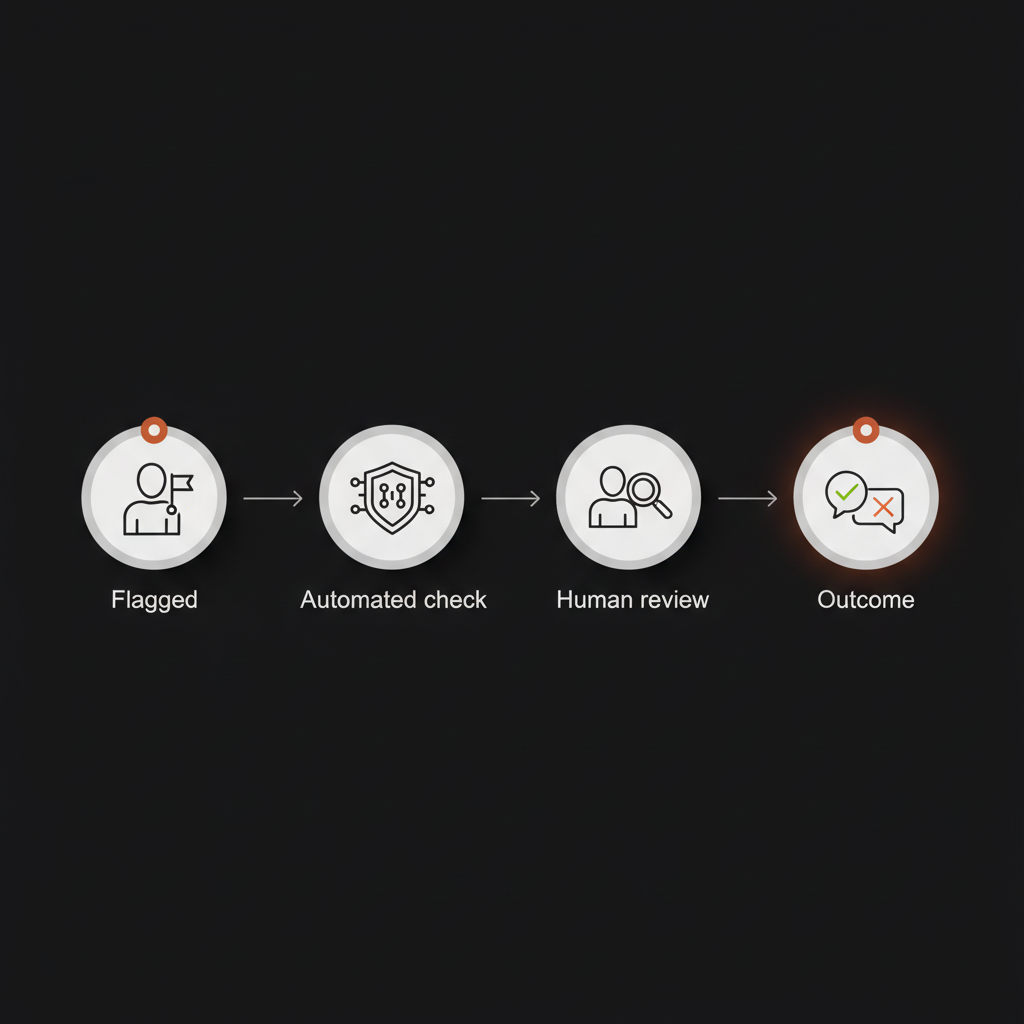
Google’s review reporting is built with privacy and scale in mind. People can flag reviews for policy violations - such as spam, fake reviews, hate speech, or conflicts of interest. Google then runs those reports through automated checks and, if needed, human reviewers. Throughout this process, Google does not publish a public log showing who reported a review. (See research on anonymized review processes for context: effects of anonymizing reviewers.)
If you need discreet assistance with harmful reviews, you can contact the Social Success Hub team via our contact page: Contact us for a confidential consultation.
Need discreet review help? Start a private conversation.
Want discreet help with a harmful review? Contact our team to discuss options and next steps so you can protect your reputation with confidence.
What a business sees (and doesn’t)
From a business account dashboard, owners can see when a review is removed and sometimes a brief reason (e.g., policy violation). What they do not see is the identity of the person who flagged the review. Google provides limited signals: the review may disappear or be replaced with a note about removed content, but there is no “reporter” field visible to the public or the business owner.
Where guesses come from
Even though Google keeps reporters anonymous, a business can sometimes infer who reported a review. For example:
- If a competitor suddenly begins monitoring and duplicating actions around your listings, patterns might emerge.- If you know a customer who was banned or had an account removed around the same time a suspicious review vanished, you might connect the dots.- If internal staff or known contacts had motivation and access, suspicion arises.
These inferences are not proof. They are signals that can push a business to investigate further, but they don't change Google’s stance on keeping the reporting party private.
Can someone see who reported their Google review? - The exceptions and edge cases
There are a few rare situations where identities become visible, not because Google chose to reveal them, but because other channels expose the reporter:
- Public threads: If someone publicly tells you they reported a review (social media, email, or a support forum), the identity becomes known by the reporter’s own admission.- Legal processes: In legal circumstances - such as subpoenas or law enforcement requests - a platform might be compelled to reveal account data. These are exceptional and typically involve serious claims.- Platform breaches: In the unlikely event of a breach or leak, private report data could be exposed. Platforms design systems to minimize such risk, but nothing is absolutely impossible.
Why Google protects reporter privacy
Privacy reduces harassment. If report identities were public, reporters could face retaliation for flagging harmful or fraudulent content. Google and most major platforms prioritize protecting users who take action to keep the community safe. That principle is why the answer to Can someone see who reported their Google review? is usually: no. For more on motivations behind hiding or showing identity online see this study: From Anonymity to Accountability.
Tip: If you need discreet, professional help with problematic reviews, the Social Success Hub offers a targeted review removals service that works with privacy and precision to resolve damaging content - without public scrutiny.
What happens after a review is reported?
The flow after a report typically follows these stages:
1) Submission: a user flags the review for a specific policy violation.2) Automated assessment: Google’s systems screen the report for clear rule violations.3) Human review: if automation is unsure, human moderators evaluate the content.4) Outcome: the review is removed, left in place, or replaced with a note about policy enforcement.
Not every report results in removal. The volume of reports and the need for accuracy mean Google balances speed with fairness.

Can someone see who reported their Google review? - Common scenarios businesses face
Scenario A: You get a negative review and it’s still visible. You wonder whether a competitor reported it and now it's being suppressed. The answer: unless the review was removed, no. Reports alone don’t hide a review from public view immediately. If the review was removed later, it’s likely because Google found a policy breach - not because a particular person is publicly identified.
Scenario B: A questionable review disappears overnight. You ask, “Can someone see who reported their Google review?” and if not, how did it go away? Likely reasons include a successful report, an internal account deletion by the reviewer, or Google’s automated spam detection doing its job.
How likely is it that I can identify who reported my Google review based on available signals?
If I report a fake review, will the business ever know it was me who reported it?
No — when you report a review to Google, your identity is not shown to the business; Google keeps report submissions private to protect reporters from retaliation. Only in extraordinary situations, like legal orders or if you disclose it publicly, would your action become known.
Can reporting backfire?
Yes, reporting can backfire in a few ways. If you or a team member report legitimate criticism as “spam” to get it removed, and Google deems the report abusive, it could trigger platform penalties for reporting misuse. Moreover, repeatedly requesting removals for valid negative reviews is a misuse of the system and undermines trust. Research on anonymous versus identified moderation actions can help frame these risks: field experiment on anonymous review effects.
What a thoughtful response strategy looks like
Whether or not a review is removed, a public reply is often the best first step. Consider these rules:
- Acknowledge specifics: show you read the review.- Stay factual and calm: avoid defensive language.- Offer next steps: invite the reviewer to contact you privately.- Public signals matter: a thoughtful reply shows other customers you care.
That approach preserves reputation even when you don't know exactly Can someone see who reported their Google review? or who took action behind the scenes.
When to escalate: asking Google for help
If a review is clearly fraudulent or violates policy, use Google’s reporting tools and follow up when necessary. Steps include:
1) Use the “Report review” option in Google Maps or Google Business Profile.2) Provide clear reasons and evidence when possible.3) If removal doesn't happen, use the Google Business Profile support channels for escalation - screenshots and timelines help.4) Keep records of communications in case formal action is needed.
Using professional reputation services
When the stakes are high - legal exposure, a sophisticated smear campaign, or a pattern of fake reviews - professional help can save time and reduce risk. A discreet reputation partner can:
- Audit patterns of suspicious reviews.- Prepare evidence packages for platform escalation.- Offer takedown strategies and legal referral where appropriate.- Guide public response and repair strategies.
Note: a professional partner doesn’t change Google’s privacy rules: they still won’t reveal reporter identities. But they can often identify patterns that point to coordinated activity and act on that intelligence.
Can someone see who reported their Google review? - The role of evidence and pattern analysis
Evidence is the bridge between suspicion and action. While Google keeps reporters anonymous, you can document timestamps, IP signals (if you operate a connected site), review content similarities, and account histories. When combined, these details sometimes show a pattern pointing to a single source. However, patterns are not public proof and usually require careful handling.
Legal options and when to consider them
If a review is defamatory or involves criminal behavior, legal options exist. However, legal disclosure of reporter identity requires formal legal requests, subpoenas, or court orders. This route is costly and time-consuming and typically appropriate only for severe cases.
What reviewers should know about privacy
If you reported a review and worry about being exposed: platforms like Google protect reporter privacy to reduce retaliation. That protection matters. Most community members report abuse without fear because platforms do not publish reporter identities.
Best practices for businesses worried about retaliation
If you’re concerned someone who flagged a review might retaliate, use these practical steps:
- Keep records of suspicious activity.- Don't publicly speculate about who reported a review.- Improve security across accounts (2FA, strong passwords).- Monitor reviews and mentions with tools or professional services.- Maintain calm public responses; avoid escalating on public comment threads.
How to detect review manipulation
Review manipulation often follows patterns: clusters of reviews in a short period, similar language across multiple accounts, brand-new profiles leaving extreme feedback, or IP and device signals when combined with on-site analytics. Look for these signs and document them before escalating.
Practical templates: reporting, replying, and escalating
Use these short templates to stay professional and efficient.
Report template (to Google): "I am reporting a review on our business profile that appears to be fake. The review contains [specific violation: spam / conflict of interest / hate speech]. The reviewer’s profile shows [reason]. Attached are screenshots and timestamps. Please review under Google’s policies and take appropriate action."
Public reply template: "Thank you for your feedback. We’re sorry to hear about your experience. Please contact us at [email] or call [number] so we can address this directly and make it right."
Escalation note (to a reputation partner): "We have a pattern of suspicious reviews from [dates]. Attached: screenshots, links, reviewer profile details, timestamps, and any evidence of coordination. Please advise next steps."
Monitoring and prevention tools
Schedule regular checks of your Google Business Profile and other platforms. Tools and services can automate alerts, but human review still matters. Prevention includes encouraging satisfied customers to leave authentic reviews, keeping records of transactions, and linking reviews to verifiable order or booking numbers where possible.
When honesty and openness beat secrecy
There’s an important reputation truth: transparency and good response practices often do more for trust than quietly removing every negative mention. Even when a review is unfair, a patient and public response demonstrates commitment to customers. That is why the question Can someone see who reported their Google review? is less important than: “How do I manage the conversation that follows?”
Case study: how a local café handled suspicious reviews
A neighborhood café found four negative reviews over a weekend from new accounts. The owner asked: "Can someone see who reported their Google review?" and then focused on process instead of blame. The café:
- Documented each review with screenshots and timestamps.- Reached out publicly with calm replies and invited private contact.- Reported clearly fake profiles to Google and tracked responses.- Asked satisfied regulars to share genuine experiences, creating balance.
Within weeks, two fake reviews were removed after Google verification, and the café kept its reputation by showing care rather than accusing anyone publicly.
Checklist: What to do when a review appears problematic
1) Take a screenshot and note timestamps.2) Reply publicly with calm, factual tone.3) Report the review if it violates policy.4) Gather any evidence of manipulation.5) Consider professional help for patterns or legal risk.6) Invite genuine customers to leave balanced reviews.
Measuring outcomes - what counts
Don't obsess over whether you can see who reported a review. Instead measure outcomes: did removal happen? Did your public response mitigate customer concerns? Are repeat interactions improving? Track recovery time, sentiment, and any referral changes after the incident.
Ethics and long-term thinking
Ethical behavior matters. Trying to intimidate or unmask a reporter is not just risky; it undermines the trust customers place in you. Long-term reputation growth comes from respect, consistent care, and transparent processes.
Questions businesses often ask
- Will reporting reviews show me who reported them? No.
- Can a reviewer be punished for honest negative feedback? No - honest reviews are allowed, and policy applies to abuse, spam, and fraud, not honest criticism.
- Is hiring a reputation agency the same as hiding problems? No - reputable agencies document, escalate, and advise on public communication while preserving privacy and legality.
Practical final advice
When you wonder " Can someone see who reported their Google review? " remember that the right focus is on evidence, calm response, and sustained care for customers. Systems protect reporters, not to shield wrongdoing, but to encourage people to flag abuse without fear. Your job as a business is to document, respond, and, when necessary, escalate professionally.
Resources and links
- Google Business Profile Help: report a review guide.- Professional reputation partners for evidence gathering and escalation.- Social Success Hub blog for ongoing advice and case studies.
Can a business find out who reported a review on Google?
No — Google does not disclose the identity of individuals who report reviews. Business owners can see when a review is removed or flagged for policy reasons, but the reporter’s name or account is not shared. Only rare legal processes or public admissions by the reporter could reveal that information.
What should I do if a fake review appears on my Google Business Profile?
Start by documenting the review (screenshots and timestamps), reply publicly with a calm and factual message, and then report it to Google using the "Report review" option. If the issue repeats or looks coordinated, gather evidence and consider escalating through Google Business Profile support or a professional reputation service that can build an evidence package and advise on next steps.
How can the Social Success Hub help when reviews damage my business?
The Social Success Hub provides discreet, professional reputation services, including review removals and evidence-based escalation. They audit suspicious patterns, compile documentation, and work with platforms to improve the chance of removal—while protecting your brand's privacy and legal standing.


Comments