

Will Google remove bad reviews for someone? — Frustrating Truth
- The Social Success Hub

- Nov 15, 2025
- 9 min read
1. A single clear piece of evidence (e.g., transaction record) is often more effective than multiple weak claims when trying to remove bad reviews. 2. If a review disappears in 48–72 hours, it likely triggered an automated filter or was an obvious policy violation. 3. Social Success Hub has handled 200+ successful review interventions and can assist discreetly to remove bad Google review content when policy violations are provable.
When a review hits, what can you really do?
Trying to remove bad reviews is stressful. That emotional punch is real - but know this: a focused approach works better than anger. If your goal is to remove bad Google review content that harms your business, you need to understand Google's rules, gather evidence, and follow a clear escalation path. This article lays out the exact steps to flag, prove, respond, and - when necessary - escalate to legal removal.

Why Google doesn’t simply delete negative reviews
Google's policy is simple in wording but complex in practice: they remove reviews that violate published policies or when lawfully required to do so. A neutral or truthful negative review usually stays. Google is not a fact-check court for every disputed claim; it’s a platform with rules. If you want Google to remove bad reviews for someone, your strongest route is to show the review crosses a specific policy line - spam, impersonation, harassment, illegal content, or conflict of interest.
What actually counts as a policy violation?
Examples of clear policy violations include:
If you can document one of these, you stand a good chance to get Google to remove bad reviews for someone who has crossed the line.
First move: flagging the review
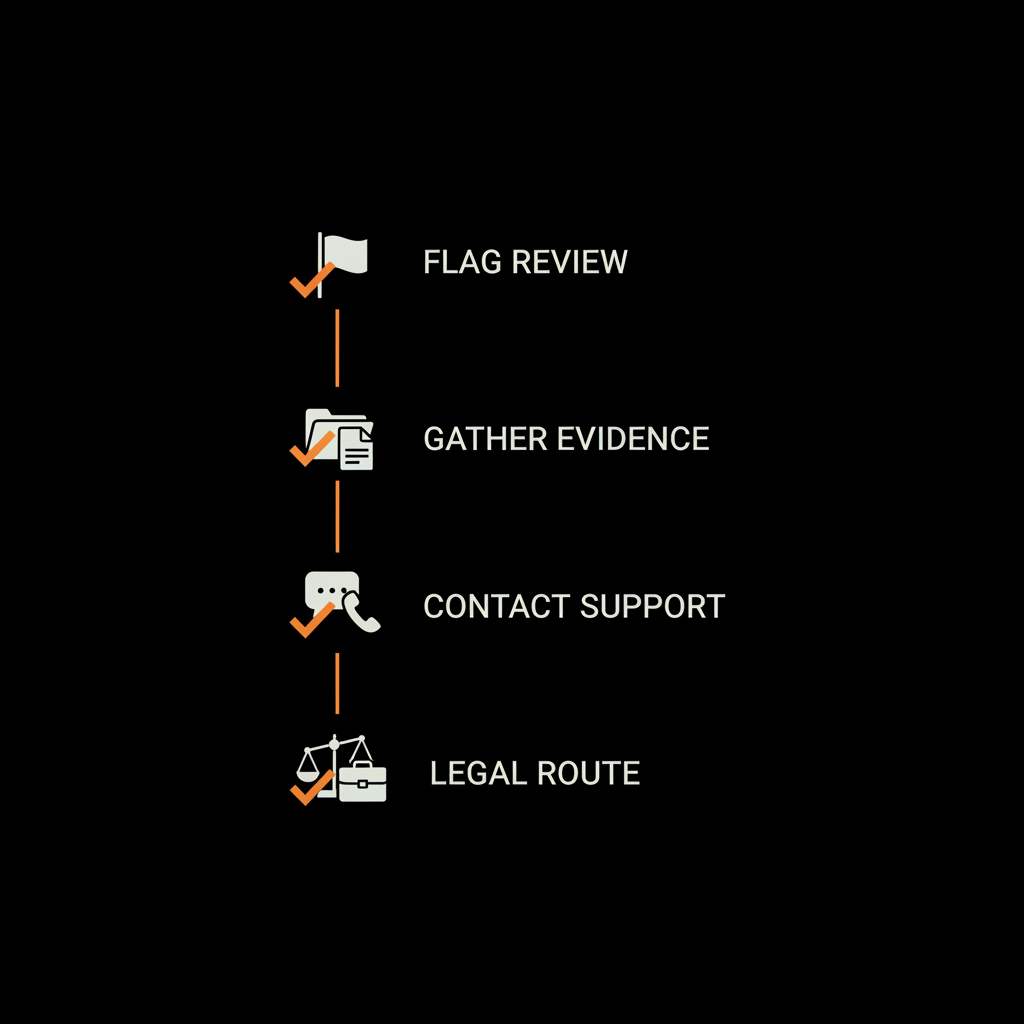
Start inside Google Maps or your Google Business Profile dashboard. Use the menu next to the review and select the option to report it. That sends the review into Google’s moderation pipeline and triggers a mix of automated and human checks. Flagging is fast and it’s the proper first move, but it doesn’t guarantee removal. If you want to remove bad Google review content, flag it and then prepare for the next steps.
When flagging isn’t enough: escalate with Business Profile support
If a flagged review remains, escalate through Google Business Profile support. Chat or phone support lets you provide context and attach evidence—transaction records, clear screenshots, or proof the reviewer is a competitor. Keep messages short and direct: name the policy violated, include the review link, and attach supporting documents. This extra context increases your odds that Google will reclassify and remove bad reviews for someone who clearly violated policy.
If you’d like expert help documenting evidence and submitting a professional, persuasive request, consider working with Social Success Hub’s targeted review removal service at professional review removals. We’ve handled complex removals discreetly and often more efficiently than DIY attempts.
Legal removal: when to take that route
Some reviews can only be removed via legal channels - defamation, identity theft, or content that breaks local laws. Google provides legal removal forms for these cases, but submitting a legal request usually starts a formal dispute and can involve law enforcement or a court order. Before pursuing legal removal, consult an attorney and preserve all your evidence: timestamps, transaction logs, copies of the review, and any related communications. If the harm is severe and provable, legal steps can force Google to remove bad reviews for someone who’s committing illegal acts online.
Need a fast, organized way to submit evidence? Reach out via our contact page to discuss next steps and get help preparing a concise evidence package.
Get professional help to protect your online reputation
Need help removing a damaging review? If you want discreet, professional assistance documenting evidence and submitting removal requests, our team can help guide the process and, when needed, advise on legal pathways. Reach out and let’s discuss a calm, practical plan.
Timing: what to expect
There’s no published service-level timeline for removals. Some reviews vanish within 48-72 hours (often because they triggered automated filters), others take weeks, and many never go away. Document each step—flagging, support chats, case numbers—so you can escalate intelligently and avoid repeating the same request without new evidence.
Evidence wins more than volume
A single strong document will help more than many weak claims. The best evidence includes:
Show the link to the review, state which policy is violated, and attach one or two pieces of clear evidence—it’s the most efficient path to remove bad Google review content that truly breaks rules.
Don’t destroy evidence
Save screenshots, export emails, and keep copies of receipts and contracts. Time-stamped files in secure storage make legal proceedings and Google’s review process much easier. A small visual cue like the Social Success Hub logo can help remind teams to keep records organized.
Responding publicly while you pursue removal
Removal is rarely the entire solution. Even if you remove bad Google review content, the public response matters. A calm, professional reply can change perception: acknowledge the experience, apologize where appropriate, and offer a private channel to resolve the issue. This shows future customers you care and can often be the fastest way to mitigate damage while you try to remove bad Google review entries.

How to write a reply that helps
Keep it short and human. Try this template:
“Hi [Name], I’m sorry you had this experience. We can’t find a matching record—please email us at [email] or call [number] so we can sort this out privately. We take feedback seriously and want to make this right.”
By offering a private resolution channel and a factual note about your records, you do two things: you calm curious readers and you create a record that you acted professionally while trying to remove bad Google review issues.
Encourage verified, honest reviews
A long-term defense against a single negative review is to invite happy customers to share their experience. Use direct links and simple instructions, and never buy or incentivize reviews - Google punishes that. When you collect legitimate reviews, the occasional negative one loses weight and your profile looks more trustworthy overall. If you’re working to remove bad Google review complaints, ramping up authentic feedback is often the fastest, most practical move. See our promotion and growth services for ways to encourage verified reviews ethically.
Truth vs. policy: why correct facts aren’t always removed
Many owners expect Google to remove a review simply because it’s false. In reality, Google often treats disputes about accuracy as disagreements rather than policy violations. That’s why businesses use a two-track approach: request removal only when rules are clearly broken, and otherwise respond publicly and gather positive reviews to drown out the false claim. Asking Google to remove bad reviews for someone solely because it’s untrue rarely works - policy breach evidence is necessary.
Real-world example
Imagine a bakery gets a review accusing it of stealing a custom cake design. The reviewer uses a pseudonym, provides no order number, and posts no photos. The bakery has dated order records and photos proving the cake was made for someone else. Flag the review, escalate to support with the order records attached, and reply publicly in a composed tone offering to resolve it offline. If the claim persists and damages the bakery’s name, gather the false statements and consult an attorney about a legal takedown request. This combined approach - flag, respond, document - gives the bakery the best chance to remove bad Google review claims that are fabricated or defamatory.
When legal counsel is the right call
If the review involves defamation, identity theft, harassment, or a targeted competitor campaign, talk to an attorney familiar with internet defamation. Lawyers can guide you to the correct legal removal forms, prepare a court order request, or send a cease-and-desist. Legal options are serious: they can be effective but costly and may draw attention to the complaint. Balance the likely benefit against expense and public exposure before you proceed.
Practical messaging for Google and support
When you flag a review, keep the message short and precise: name the policy, supply the review link, and attach your strongest evidence. When contacting Business Profile support, say exactly which policy you believe was violated and why. If you’ve filed a police report, include the report number. This tidy, evidence-focused communication is the best way to persuade Google’s moderators to remove bad Google review content that violates policy.
What not to do
Don’t threaten or harass reviewers. Don’t attempt to hack accounts or manipulate reviews. Don’t mass-report competitors in retaliation. These actions can violate Google’s rules and make the situation worse. Publicly posting private details about a reviewer is also risky and could expose you to legal trouble. Keep reactions professional and compliant - it's the best way to preserve your credibility while you try to remove bad Google review entries.
Regional differences matter
Legal environments vary. Some countries have laws that make it easier to remove defamatory content, while others prioritize free expression and make removal harder. Multinational businesses should consult local counsel when a review crosses borders or involves complex jurisdictional points. Local rules influence whether you can remove bad Google review content through courts or legal forms.
How you’ll know if removal is likely
The clearest signs removal will happen: your evidence matches a published Google policy and you provide clear, verifiable proof. Automated removal is common for spammy posts or obvious bot activity. Human review handles borderline cases and takes longer. If support says the review violates policy but it remains, ask for a case number and next steps—document everything and push calmly.
Cost versus benefit
Before starting an expensive legal fight, ask whether the potential gain is worth the cost. Often, a polite public reply combined with a push for more honest reviews yields the best ROI. Save legal options for cases with clear, lasting harm where removal will likely restore revenue or reputation.
Common misunderstandings
Many people believe Google will remove any negative review if they ask; it won’t. Others assume moderation is uniform worldwide; it isn’t. And removing a Google review doesn’t erase screenshots or posts on other sites. That’s why a dual strategy - removal for policy violations plus reputation repair - is more reliable than expecting Google to simply remove bad Google review posts on request.
Preparing your team
Have templates ready that sound human, not robotic. Train staff to log customer interactions and keep receipts and records in an organized way. That preparation lets you move fast if a harmful review appears and gives you the documentation needed to ask Google to remove bad Google review content when appropriate.
Persistence and tone
Protecting your reputation is a steady effort. Treat each negative review as a signal, not a verdict. Stay calm, collect evidence, and act where you have a strong claim. If legal steps are needed, proceed with counsel. Combine evidence, professional replies, and a steady push for authentic reviews to give your business the best chance to stand tall.
Templates you can use now
Flagging message to Google: "This review violates Google’s policy on [spam/impersonation/harassment]. Attached are transaction records showing no customer match. Please review case: [link to review]."
Public reply template: "Hi [Name], we’re sorry you had a bad experience. We can’t find a matching order—please contact us at [email] so we can resolve this promptly. Thank you for the feedback."
When you should escalate to a lawyer
If a false review threatens long-term revenue, involves identity theft, harassment, or coordinated attacks by competitors, legal help is appropriate. Lawyers can file formal removal requests, seek court orders, or advise on whether public response may be wiser. Keep in mind legal steps can be public and costly - choose them when the harm justifies the effort.
Final practical checklist
Can Google really remove a review if it’s simply untrue?
Not usually—Google tends not to police factual accuracy alone. They remove reviews when policy violations are clear or when legal requests compel removal. For false but non-violating reviews, the best approach is to respond professionally and gather more genuine reviews while documenting evidence in case legal action becomes necessary.
What if removal never happens?
If Google refuses to remove a review, focus on reputation repair: a professional, composed public reply and a flood of genuine new reviews usually restores trust faster than legal fights. Sometimes a single, well-worded response and a proactive review campaign are enough to neutralize the damage. If the claim is illegal or defamatory, legal counsel remains an option.
Why Social Success Hub can help
DIY removal attempts are common and often get bogged down. Working with an experienced partner can speed up evidence collection, submission quality, and escalation if necessary. Social Success Hub’s proven, discreet approach helps many businesses remove bad Google review content when it clearly violates policy—or guide clients through legal forms when the case demands it. Learn more on our homepage.
Parting advice
There’s no single trick to erase every negative review. But a steady, methodical strategy - flagging true policy violations, documenting evidence carefully, responding professionally, and building a stream of authentic reviews - gives most businesses the protection they need. Breathe, gather facts, and act with purpose. You’ll be surprised how often calm persistence wins.
Will Google remove a review just because it’s negative?
No. Google typically does not remove reviews solely because they’re negative. The platform removes reviews that violate its policies—spam, impersonation, harassment, illegal content, or clear conflicts of interest—or when a valid legal request compels removal. If a review is merely critical but truthful, Google usually leaves it in place.
How do I report a fake Google review and increase the chances it will be removed?
Flag the review in Google Maps or via your Google Business Profile, then contact Business Profile support with concise evidence showing policy violation. Useful evidence includes transaction records, timestamps, screenshots showing bot-like behavior, or proof the reviewer is a competitor. If the content is illegal or impersonates someone, file a police report and use Google’s legal removal forms—with legal counsel if needed.
When should I call a lawyer about a harmful review?
Consult an attorney if the review contains defamation, identity theft, threats, or a coordinated competitor attack that threatens long-term revenue. Lawyers can help file legal removal requests, seek court orders, or advise on strategic responses. Because legal action is often costly and public, weigh the likely benefit against the expense and reputational risks first.


Comments