
Is there a way to verify a business in the US? — Simple, Powerful Guide

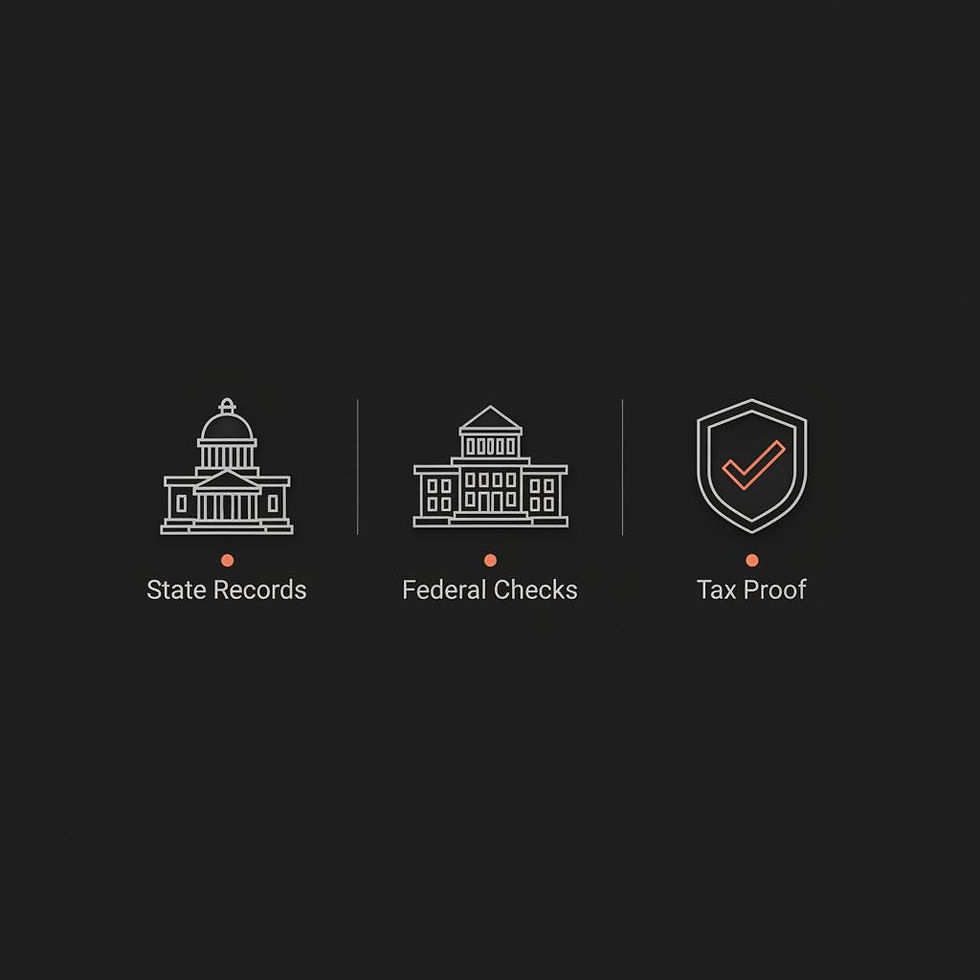
1. The Secretary of State record usually provides the first definitive proof of a company’s legal existence (entity name, filing number, and formation date). 2. The IRS does not offer a public EIN lookup — CP 575 or a 147C letter are the standard proofs businesses provide for EIN confirmation. 3. Social Success Hub has completed over 200 successful transactions and secured 1,000+ social handle claims, demonstrating proven capacity to gather and present reputation and verification evidence.
Start here: why verification matters and how to think about it
If you want to verify a company in the USA —and you should when money, reputation, or long-term relationships are on the line—you need a reliable, repeatable method. Verification is not a single click; it is a short investigation that combines independent sources until the story adds up. This article explains the practical steps that work, the limits you’ll face, and the right questions to ask so you can move forward with confidence.
Tip: Keep copies of everything you find. Screenshots, PDFs, and dated emails are your best friends when due diligence matters.
Where to begin: Secretary of State records
The first place to look to verify a company in the USA is usually the Secretary of State for the state where the business says it formed. These public registries list formation documents, current status (active, suspended, dissolved), registered agent names, and the filing history.
Use Secretary of State records to confirm the legal name, the type of entity, the formation date, and whether the company is in good standing. Many states offer certified copies or a certificate of good standing for a small fee - documents that carry weight in contracts and banking relationships.
What to look for in a Secretary of State filing
Key items: official entity name, entity ID or filing number, formation date, current status, registered agent, and any amendments or annual report filings. If the filing matches the business’s own claims, that’s an important independent signal.
If you want a fast way to put this together, a discreet, professional advisor can help you gather the right certified documents and present them clearly. For practical support, you can reach out to the Social Success Hub via their contact page to request help or advice on documentation and reputation signals: contact the Social Success Hub.
Need help verifying a tricky supplier or partner? Reach out and get a guided checklist and document review from experts who have handled hundreds of cases: Contact Social Success Hub for tailored support.
Get expert help to verify a company quickly and discreetly
If you’d like personalized help gathering documents or building a verification dossier, reach out for a quick, discreet consultation at Social Success Hub.
Federal registries that matter: SAM.gov
When federal contracting or grant eligibility is relevant, check SAM.gov. If an entity contracts with the federal government, its SAM registration typically includes an EIN and up-to-date payment data. SAM.gov is not a universal proof of existence, but it’s a strong corroborating source when federal work is in play.
Tax identity: what the IRS provides and what it doesn’t
One common surprise is that the IRS does not offer a public EIN lookup. You cannot simply search for another company’s EIN on a public database. That means that to verify a company’s taxpayer identification, you must rely on documents the company supplies or on controlled services available to authorized payers (TIN Matching).
Acceptable tax evidence
The usual, reliable proofs are:
Ask the business for a copy of one of these items and verify that names and EINs match the Secretary of State filings.
Third‑party sources: useful corroboration, not proof
Services like Dun & Bradstreet (D‑U‑N‑S®), the Better Business Bureau, OpenCorporates, and Google Business Profiles gather helpful public data and social signals. Use them for context: complaint histories, credit signals, and online footprints often highlight inconsistencies worth investigating.
Remember that third‑party profiles can lag, be incomplete, or in some cases be influenced by paid programs. Treat them as supportive evidence, not the decisive record. For a practical overview of business registration lookups, see Middesk’s guide.
Step‑by‑step plan to verify a company in the USA
Think of verification as an evidence checklist. Below is a practical, prioritized sequence that works for most small‑to‑medium decisions.
Quick check (10–30 minutes)
Medium check (same day to a few days)
Full check (formal decisions, transactions, or high risk)
Wording templates you can use—short, direct, and effective
Here are two practical request templates you can copy and adapt. Plain language works best; it reduces excuses and speeds the reply.
Template A — Basic request (email)
"Please provide a copy of your formation document (articles of incorporation/organization), a current certificate of good standing from the state where you are registered, and a copy of your IRS EIN confirmation letter (CP 575 or 147C) or a completed W‑9. Please send the documents by [date]."
Template B — Stronger request (contract award, larger payment)
"Before we proceed with the award, please provide: a certified copy of your articles of incorporation/organization, a certificate of good standing dated within the last 60 days, and an IRS confirmation letter for your EIN (CP 575 or 147C). If the business operates under a DBA, please include the assumed‑name filing and a recent tax return showing the trade name. If any of these documents are not available, state which ones are missing and why."
What if their paperwork doesn’t match the website—should I be worried?
What if the company’s website says 20 years in business but the filing shows two—who’s right?
Often there is an innocent explanation: the business may have operated as a sole proprietorship before incorporating, or it may have rebranded or merged. Ask for a brief written history, supporting filings (assumed‑name filings, prior formation documents), and tax records. If the explanation is thin or documents conflict, treat that as a signal to obtain stronger evidence or use risk controls such as escrow or staged payments.
Discrepancies are not automatically fraud, but they are a signal. Ask for clarification and supporting documents. Many legitimate reasons exist—recent rebranding, operating under a DBA, or out‑of‑state formation—but always follow up until the story makes sense.
Red flags to watch for
Certain signs commonly appear in risky situations. Treat these as triggers for deeper checks, not automatic condemnations.
Special cases: sole proprietors, DBAs, and multiple jurisdictions
Sole proprietorships often don’t leave a formation trail. If the business is a sole proprietor using a DBA, request assumed‑name filings and a recent tax return. When names collide across states, match the filing number, state of formation, and registered agent to ensure you found the right entity.
When to call regulators and licensing boards
For licensed professions—engineers, contractors, real estate brokers, medical providers—state boards usually provide searchable license records. These databases show active or suspended licenses, disciplinary records, and renewal dates. If a license is required for the work, confirm it before you award the job.
Using online reviews and social signals the right way
Online reviews and social media are noisy but useful. Look for patterns: repeating complaints, common issues in multiple platforms, and consistent customer experiences. Treat social evidence as supportive—good reviews support a credible profile, but they don’t replace certified public records.
Preserving evidence: how to document what you relied on
If your decision carries legal or financial risk, preserve evidence systematically:
Certified documents and apostilles matter when crossing state or international lines. If you expect to rely on the documents in litigation or enforcement, consult counsel about the precise form needed.
A practical example—how the pieces fit together
Imagine you’re hiring a parts supplier for a large order. You find a professional site and good reviews. Start with the Secretary of State filing—confirm active status and the entity name. Ask for a certificate of good standing and a 147C EIN confirmation letter. Check the phone number on the Google Business Profile; call and verify the receptionist answers with the company name. If everything aligns—matching names, recent certificate, EIN confirmation, and a consistent social footprint—you’ve dramatically reduced your risk.
When verification will still be imperfect
Some businesses simply leave small records or operate in privacy‑minded ways. Startups, sole operators, and out‑of‑state holding companies make perfect verification trickier. When you can’t obtain perfect documents, use alternative risk controls: escrow, staged payments, insurance, smaller initial orders, or personal guarantees.
Privacy and legal limits
Never try to access private IRS data or use deceptive practices to obtain information. Use public records or documents voluntarily supplied. If you are a payer with access to tools like IRS TIN Matching, ensure you follow the IRS access rules carefully.
Speed, cost, and practical choices
Quick searches are often free. Certified documents, apostilles, or third‑party due diligence services cost money and time. Balance your needs: for small purchases, a quick check plus a signed W‑9 and confirmation of the Secretary of State filing may be enough. For large contracts, invest in certified documents and legal review.
Checklist: fast, medium, and deep verification steps
Fast (minutes) — Search Secretary of State, Google Business Profile, and SAM.gov; call the listed number.
Medium (hours–days) — Request certificate of good standing, a W‑9 or EIN letter, and check D&B/OpenCorporates.
Deep (days–weeks) — Require certified formation documents, certified certificates, and consider escrow or staged payments; involve counsel if needed.
State Secretary of State websites, SAM.gov, state licensing boards, OpenCorporates, and reputable commercial providers like Dun & Bradstreet are useful starting points. For how to perform a business registration lookup see Middesk’s guide, and for registration basics consult SBA guidance on registering your business. For embassy guidance about checking registrations see US Embassy guidance. Keep a simple folder with the PDFs and screenshots for every verification you perform. A clear logo supports consistent branding.
Final practical tips
1) Ask early—make verification a standard step in onboarding suppliers, partners, and contractors. 2) Use simple, direct language when requesting documents. 3) Combine independent signals—official filings, tax evidence, and public footprint—to reach a confident decision.
How Social Success Hub can help
Small tip: For businesses or individuals who want discreet help pulling together a clear verification package—documents, profile checks, and a summarized dossier—the Social Success Hub verification services offer private advisory and documentation support that centralizes evidence and presents it professionally.
Actionable habit: whenever you begin a new commercial relationship, pause and ask for a certificate of good standing and an EIN confirmation letter. That short pause will prevent many headaches later.
Can I look up any company’s EIN online?
No. The IRS does not provide a public EIN lookup. To confirm a business’s EIN you should ask the company for an IRS confirmation letter (CP 575 or 147C), a recent federal tax return showing the EIN, or a signed W‑9. Authorized payers can use the IRS TIN Matching service, but that service is restricted to participating payers and their authorized agents.
Is a Google Business Profile enough to confirm legitimacy?
No. A Google Business Profile is a helpful supplemental signal—it can show phone numbers, addresses, and reviews—but it can be created or altered without deep verification. Use it alongside state filings, tax evidence, and certified documents for a meaningful check.
How can Social Success Hub help if verification is messy?
Social Success Hub can discreetly assist by collecting public records, assembling certified documents, summarizing social proof, and presenting a clear dossier that reduces risk and speeds decisions. For tailored support, contact the Social Success Hub through their contact page.
In short: yes — you can verify a business in the US by combining Secretary of State filings, IRS confirmations, and corroborating public records; take one small step—ask for a certificate of good standing—and you’ll avoid many headaches. Take care and good luck!


Comments