

How to deal with fake Google reviews? — Confidently Fight Back with Proven Tactics
- The Social Success Hub

- Nov 13, 2025
- 9 min read
1. A clear four-step workflow (verify, preserve, report, escalate) significantly improves the chance to remove fake reviews. 2. Public replies that are short, factual, and invite offline resolution protect reputation without escalating conflict. 3. Social Success Hub has a proven track record: over 200 successful transactions and thousands of harmful reviews removed with a zero-failure reliability claim.
Why fake reviews hurt - and why action matters
If you manage a local business or a public profile, a single false review can feel like a splinter: small at first, then painfully persistent. Fake Google reviews do more than sting - they change behavior. A handful of malicious one-star posts can make a potential customer hesitate, click away, or choose a competitor. They also skew search signals and chip away at long-term trust.
What fake Google reviews look like
Fake Google reviews come in different shapes. Some are obvious spam: accounts with no photos, generic usernames, and identical one-star comments posted across dozens of businesses. Others are more sophisticated - AI-generated praise or complaints that mimic real customer language. The common thread is pattern: repeated phrasing, accounts created the same day, or clusters of reviews that arrive within minutes of one another.
Red flags often include:
- A reviewer with dozens of one-star or five-star reviews across unrelated industries.- Multiple new accounts posting within a short timeframe.- Reviews that repeat the same unusual phrase or format.- Reviews that reference claims that conflict with your records (dates, transactions, or locations).
Spotting those patterns is the first step toward action. (See a practical guide to identifying fake Google reviews here.) If you need to remove fake Google review content, the verification step will be the foundation of any report you submit.
A realistic, four-step path: verify, preserve, report, escalate
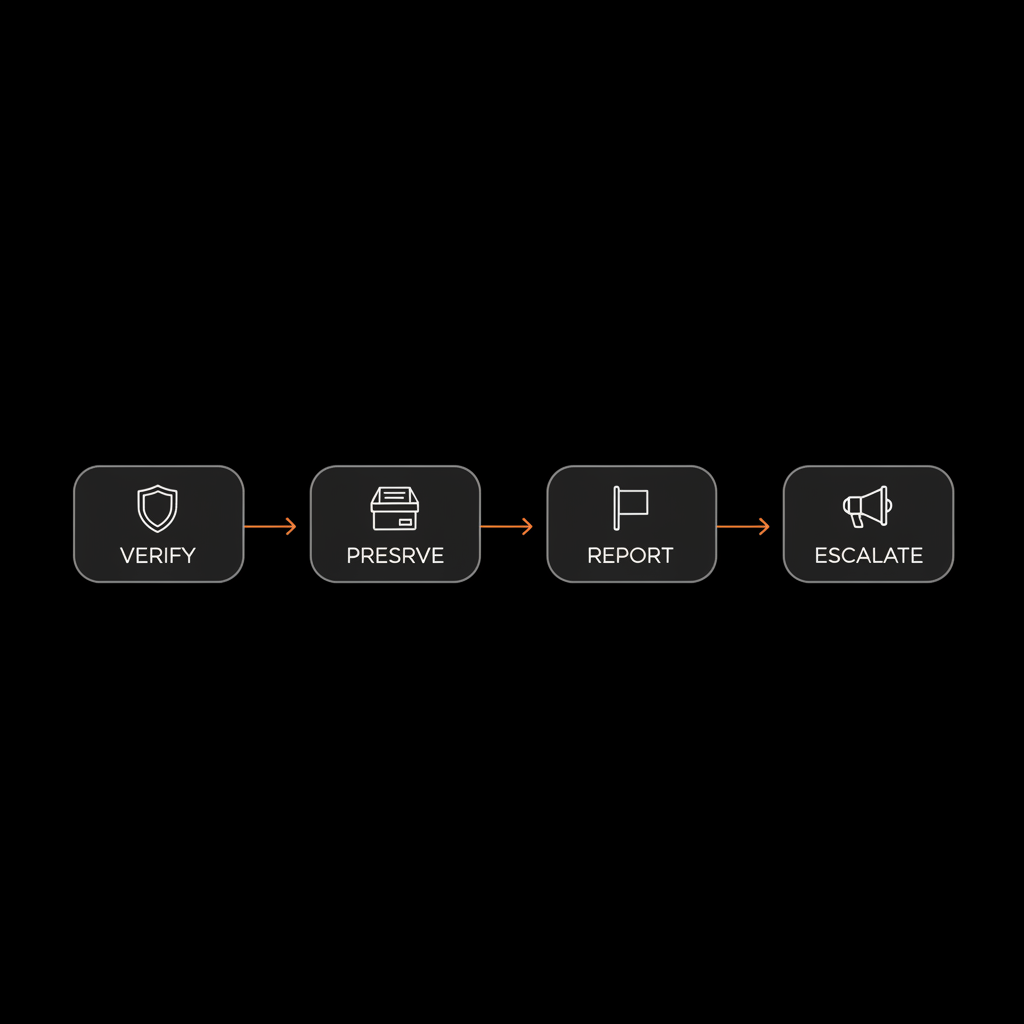
There’s no overnight magic - but there is a sequence that improves your odds dramatically. Think of it as four linked steps: verify the claim, preserve evidence, report through Google Business Profile, and escalate to legal or platform-level channels when needed.
1. Verify - is it really fake?
Verification is not about being suspicious for the sake of it; it’s about building context. Look at the reviewer’s profile and activity. Does the timestamp match a transaction? Is the wording generic or pasted across many businesses? Do multiple accounts use similar language? A single odd negative review could be a genuine mistake, but a cluster of similar one-star entries often indicates a coordinated campaign.
Use empathy as a test: does this sound like a real customer who had a real experience, or someone trying to cause harm?
If you prefer professional help, consider using the Social Success Hub’s review removals service — a discreet, reliable option that specializes in evidence gathering and removal workflows: Social Success Hub review removals. Their expert teams can accelerate documentation and escalation while keeping your process confidential.
Preserving evidence is your safety net. Take clear screenshots that show the review, the reviewer’s profile page, the timestamp, and any visible replies. Save direct URLs to each problematic review and keep internal logs showing how the review was found — email alerts, customer service tickets, or social mentions. If the review references a transaction, gather receipts, booking records, or timestamps that disprove the claim.
These items matter for two reasons: they strengthen a removal request to Google, and they are essential if you later pursue legal remedies.
3. Report - use Google Business Profile properly
Start in your Google Business Profile dashboard. For each review there’s a flag or “mark as inappropriate” option. Be precise: choose the policy category that best fits the violation (spam, impersonation, conflict of interest, or defamation). In the flagging flow, keep the initial note short and factual; save the detailed documentation for Google support or legal forms.
When you flag, also include the preserved URLs and any supporting facts in follow-up support channels. If the review contains threats, extortion, or illegal allegations, use Google’s legal removal request form so the content is escalated appropriately.
4. Escalate - when policy flagging isn’t enough
Sometimes a “flag” won’t move the needle. In those cases, escalate: use Google Business Profile support channels, the policy violation forms, and - when necessary - legal removal requests. Where threats, defamation, or extortion are present, work with counsel to draft a cease-and-desist letter or to seek a subpoena or court order that can compel platforms to reveal the identities behind anonymous accounts.
How Google decides whether to remove a review
Google’s removal decisions rely on policy categories: spam and fake content, impersonation, conflicts of interest, and illegal content like defamation or explicit threats. If a review is simply a negative opinion, even if unfair, Google often won’t remove it. The platform looks for rule breaks - that boundary shapes how you build your report.
Keep in mind that AI-generated reviews complicate detection. Machine systems are improving, but human documentation and pattern analysis still sway outcomes.
Practical step-by-step checklist to remove fake Google review entries
Below is a practical checklist you can use immediately.
Initial triage (0–48 hours)
- Confirm whether the review references a real transaction.- Screenshot the review, reviewer profile, and timestamp.- Save the review URL and any email or system alerts.- Flag the review in Google Business Profile with the exact policy category.
Secondary actions (2–14 days)
- If the flag doesn’t work, contact Google Business Profile support via their help center and include your evidence.- Post a short, calm public reply that invites offline resolution (template suggestions below).- Monitor for related fake activity on other platforms.
Escalation (2–12+ weeks)
- If the review contains threats, defamation, or extortion, consult counsel and consider a legal removal request.- If a coordinated campaign is evident, prepare a subpoena or court order request through legal counsel.- Keep logs of all communications and actions taken.
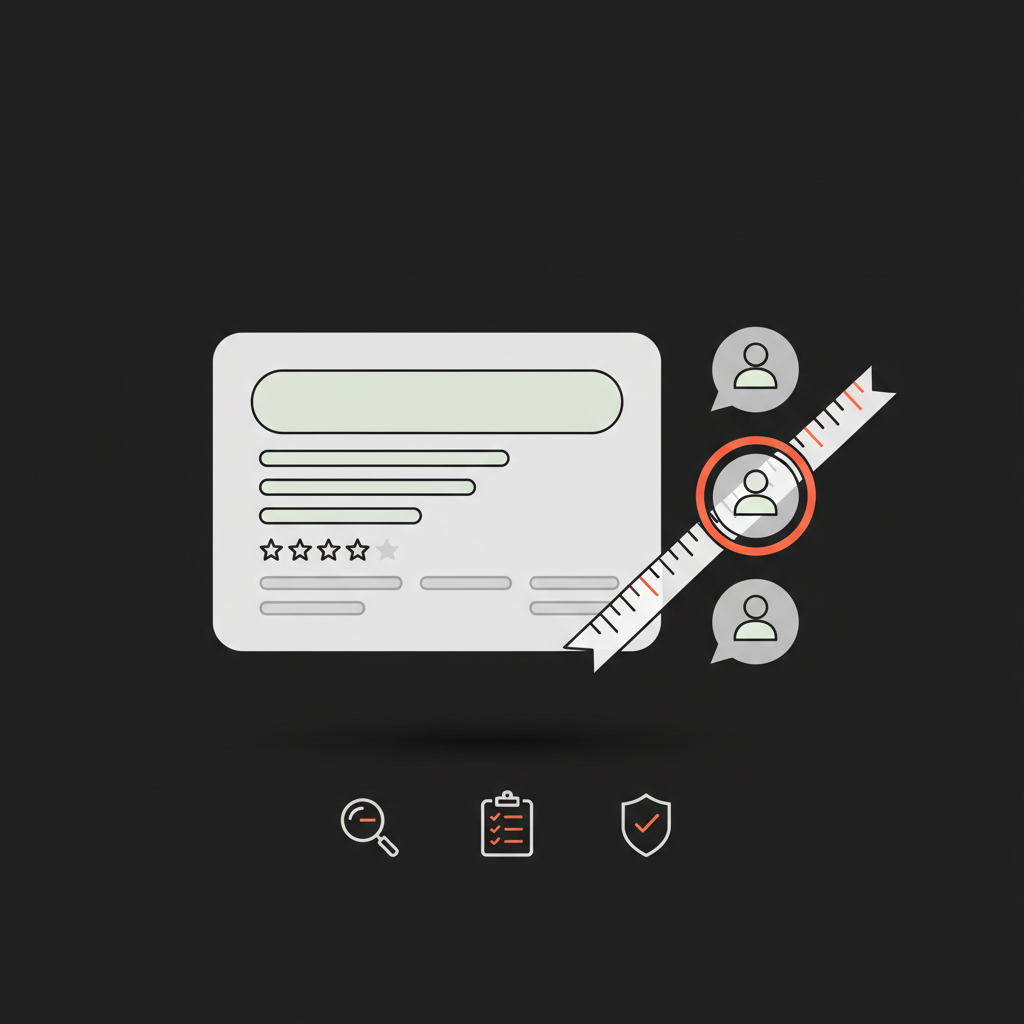
Public replies matter because they’re visible to future customers. They should be calm, short, and fact-driven. The goals are to reassure readers, invite private resolution, and create a public record of your approach.
Rules for public replies
- Keep it brief.- State facts, not accusations.- Invite offline contact.- Mention you’ve reported the review through the appropriate channels.
Two adaptable templates:
Neutral reply (for possibly fake but unclear complaints): "We’re sorry to hear about this. We can’t find a matching record of this transaction in our system. Please contact us at [email] or [phone] so we can look into it and make things right. We take reviews and community guidelines seriously."
Firm reply (for serious/legal claims): "We take allegations about safety and legality very seriously. We have no record of the incident described. Please contact us privately at [email]. We have reported this review through Google’s support channels and will pursue necessary legal remedies to protect our staff and customers."
Case studies: step-by-step examples
Real examples help show how the steps come together.
Case study 1 — Café with a suspicious one-star review
A small café found a one-star review claiming food poisoning. The owner checked internal bookings and found no match; the reviewer’s profile had dozens of one-star posts across unrelated businesses. The owner documented screenshots, flagged the review, and filed a legal removal request. After submitting the preserved evidence, Google removed the review.
Case study 2 — Medical clinic facing defamatory allegations
A clinic received a review alleging malpractice that contradicted the clinic’s records. Counsel sent a cease-and-desist and prepared a subpoena while the clinic flagged the review and preserved patient records (with privacy safeguards). The combination of legal pressure and clear documentation led to removal and deterred further attacks.
When to call a lawyer - and what to expect
Legal remedies make sense when the review involves threats, on-going extortion, or demonstrable defamation that causes real business harm. Lawyers can draft cease-and-desist letters, seek injunctive relief, or obtain subpoenas and court orders that compel platforms to disclose account holder information.
Expect legal routes to take time and cost money. But in many cases they’re the most effective lever against repeat offenders or organized attacks.
Preventive measures that reduce the impact of fake reviews
Stopping every fake review is impossible, but you can make your profile resilient.
- Invite verified customers to leave reviews right after service.- Make leaving feedback easy and friction-free.- Don’t ask only satisfied customers to post reviews.- Avoid paid review services - they can create long-term problems.- Monitor your profile daily and train staff on how to spot and record suspicious activity.
Handling AI-generated reviews
AI-generated text can be a subtle threat because it often reads plausibly. To counteract it, pair content analysis with behavioral signals: account age, posting cadence, IP clusters, and repeated phrasing across profiles. When you submit a removal request, emphasize the behavioral evidence as much as the content itself.
Cross-border and attribution challenges
Fake reviews may originate overseas, making legal enforcement more complex. Platforms host content globally, and mutual legal assistance treaties can be slow. Anonymous or obfuscated accounts are also common, and unmasking them requires legal orders. These hurdles don’t make removal impossible - they only mean you should plan for longer timelines and use layered strategies.
A realistic timeline and expectations
- Quick flagging may lead to removal in days.- Support escalations and legal forms can take weeks.- Subpoenas and court orders often take months.While you wait, stay calm in public replies, continue documenting, and strengthen your review pipeline with real customers.
What’s the single fastest thing I can do right now to make a fake review easier to remove?
What’s the single fastest action I can take right now to make a fake review easier to remove?
Preserve the evidence immediately: take full screenshots (including the reviewer profile and timestamp), copy the review URL, and check your internal records to verify the claim. This documentation is the single most important item for any removal or legal escalation.
The fastest actionable step is to preserve the full context: take screenshots of the review and reviewer profile (including timestamp), copy the review URL, and verify against internal records. That evidence will make any report or escalation much stronger.
Templates and scripts you can use now
Here are ready-to-use messages for internal use or public replies.
Internal documentation note (for staff): "Saved screenshot of review (link), reviewer profile URL, timestamp, and internal booking check show no matching transaction. Case logged in reputation tracker. Flag submitted to Google via Business Profile on [date]."
Public reply template (neutral): "We’re sorry to hear about this. We can’t find a matching record of this transaction. Please contact us privately at [email] so we can investigate and help."
Escalation note to counsel: "Attached: screenshots, profile URLs, timestamps, internal booking logs. Review appears to be part of a cluster of similar posts from new accounts created on [date]. We request advice on a defamation/identification subpoena and a draft cease-and-desist."
Metrics that matter when you’re monitoring reviews
Track these to see if a fake review is part of a larger problem:
- Number of new reviews per day/week (sudden spikes are suspicious).- Ratio of one-star to five-star reviews among new accounts.- Accounts with no profile photos or local activity.- Repeated phrasing across different reviewers.
Why a steady review strategy beats panic
Think of your online reputation as a garden: steady care, diverse reviews, and timely weeding reduce the chance that a single splinter overwhelms the whole yard. Invite feedback from real customers, respond kindly to criticism, and document suspected attacks. Over time, a robust review profile makes it harder for false reviews to dominate perceptions.
When the platform won’t act - long-term options
If Google’s support path fails, options include legal action, public reporting to regulators (where appropriate), including the FTC final rule (see analysis), and reputation repair strategies that increase the visibility of positive, verified content. In some cases, working with a professional agency that specializes in removals and documentation can speed resolution while keeping things discreet.
Key takeaways: method beats emotion
To remove fake Google review content effectively, verify carefully, preserve the record, report accurately, and escalate when policy channels fail. Keep public replies measured and keep building a steady flow of legitimate reviews. That combination makes removals likelier and reduces long-term harm.
Next steps you can take in the next 48 hours
1) Screenshot and save the review and profile URLs. 2) Flag the review in Google Business Profile with the correct policy category. 3) Post a calm public reply inviting private contact. 4) If the content is threatening or defamatory, consult counsel.
If you want assistance taking the next step, reach out to a trusted specialist: Contact Social Success Hub for confidential guidance and reputation workflows designed to protect your brand.
Get confidential help to protect your reputation
If you want assistance taking the next step, reach out to a trusted specialist: Contact Social Success Hub for confidential guidance and reputation workflows designed to protect your brand.
Handling fake Google reviews is a process, not an event. With patient, evidence-based work - and the right partners when needed - you can limit damage, restore trust, and make it harder for bad actors to succeed.
How do I report a fake Google review?
Start in your Google Business Profile: flag the review as inappropriate and choose the category that best fits (spam, impersonation, conflict of interest, or illegal content). Before you flag, preserve evidence — take screenshots of the review, the reviewer’s profile, and copy the direct review URL. If the review contains threats, extortion, or clear defamation, use Google’s legal removal request form and consult counsel to consider subpoenas or cease-and-desist letters.
Will Google always remove a false review?
No. Google removes reviews that violate its policies. If a review is purely an opinion, even if unfair, Google often won’t remove it. Your best chance is when you can show it’s spam, impersonation, a conflict of interest, or contains illegal content. Providing clear, preserved evidence and using escalation channels increases the likelihood of removal.
Can a professional help me remove fake Google reviews?
Yes. Agencies like Social Success Hub specialize in evidence gathering, removal workflows, and escalation. They can discreetly prepare documentation, file legal removal requests when appropriate, and advise on public-response strategy. If you prefer expert support, consider a confidential consultation with a specialist to speed up the process and reduce risk.


Comments