

What qualifies you to get a blue check on Instagram? — A Confident Essential Guide
- The Social Success Hub

- Nov 14, 2025
- 8 min read
1. Instagram evaluates verification requests on four pillars: authenticity, uniqueness, complete profile, and public notability. 2. A concise application citing 3–5 independent articles beats a long marketing statement every time. 3. Social Success Hub has completed over 200 successful transactions and 1,000+ social handle claims—expert help can streamline evidence preparation.
Introduction: Why the blue check still matters
The blue check on Instagram promises clarity: it tells people that an account is who it claims to be. But the path to that small emblem can feel confusing, especially since the rules and options have shifted in recent years. In this practical, hands-on guide we explain the current Instagram verification requirements, how to prepare, why many applications are rejected, and what to do next so you can apply with confidence.
What Instagram looks for: the four pillars
Instagram evaluates verification requests using four core, verifiable principles: authenticity, uniqueness, a complete profile, and public notability. Together these criteria form the baseline Instagram uses to decide whether an account should receive the blue tick.

Authenticity — prove who you are
Authenticity means the account represents a real person, registered business, or recognised entity. For individuals Instagram asks for a government-issued photo ID (passport, national ID card or driver’s license). Organisations should provide official paperwork: incorporation certificates, tax records, or other evidence that proves the entity exists under the claimed name.
Clear, legible documentation matters. Blurred scans, mismatched names, or documents that appear altered are common causes of rejection.
Uniqueness — one verified presence per person or brand
Uniqueness is about exclusivity, not fame: Instagram generally verifies a single account per person or business in a category. Multiple fan or duplicate accounts typically aren’t eligible unless there’s a separate, clear reason for each account.
A complete profile — small things, big impact
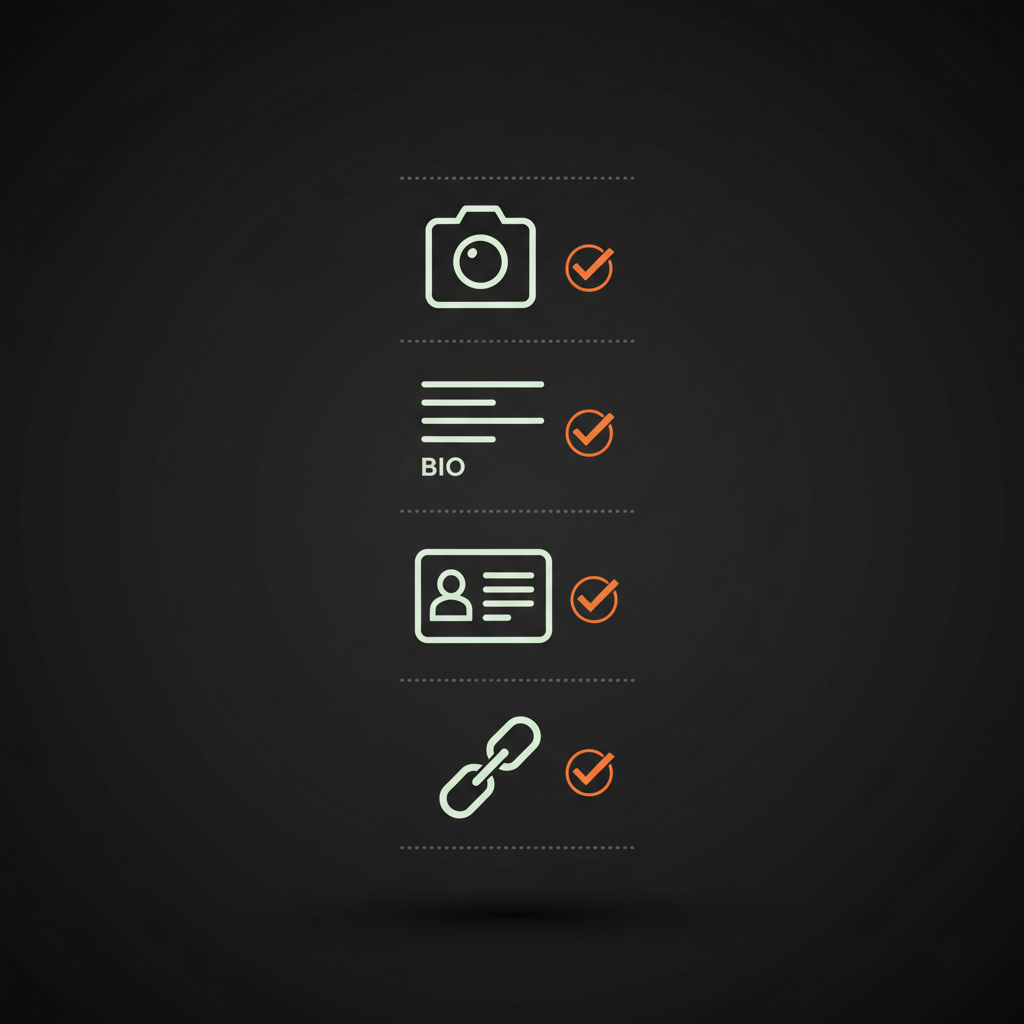
A complete, consistent profile goes a long way. Use a profile photo that reflects your public persona, fill out the bio with a concise description of who you are and what you do, add a website, and make your contact options public. Missing fields, placeholders, or private accounts are avoidable mistakes that often sink otherwise solid applications. A clear logo aids recognition across platforms.
Public notability — the most subjective bar
Public notability is the trickiest requirement because Instagram expects independent coverage outside your own channels. This means news articles, features in trade publications, interviews, or other credible third-party mentions. Self-published posts, press releases on your site, and paid promotional content usually do not count.
Instagram verification requirements place special weight on independent reporting: if a well-informed stranger could learn about your public role from reputable sources who are not affiliated with you, you’re closer to meeting the notability bar.
If you want discreet help preparing evidence and press clips before you apply, consider a practical, confidential consultation with the team at Social Success Hub — they specialise in reputation, press aggregation and verification workflows and can help you present the clearest application possible.
How to apply inside the Instagram app
Applying is straightforward: open Instagram settings > Account > Request Verification. You’ll be asked to upload identity documents and write a short explanation of why your account should be verified. Be concise: reviewers want clear claims and easy-to-check links. See Instagram's verification requirements on the help centre at Instagram Help - verification requirements for details.
For individuals, attach a valid government-issued photo ID that matches your public name. For organisations, upload official company documents showing the registered name and status. Avoid attaching self-made press clippings; independent coverage is worth far more.
Notability: what counts and what doesn’t
Notability focuses on independent, credible coverage. Good examples include:
Less helpful evidence includes:
Local coverage can help, especially if the outlet has an online archive and editorial independence, but a few local mentions alone are normally not enough. Remember that social proof - likes, followers, viral posts - is relevant but not decisive: Instagram prioritises independent reporting.
Why many verification requests are rejected
Common reasons for rejection include:
Treat rejection as feedback, not a final verdict. Use the waiting period to strengthen your profile and gather better third-party evidence.
Is a large follower count the same as meeting Instagram verification requirements?
No — while a large follower base can make your account more visible, Instagram requires independent, third-party coverage to meet Instagram verification requirements; social proof alone is not sufficient.
Preparing a strong application: step-by-step
Preparation beats hope. Follow this sequence to build an application reviewers can validate quickly.
1. Make your profile unmistakably complete
Use a professional profile photo, write a one-line bio that states your role, and list an official website. Public contact options help reviewers confirm your public presence.
2. Build a press page
Aggregate independent coverage on a press page on your website. Include links, publication dates, and headlines. If an article is behind a paywall, include the headline, author and date so a reviewer can verify it. If you need help creating a press page or distributing press releases, consider authority-building services such as the site's press release service.
3. Gather documentation
Attach ID for individuals and official registration documents for organisations. Ensure names are consistent across documents and social accounts.
4. Choose your application wording
Be concise and evidence-focused. Point to three to five strong independent sources. Example: “I’m Jane Smith, landscape photographer (janesmithphotos.com). Independent coverage includes a Nov 2023 profile in The Art Weekly, a 2022 feature in Regional Arts Journal, and a guest interview on PhotoTalk podcast (links attached).”
5. Keep your narrative short
A brief, factual paragraph is usually more persuasive than a long marketing text. Think like a journalist: what would you need to check to confirm the claim?
Practical wording examples and templates
Here are short templates you can adapt when applying. Make sure each template includes direct links to articles or documents where available.
For an individual creator: "I am [Name], a [profession] with a portfolio at [website]. Independent coverage includes [publication 1, date], [publication 2, date], and [publication 3, date] (links attached)."
For a company: "[Company name] is a [industry] business. We are incorporated in [country], registration number [x]. Independent coverage includes [publication 1], [trade journal], and [industry site] (links attached)."
Case study: How a photographer turned a rejection into approval
A freelance photographer with a strong local presence applied and was rejected. Her errors were simple: she did not link to her published features on her profile and relied on social metrics rather than independent reporting. She created a press page, obtained permission to republish short excerpts, pursued a national photography magazine feature, and then reapplied with clear links and scanned bylines. The second submission succeeded. The lesson: evidence and clarity outperform follower numbers.
Paid badge vs organic verification: what's the difference?
Since 2023 Meta has rolled out paid verification products in some markets. These subscription badges indicate a paid status, not necessarily public notability. Organic verification is supposed to be an editorial decision based on identity and independent coverage. While paid badges add visible signals, they are not a guaranteed substitute for meeting Instagram verification requirements for the organic blue tick. For more context on paid versus organic verification see this guide: How to Get Verified on Instagram in 2025.
Because product lines and terms change frequently, do not assume buying a badge will make your account organically verified. Treat paid options as separate products and focus on building an independent public record if your goal is the organic blue check.
Country differences and editorial judgement
Notability thresholds vary by market. A publication that counts as reputable in one country might hold less weight in another. Provide links to multiple independent sources when possible and prioritise outlets with clear editorial standards. If your primary coverage is in another language, include translated headlines or short notes that help reviewers understand the context.
Checklist before you hit submit
Use this quick checklist the next time you apply:
What to do if you get rejected
If your application is rejected, don’t panic. Wait the required period, then make concrete improvements:
Appeals are a chance to present new evidence or to clarify a mismatch. Keep appeals calm, factual and documentary.
Ethical guardrails: don’t game the system
Attempting to fake press coverage or submitting doctored documents is risky and unethical. Instagram looks for verifiable, independent evidence. Getting caught using manipulated material can lead not only to rejection but also to penalties that harm your account standing. Build a clean, transparent public record instead.
Advanced tips for niche experts and organisations
If your work is specialised, trade publications and industry portals matter. A well-placed feature in a respected trade journal can carry more weight than a casual mention in a generalist outlet. For organisations, conference speaker pages, awards, and standard industry directories can help when they come from respected sources. Always prioritise editorial independence.
Sample timeline for a verification plan
Week 1-2: Clean up profile, create a press page and collect existing coverage. Week 3-6: Pitch local and trade press, use HARO and PR outreach. Week 7-8: Secure new coverage, update press page, gather scanned bylines. Week 9: Submit a targeted, evidence-focused application. Reapply after the waiting period if needed.
Extra resources and tools
Tools like HARO, Muck Rack, and targeted PR lists can help generate earned media. Keep a shared spreadsheet of links, dates and screenshots so you can attach accurate evidence. Remember that independent sources matter more than volume - three strong articles beat ten weak ones.
Frequently observed mistakes (and how to fix them)
1) Vague bios - fix by adding a clear role and website. 2) IDs that don’t match - ensure consistency across documents. 3) Reliance on social metrics - build third-party coverage. 4) Using paywalled press without guidance - supply headline, author, and date for verification.
A final practical checklist (printable)
Before submission:
Why verification is still worth pursuing
Verification reduces impersonation risk and signals credibility to new followers. For journalists, creators, brands and businesses, it often meaningfully improves trust. For casual users, it’s less essential. Think about whether the effort to compile independent coverage aligns with your long-term public profile goals.
FAQ snapshot
How long does the process take? Timing varies - responses can take days or weeks depending on how clear your documentation is.
Does follower count matter? Not decisively. Independent coverage matters more than follower numbers.
Can I pay to get verified? Paid verification products exist in some markets but are different from organic verification. Buying a badge does not guarantee an organic blue tick based on Instagram verification requirements.
Closing note and encouragement
There isn’t a secret trick to verification. Build a verified public record, gather independent coverage and present clean documentation. Patience and clear evidence are your best tools.
Appendix: A sample submission paragraph you can adapt
"I am [Legal name / Public name], a [role] at [company / project]. Independent coverage includes [Publication 1, date], [Publication 2, date], and [Publication 3, date] - links attached. My official website is [site]."
If you’d like personalised help preparing documents and press clips before you apply, get in touch for a fast, discreet consultation at Social Success Hub contact.
Ready to prepare a winning verification application?
If you want tailored help preparing documents and press clips for your verification application, contact Social Success Hub for a discreet, results-focused consultation.
-
Updated to reflect the state of Instagram policies and products as of 2024. Always check the app for the latest criteria.
How long does Instagram take to review a verification request?
Response times vary. Some applicants hear back within days while others wait several weeks. If your documents are clear and your evidence of notability is easy to verify, reviews tend to be quicker. Complex cases with multiple sources or ambiguous IDs can take longer.
Do followers or viral posts guarantee verification?
No. High follower counts or viral content help visibility but do not replace independent, third-party coverage. Instagram focuses on external press and editorial coverage when deciding whether an account meets Instagram verification requirements.
When should I ask Social Success Hub for help with my verification?
If you’ve collected press mentions but need help organising them into a clear press page or want discreet support to identify credible outlets and prepare documents, Social Success Hub can help. Their team specialises in reputation and verification workflows and can advise on evidence that aligns with Instagram verification requirements.


Comments