

Can you request a Google review be removed? — Powerful, Urgent Guide
- The Social Success Hub

- Nov 13, 2025
- 8 min read
1. Google removes reviews for clear policy violations (spam, doxxing, hate speech) — these are the quickest cases to resolve. 2. Evidence beats anger: booking logs, timestamps, and patterns improve removal success dramatically. 3. Social Success Hub has a proven track record: over 200 successful transactions and thousands of harmful reviews removed with transparent, documented methods.
Can you request a Google review be removed? - Quick, Practical Answers
If you’re searching for how to remove a Google review, you’ve landed where many business owners and managers begin: trying to separate what’s actionable from what’s simply unpleasant. The short truth is this: Google will remove content that breaks its rules or the law, but it won’t erase honest criticism just because it hurts. This guide explains how to remove a Google review, when removal is likely, how to collect evidence, and what to do when deletion isn’t the best option.
Why this matters right now
One review can affect search results, click-through rates, and conversions. More than that, a damaging review can shape a first impression for anyone searching your brand. That’s why understanding how to remove a Google review - and when to pursue alternative strategies - is essential for anyone who relies on online visibility.
If you need a discreet, professional assessment early in the process, consider Social Success Hub’s targeted review removals service — a practical option when evidence points to fake or malicious content.
What Google allows and what it won’t tolerate
Google’s policies are focused: remove content that violates clear rules or the law, keep content that represents opinion or real customer experiences. Examples that often qualify for removal include spam, impersonation, hate speech, doxxing, and copyright infringement. By contrast, truthful negative reviews — even if harsh — generally remain.
When you’re considering how to remove a Google review, focus on whether the content fits one of these categories:
If a review falls into one of these boxes, flagging it or using Google’s legal removal flow can work. If not, you’ll likely need a different strategy.

How to flag a review: the standard path
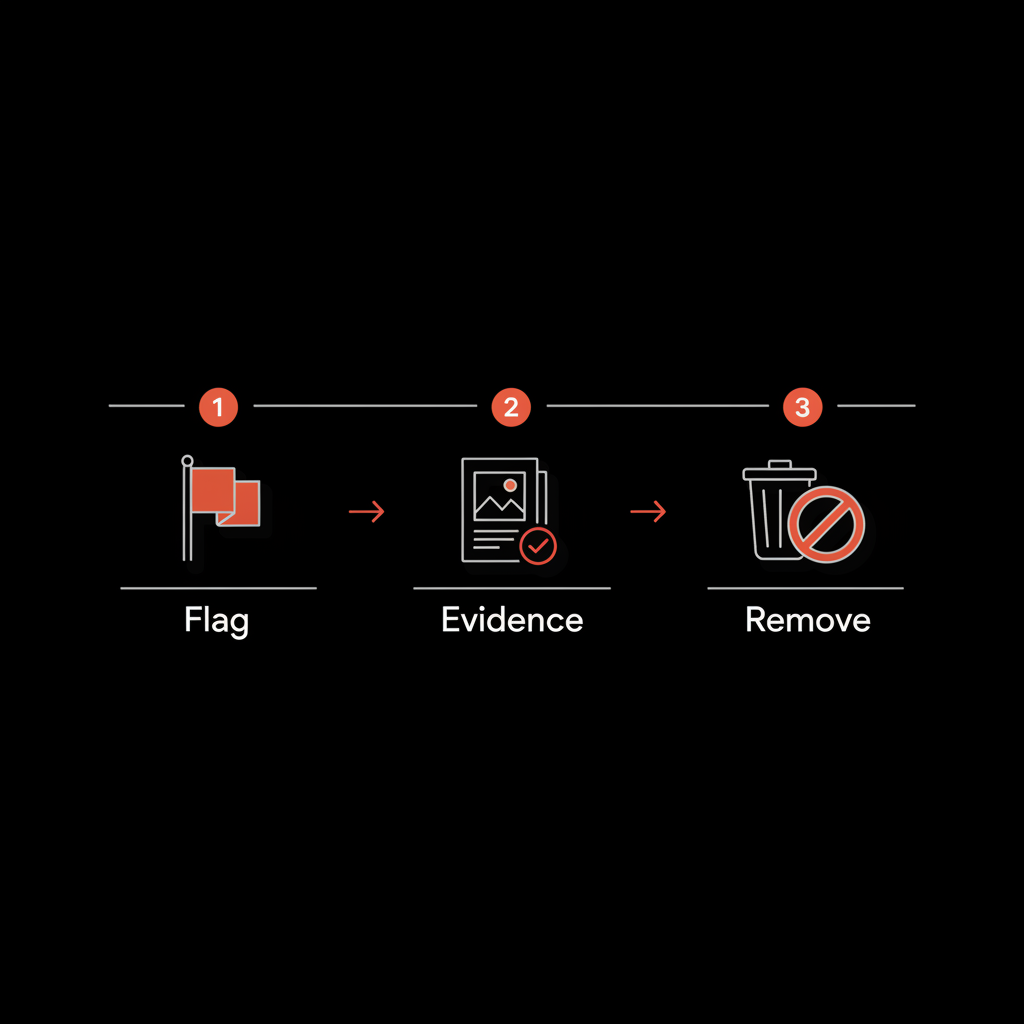
Flagging a review inside Google Maps or the Business Profile dashboard is the most common start. Be precise in your reason — vague complaints rarely succeed. For Google’s official steps on reporting, see the reporting guide at Google Business Profile help.
Step-by-step: flagging with purpose
Follow these practical steps when you try to report a Google review:
Keep in mind that how to remove a Google review via flagging depends on human moderation and automated checks. Results vary by region, language, and the content reviewer who sees your report. A simple, consistent logo can help strengthen recognition.
When you should consider a legal takedown
Certain reviews are not just policy violations - they’re illegal. Defamation, explicit privacy breaches, and some intellectual property violations may justify a legal route. Google has a legal removal flow for these cases, but it often requires specific documentation and sometimes a court order. For guidance on legal options, see a lawyers' guide such as this one: A Lawyer's Guide to Removing False Google Reviews.
What constitutes a legal takedown?
Examples include:
Legal takedowns are effective when supported by clear evidence; they’re slow and costly, so reserve this route for the most damaging incidents.
What evidence actually helps
Emotion is understandable, but facts win cases. When preparing to show how to remove a Google review, gather the following:
Screenshots are useful but can be challenged - preserve original page URLs and create a defensible audit trail with dates and system logs.
How to package evidence for a policy flag
When you report a review through the platform, succinctly state why the content violates policy and attach clear examples. For legal requests, prepare a structured dossier with sworn statements, records, and any third-party corroboration.
Can you force Google to delete a review? The honest take
Yes - sometimes. The deciding factor is whether the review clearly violates policy or law. If it doesn’t, Google prefers transparency: keep the review, respond professionally, and let your broader reputation recover the balance.
Practical reality vs. expectation
Many business owners expect immediate removal after flagging. In reality, moderation takes time and may require follow-up. A calm, factual approach increases your chance of success when requesting removal.
Options if deletion isn’t likely
When removal isn’t realistic, there are effective alternatives that protect your brand and reduce the review’s impact:
Respond publicly and well
A thoughtful public reply can shift the narrative. Use the reply to show empathy, outline next steps, and invite private resolution. A well-handled response communicates to potential customers that you care about service quality.
Encourage fresh, genuine reviews
Building more authentic, detailed reviews is one of the best ways to drown out an unfair comment. But always encourage reviews ethically: ask for honest feedback, and avoid directing people to leave only positive reviews.
Improve your search presence
Work on your site’s SEO, claim authoritative profiles, and publish content that ranks for branded queries. Over time, a single negative review becomes less visible as your larger web presence strengthens.
When to take legal action
Legal escalation makes sense when you can prove falsity and measurable harm - lost contracts, canceled deals, or quantifiable declines tied to the review. If you can document damages and defend your evidence, lawyers may pursue a court order that compels removal.
Costs and trade-offs
Legal routes are expensive and time-consuming. Ask whether the expected result is worth the cost. Often, clients reserve litigation for repeated malicious attacks or high-profile falsehoods that threaten long-term reputation.
Examples: real-world situations and strategies
Example 1: The bakery with an outrageous theft claim
A small bakery faced a review accusing the owner of stealing a recipe. The bakery had sales records, staff statements, and order logs to disprove the timeline. They flagged the review and submitted a legal request. The combination of solid evidence and a formal legal claim led to swift removal.
Example 2: The coach with a subjective complaint
An online coach received a one-star review claiming the course didn’t deliver. The coach could show attendance and materials sent, but the core complaint was subjective. In that case, removal wasn’t realistic; a patient public reply and an offer of private resolution resolved the issue.
Example 3: A coordinated attack
When a business suspects a fake-review ring, documenting the pattern is key. Capture matching language, posting times, and account similarities. Presenting this pattern to Google and relevant regulators often triggers deeper review and higher success for removal. For practical detection and removal steps for fake reviews, see this guide: Remove Fake Google Reviews.
Can a single bogus review actually ruin my business overnight?
A single review rarely destroys a business on its own, but it can influence first impressions — especially for small brands with few reviews. The smart move is to document the issue, choose the right removal or response path, and proactively build genuine reviews to dilute the impact.
How long does the removal process take?
There is no fixed timeline. Clear-cut spam or privacy violations can be removed in days; complex or legal cases can take weeks or months. Regional differences and backlog can also affect timing.
Common mistakes that reduce your chance of success
How to ask a reviewer to edit or remove their review — human approaches that work
Reach out privately when possible. Begin with empathy, acknowledge their experience, and offer to fix the problem. For example:
“I’m sorry you had a disappointing visit. I can’t find a booking under that name. Can we talk so I can understand what happened and make it right?”
A calm, fact-based ask often leads to a corrected review or private resolution.
When to use a reputation professional
Reputation specialists help when evidence is complex or when you lack time. A reputable firm brings tools and experience to gather data, file legal requests, and manage communications. Use professionals for targeted, transparent action — not for shady shortcuts.
A tactical tip
Before retaining outside help, ask for a clear plan: what evidence they’ll collect, which channels they’ll use, and how success will be measured. The Social Success Hub’s reputation cleanup and review removals pages outline typical steps and expectations for clients who need a guided path.
Ethical considerations
Not every negative review should be removed. Deleting honest criticism damages trust. Aim for removal only when evidence shows falsehood, harassment, or privacy invasion. Otherwise, use feedback to improve services and show responsiveness to future customers.
What to include in your report to Google
Be concise and factual. State the exact policy violation, present corroborating evidence, and identify patterns if relevant. For legal requests, clearly state the legal basis (defamation, doxxing, IP infringement) and attach supporting documents.
What if Google refuses your request?
If a flag is denied, don’t panic. Re-evaluate your evidence, add new documentation if possible, and consider escalation. For serious matters, legal counsel can file formal takedown requests or pursue court orders when appropriate.
Practical checklist if you want to try removal
Start with these steps:
How to measure success beyond deletion
Removal is one metric, but long-term reputation health includes:
Final practical advice
Dealing with negative reviews is part policy, part psychology. Start by collecting evidence and choosing the right channel for how to remove a Google review. If deletion isn’t likely, use a calm, public reply, encourage genuine reviews, and strengthen your broader online presence. For severe or coordinated attacks, professional help is a sensible investment.
If you need help deciding the best route — flagging, legal action, or a strategic response — contact Social Success Hub for a discreet consultation and clear next steps.
Need help deciding whether to flag, escalate, or respond?
If you’re unsure which path to choose, reach out for discreet, practical advice so you can protect your online reputation with confidence.
1) Google removes content that violates policy or the law; honest negative reviews usually remain. 2) Evidence and patience improve outcomes - document everything. 3) When removal isn’t possible, strong responses and a proactive review strategy protect your brand.
Resources and next steps
Keep a live file of suspicious reviews, maintain booking and communication logs, and set a calm, repeatable process for response. If you want assistance gathering evidence or taking the next step, consider a measured consultation with a reputation firm that follows transparent, documented methods.
One voice rarely defines your brand - a bigger, honest presence does. Take action with facts, not fury.
Will Google remove a review just because it’s unfair?
No. Google typically won’t remove a review solely because it feels unfair. Removal usually requires a policy violation (spam, hate speech, doxxing, impersonation) or a legal reason like defamation or privacy breach. If the content is honest criticism, the better path is to respond professionally and gather more genuine reviews to balance the feedback.
What evidence should I gather to report a fake review?
Collect booking or transaction records, timestamps, communications with the reviewer, and patterns that suggest coordination (identical wording, similar posting times, or multiple accounts tied to the same source). Save the review URL, take dated screenshots, and preserve system logs. Clear, corroborating evidence greatly improves your chance of successful removal.
When should I hire a professional like Social Success Hub?
Consider professional help when a review or campaign causes measurable business harm, when evidence is complex, or when you need a discreet, efficient approach. Experts can gather data, file legal takedowns when needed, and manage communications. For sensitive or high-stakes cases, a reputable firm offers transparency, documented methods, and a strategic plan.


Comments