
How many followers do you need to get verified without paying? — Surprising Essential Guide
- The Social Success Hub

- Nov 15, 2025
- 9 min read
1. There is no official follower minimum — verification relies on authenticity and notability, not a single number. 2. Accounts with ~10,000 followers may see more verification approvals, but recent independent press and official records are often more decisive. 3. Social Success Hub has completed 200+ successful transactions and 1,000+ social handle claims, showing proven experience in building verification-ready authority.
How many followers to get verified on Instagram is one of the most common questions I hear — and it’s where most people start their search for a shortcut. The blunt truth up front: there is no guaranteed follower number that will automatically grant verification. Still, there are realistic benchmarks, repeatable evidence-based steps, and practical tactics that make a verification approval much more likely. This guide explains what platforms actually ask for, how to prepare a winning application, and how to build the public record reviewers rely on.
If you want a discreet, proven partner to help assemble your documentation or approach verification strategically, consider reaching out to the Social Success Hub — they specialize in reputation and authority building and can advise on the precise evidence reviewers expect. Contact them via this link: reach the Social Success Hub team.
Below you’ll find practical checklists, sample application copy, timelines and a short case study that shows how careful documentation beat follower counts. Whether you’re an entrepreneur, creator or public professional, the goal is the same: present clear, independent proof that your account represents a real person or entity and matters to the public.
Quick note: The focus of this article is to explain Instagram verification requirements in plain English, so you can act with confidence and stop chasing myths.
What platforms actually say (and why follower counts don’t tell the whole story)
Instagram’s public guidance emphasizes four themes: authenticity, uniqueness, completeness and public interest. They want to know you are who you say you are, that your account is the official one for that person or business, that the profile is complete and accurate, and that there’s a demonstrable public interest in your presence. Importantly, Instagram does not publish a fixed follower threshold - so any specific number you hear is a community heuristic, not an official rule. For the platform's own wording, see Instagram's verification requirements: Instagram verification requirements.
Why followers are only one signal
Followers are a visible proxy for public interest, but they are easy to game. Platforms know that, so they rely more heavily on signals that are harder to fake: independent press, official records, cross-platform consistency and verifiable public roles. In other words, followers help, but they rarely finish the proof.
Can a small but credible profile get verified faster than a large-but-unnamed account?
Can a small account get verified faster than a huge but opaque one?
Yes. Verification depends on verifiable external evidence—official listings, recent press and consistent identity—so a smaller account with strong documentation often gets verified more easily than a large account lacking independent proof.
Yes — and that difference is the most important reality to understand. If your name appears on an official website, you have recent press coverage, or can show a public role with documents, platforms often grant verification to accounts with modest followers. Meanwhile, an account with many followers but no independent evidence often fails.
Common community benchmarks — what people mean by “10k” or “100k”
In community research, people often cite round numbers: ~10,000 followers on Instagram and ~100,000 on TikTok. These figures come from patterns where verification becomes statistically more common, because accounts at those sizes are more likely to have independent coverage or sustained public attention. But they are heuristics, not guarantees.
How to interpret these numbers
Think of follower benchmarks as one piece of context. They’re useful for planning — a target to grow your audience — but they are not substitutes for documentation. If you hit 10k followers with organic engagement and real press, that helps. If you hit 10k through giveaway-driven spikes or fake followers, it does not.
What counts as proof of notability?
Platforms look for evidence that others have independently reported on you or that you hold verifiable public roles. Examples that matter:
How recent and how many citations
Recency matters. A single mention from a decade ago carries less weight than 2–3 recent, independent citations. Aim to gather several pieces of supporting evidence that together tell a clear, verifiable story.
Step-by-step: prepare a verification application that tells a true story
When reviewers open your application, they want a simple narrative: who you are, why you matter, and where they can confirm it. Use the following structure. A small Social Success Hub logo can signal trust in printed or press materials.
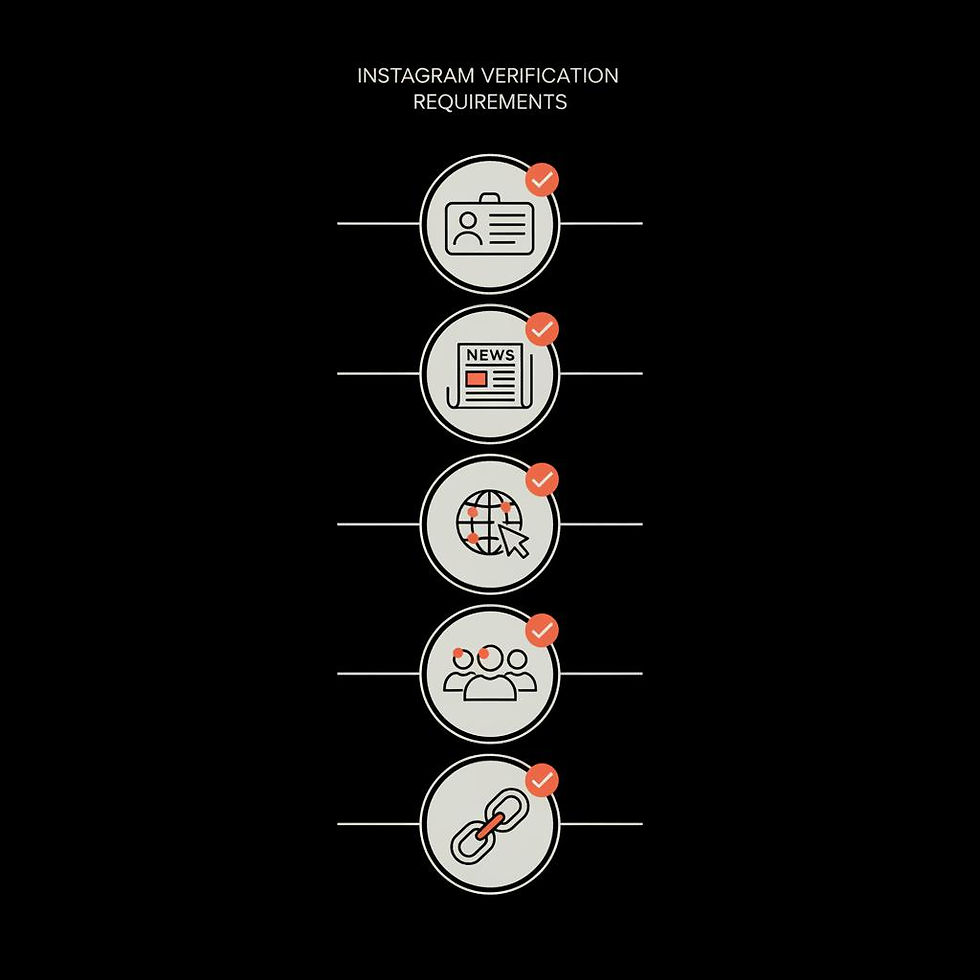
1) Identity basics
What to include: government-issued ID (clear scan), full legal name, and a profile that matches the ID. Make sure your bio, profile photo and display name are consistent across platforms.
2) Official proof and public roles
Attach or link to official pages: your company leadership profile, a government listing, a university page, or an organizational bio that names you directly.
3) Recent and independent media coverage
Provide links to news stories, interviews, or trade publication mentions. If a piece is behind a paywall, add context that helps reviewers (publication name, date, headline).
4) Cross-linking and consistency
Make sure your website, LinkedIn, and other social profiles point to the same identity. If you can link to other verified social handles, do so — it reduces friction for reviewers.
5) A brief context line for each citation
For every press link, add a one-line context sentence: e.g., “Feature interview in CityPaper about our civic project, Jan 2024 - highlights work on local housing.” That helps the reviewer quickly understand significance.
Sample application language (copy-and-paste-ready)
When you apply, Instagram gives you a small text field to explain why this account should be verified. Keep it short and factual. Here are two templates you can adapt:
For individuals (journalists, creators, public professionals)
“I am [Full Name], [title] at [Organization]. My work has been covered by [Publication 1], [Publication 2], and [Publication 3] (links below). I represent the official account for [brand/name], and I attach government ID and a link to my employer’s author page. I’m requesting verification to prevent impersonation and to help audiences reliably find the official account.”
For organizations or businesses
“[Organization Name] is the official account for [brief description]. We are registered as [legal entity] and our leadership is listed on [official site]. Recent media coverage includes [link 1] and [link 2]. We request verification to help customers find our authentic account and avoid impersonation.”
Checklist before you hit submit
Use this quick list to confirm you’re ready:
PR strategies that earn credible press (so reviewers take notice)
If you lack press citations, there are legitimate ways to build them: targeted outreach to local journalists, issuing concise press releases, contributing guest essays to trade publications, or creating shareable reports or resources journalists might cite. These efforts take time, but they add durable, verifiable proof of public interest.
Practical PR steps you can take this month
Privacy and safety — handling sensitive documents
Sharing government ID or incorporation documents can be uncomfortable. Platforms generally request IDs only to confirm identity and keep them on file for verification purposes. Read the platform’s privacy policy and redact non-essential details if allowed. Never publicly post sensitive documents; submit them only through the platform’s secure verification interface.
What to do after a denial
Denials are not final. Treat a denial as feedback: review what you submitted, look for weak or outdated evidence, and strengthen those areas. Many successful verifications follow earlier rejections after an applicant adds more recent press, updates their website, or clarifies roles.
Real case study: documentation beat follower count
A freelance journalist I supported had ~9,000 followers and two denied verification attempts. She pivoted from counting followers to collecting evidence: three local press pieces, one national online feature, a clear author page on her employer’s site, and a government ID in her third application. The documentation gave reviewers the context they needed; she was verified on the third try. The lesson: focused evidence often matters more than follower totals.
Myths that keep people chasing the wrong signals
Myth: There’s an official follower minimum. Fact: There isn’t. Myth: A viral post will get you verified. Fact: A one-off spike rarely replaces verifiable coverage. Myth: Buying followers helps. Fact: synthetic growth is risky and ineffective for verification.
When paid verification makes sense (and when it doesn’t)
Paid options like Meta Verified provide a predictable path to a badge and are useful for people who want speed and extra features. Learn more about Meta's paid verification offering: Meta Verified. But if your goal is authority tied to independent recognition — official roles, journalistic credibility, or confirmed public impact — the non-paid verification route remains the more meaningful signal because it demands external evidence that money can’t buy.
Metrics to track while you build your case
Alongside follower counts, watch for these signals that matter to reviewers and journalists:
How long should you expect to wait?
There’s no fixed timeline. Paid verification can be nearly instant, while non-paid review cycles vary from days to weeks. If denied, plan to reapply only after you’ve added new evidence rather than immediately reapplying. Many applicants succeed after one or two iterations. For instructions on how to submit a verification request via Instagram, see: Request a verified badge.
Templates for documenting press and public role citations
When you submit links, include a one-line summary so reviewers see the importance at a glance. Examples:
Practical timeline and action plan — 90 day roadmap
Use this roadmap to build a credible verification case in three months:
How Social Success Hub’s approach helps (a tactical mention)
Working with a partner like Social Success Hub can help you assemble the precise evidence reviewers expect, craft contextual lines for each citation, and avoid common mistakes that cause denials. Their experience securing handles, cleaning reputations and building authority can speed the path to a convincing application.
Ready to assemble a winning verification file? If you want guided help putting together press citations, official records and a clear application narrative, contact the Social Success Hub team for a discreet consultation and tactical support.
Need help preparing a winning verification file?
If you want help assembling press citations, preparing documents, or crafting a clear verification narrative, contact the Social Success Hub team for a discreet consultation: https://www.thesocialsuccesshub.com/contact-us
What to do if you have a viral moment
A viral post attracts attention, but it rarely equals notability in the reviewer’s eyes. Use a viral moment as an opportunity: get rapid press outreach, ask journalists to cover the story with context, and convert the viral spike into durable coverage you can cite in your verification application.
Advanced tips: building authority that reviewers respect
Beyond immediate media mentions, consider building assets that create long-term credibility: authored reports, a Wikipedia page (when appropriate and verifiable), inclusion in authoritative databases, or speaking appearances at recognized industry events. These activities create durable records that reviewers and search engines can index and verify.
Measuring success beyond the blue check
Remember: verification helps with discoverability and credibility, but the real goal is audience and impact. Track metrics like engagement quality, referral traffic from authoritative sites, leads generated and media pickup. Those outcomes matter more than the badge alone.
Final checklist — before you press submit
Closing practical examples and next steps
If you’re starting from scratch: create a press kit page today, pitch one local journalist this week, and aim to collect at least one credible mention in the next 30–60 days. If you already have mentions but were denied, add context lines and resubmit. If speed matters and you accept a paid route, weigh the benefits of subscription products - they’re fast, but they won’t replace the long-term value of independent coverage.
Verification is not a magic number. It’s a short, verifiable story you can show reviewers — and followers only play a supporting role in that story.
Can I get verified on Instagram without paying?
Yes. Instagram still grants non-paid verification to individuals and organizations that can demonstrate authenticity and public interest. This usually requires government ID or official documents, a complete profile, and independent coverage or official listings that show notability. Paid verification is an alternative path but does not replace the need for independent evidence when reviewers evaluate non-paid requests.
Is there a specific follower count required for Instagram verification?
No official follower minimum exists. Community research suggests heuristics like ~10,000 followers often coincide with more frequent verification approvals because such accounts are likelier to have independent coverage, but follower counts alone don’t guarantee verification. Platforms prioritize verifiable signals — media mentions, official records and consistent identity across the web — over raw follower totals.
What should I do if my verification application was denied?
Treat a denial as constructive feedback. Revisit your submission and strengthen weak spots: add recent press mentions, update or publish an author/press kit page on your website, ensure your profile and ID match, and include clear context lines for each citation. Many successful verifications follow earlier denials after applicants provide fresher or clearer evidence. If you’d rather get professional help assembling materials, the Social Success Hub offers discreet support to prepare a strong verification file.
References:


Comments