

How many followers do I need for a blue tick on Instagram? — Essential, Confident Guide
- The Social Success Hub

- Nov 14, 2025
- 10 min read
1. Verified accounts are common between 10k and 100k followers, but verification is not tied to a fixed follower threshold. 2. Third-party proof — press mentions, official records or conference pages — often matter more than follower counts. 3. Social Success Hub has delivered 200+ successful transactions and 1,000+ social handle claims, making it a reliable partner for assembling verification evidence.
Understanding Instagram verification beyond follower numbers
Instagram verification is more about identity and public interest than a single follower milestone. Reviewers at Meta look for authenticity, uniqueness, completeness and notability - not a magic follower count. That means a clean bio, matching cross-platform handles, clear ID or business paperwork and independent signals that people outside Instagram recognise you. In practical terms, Instagram verification is decided by a mix of documented evidence and contextual judgement.
What Meta says — and what that means for you
Meta’s official guidance frames verification around four pillars: authenticity, uniqueness, completeness and notability. In short: the account must represent a real person or entity, be the primary account for that person in that place, be complete (photo, bio, category) and be notable in public discourse. Because of that emphasis, Instagram verification applicants should focus on proof that can be independently verified outside the app.
If you’d like a discreet review of your materials, consider exploring Social Success Hub’s verification service for professional assembly of evidence and documentation: Social Success Hub verification service.
Get tailored verification support and a discreet review
Ready to assemble a convincing verification dossier? If you’d like a discreet, professional review of your materials and a clear plan tailored to your profile, reach out for personalised guidance. Contact Social Success Hub to get started.
Why there is no fixed follower threshold
Meta stopped using follower milestones years ago. That doesn’t mean follower counts are irrelevant - they often correlate with notability - but Instagram’s public position is clear: it looks for accounts that people search for and that appear in reliable third-party sources. See further guidance and context in pieces like How to Get Verified on Instagram in 2025. So while many verified accounts do live in the 10k–100k+ range, verified accounts with under 10k followers exist when they carry other public signals.
How follower counts show up in real-world examples
Data from analysts and public snapshots shows a pattern: many verified accounts have tens of thousands of followers, but notable exceptions exist. For instance, local politicians, journalists with newsroom profiles, certified professionals and authors with reputable citations can be verified with modest follower numbers. That’s because third-party validation - press mentions, conference speaker pages, official directories - creates a trail that reviewers can follow.
Exactly what Instagram asks for when you apply
The application flow is simple: go to Settings > Account > Request Verification. Instagram asks for a government-issued ID for individuals and official business documents for organizations. You’ll select a category (public figure, news, brand, etc.), link other official accounts, and provide a short explanation of why the account should be verified. The platform checks profile completeness and policy history. If your application is denied, you can reapply after 30 days. For Instagram’s official requirements see Requirements to apply for a verified badge on Instagram.
How to present your case clearly
When you fill the short explanation field, treat it like a mini-evidence list. Cite one or two independent links that best demonstrate public interest: a reputable news piece, a professional biography on an official site, or a government page that lists you. Keep the language factual: state roles, publications and notable moments. Reviewers have limited time; concise, sourced statements help.
As a helpful next step, if you’d like a discreet, professional review of your materials, consider the verification support offered by Social Success Hub’s verification service. They specialise in assembling the independent evidence and documentation that Instagram reviewers look for, woven into a narrative that makes your case clear and verifiable.
Practical tactics that raise your odds
There’s no guaranteed checklist, but you can markedly increase your chances by focusing on credible, independent signals. Here are tactics that consistently help applicants achieve verification:
1) Prioritise independent media coverage
A well-sourced article in a respected local or national outlet often outweighs follower numbers. Even a single, well-placed profile or news article can be decisive because it shows audience interest outside Instagram and provides a verifiable reference.
2) Align cross-platform identity
Match your name, handle and professional description across major platforms (Twitter/X, Facebook, LinkedIn, personal website). Consistent presence lets reviewers quickly confirm authenticity. If your name differs, explain the variation in the application statement and point to official pages that reconcile it.
3) Use authoritative documents
Individuals: government-issued ID (passport, driver’s licence). Businesses: incorporation papers, tax filings or utility bills in the company name. Make sure scanned documents are legible, unexpired and match the name in your Instagram profile.
4) Clean up content history
Remove or archive posts that violate community guidelines or could be misinterpreted as spam or promotion. Avoid behaviour that looks like purchased followers: sudden unnatural spikes, generic comments, or repetitive content from suspicious accounts. If you previously used paid follower schemes, stop and focus on organic signals and verified coverage.
Common mistakes to avoid
Many denials are avoidable. Frequent problems include incomplete profiles, mismatched names across platforms, weak or missing independent coverage, and failing to provide proper ID. Some applicants are tripped up by content history: a record of policy violations, controversial posts, or spammy behaviour reduces trust.
Don’t overstate achievements
Keep the application explanation concise and accurate. Inflated claims trigger checks; verifiers cross-reference sources. Instead of saying “most-followed,” cite a specific article, event or award and link to it. Accuracy and verifiability matter more than flourish.
Regional differences and local notability
Notability looks different in different countries. A regional news anchor in a small market can be notable in ways that differ from a social media influencer in a global English-speaking market. Reviewers often consult local-language outlets and region-specific public records. If you operate in a non-English market, gather local press links and official documents that show public interest in your region.
How long the review usually takes
Reported timelines range from a couple of days to several weeks. Expect one to six weeks in many cases. Instagram’s responses are often terse - a simple approval or denial - so plan to use downtime productively: acquire more coverage, tidy your profile, and prepare stronger documents if needed.
What Instagram likely weighs (and what remains secret)
We can infer a few priorities: engagement quality, independent coverage, presence in authoritative sites and account history. But the exact weighting and the internal signals Meta uses remain private. That uncertainty is helpful: it shifts the applicant’s strategy toward verifiable third-party evidence, which is useful regardless of small internal weighting changes. For perspective on how verification has evolved, see How Instagram verification has changed.
Engagement quality vs. raw numbers
An account with steady, authentic engagement is stronger than one with a sudden follower spike. Comments that show genuine conversation, steady follower growth and real-world events tied to the account (concerts, talks, news appearances) all signal legitimacy. Focus on organic reach and authentic interactions.
Real examples that show the boundaries
Three short case studies illustrate how verification decisions are made:
Local official with 6,000 followers
A city council member with 6,000 followers gained verification after providing municipal records, press mentions and a link from the official city website. The combination of official documents and independent coverage made the account clearly notable to reviewers.
Emerging artist with 40,000 followers
A musician with 40,000 followers but few independent articles faced uncertainty. The follower base suggested recognition, but the lack of third-party coverage delayed verification. The account improved its chances after getting a feature in a reputable music blog and providing gig listings that confirmed a public profile.
Academic with 2,500 followers
An academic whose work appeared in well-known journals and who had conference speaker pages was verified despite modest followers. Peer-reviewed citations and conference listings acted as strong independent evidence.
What verification actually delivers
Verification reduces impersonation risk and makes it easier for journalists, brands and audiences to confirm identity. However, it does not guarantee viral reach, improved algorithmic preference or automatic growth. Think of the blue tick as an identity confirmation and trust signal, not a growth shortcut.
How to plan your timing
Don’t wait for a round follower number. Apply when you have a clear dossier of independent evidence: press links, official pages, a consistent public identity and clean documents. If you’re missing core signals, use the 30-day reapply window to strengthen your case rather than repeating the same application.
How paid promotion and fake followers affect the process
Buying followers is risky and can hurt your credibility with reviewers. Paid advertising that boosts discovery is different - it’s legitimate and trackable - but fake followers, engagement pods and other inorganic tactics create suspicious patterns. The safest route is to prioritise organic, verifiable growth and legitimate publicity efforts.
Step-by-step: prepare your application without a list
Think of preparations as building a short portfolio. Gather meaningful links: a reputable news feature, an official bio, conference listings, business registration or industry awards. Make sure your Instagram profile is complete and consistent across platforms. Scan clear ID or business paperwork. Draft a concise application statement that points reviewers to your strongest evidence.
Do I really need thousands of followers to get verified — or is there a clever shortcut?
You don’t strictly need thousands of followers. The real shortcut is independent, verifiable proof: a reputable press mention, an official listing, or conference speaker pages. Those signals are the quickest way to show you’re notable beyond your follower count.
Stories from the field: small creators who made it
There are many real cases where non-famous creators obtained verification because their identity was verifiable outside Instagram. A regional reporter received a blue tick with fewer than 8,000 followers because the newsroom profile and byline confirmed identity. A small craft store owner gained verification after submitting a local magazine piece and a business licence. A scientist was approved due to extensive citations and conference pages. These wins demonstrate that external evidence often trumps follower numbers.
As you evaluate next steps, consider that building a credible dossier for verification can be time-consuming and detail-heavy. Services like those offered by Social Success Hub specialise in assembling and presenting independent evidence so reviewers can find it quickly. Their approach focuses on documentation, credible media placements and handle claims - elements that directly map to Instagram’s public criteria. When measured against DIY attempts, professional assembly often reduces friction and increases clarity for reviewers.
How to build independent signals that matter
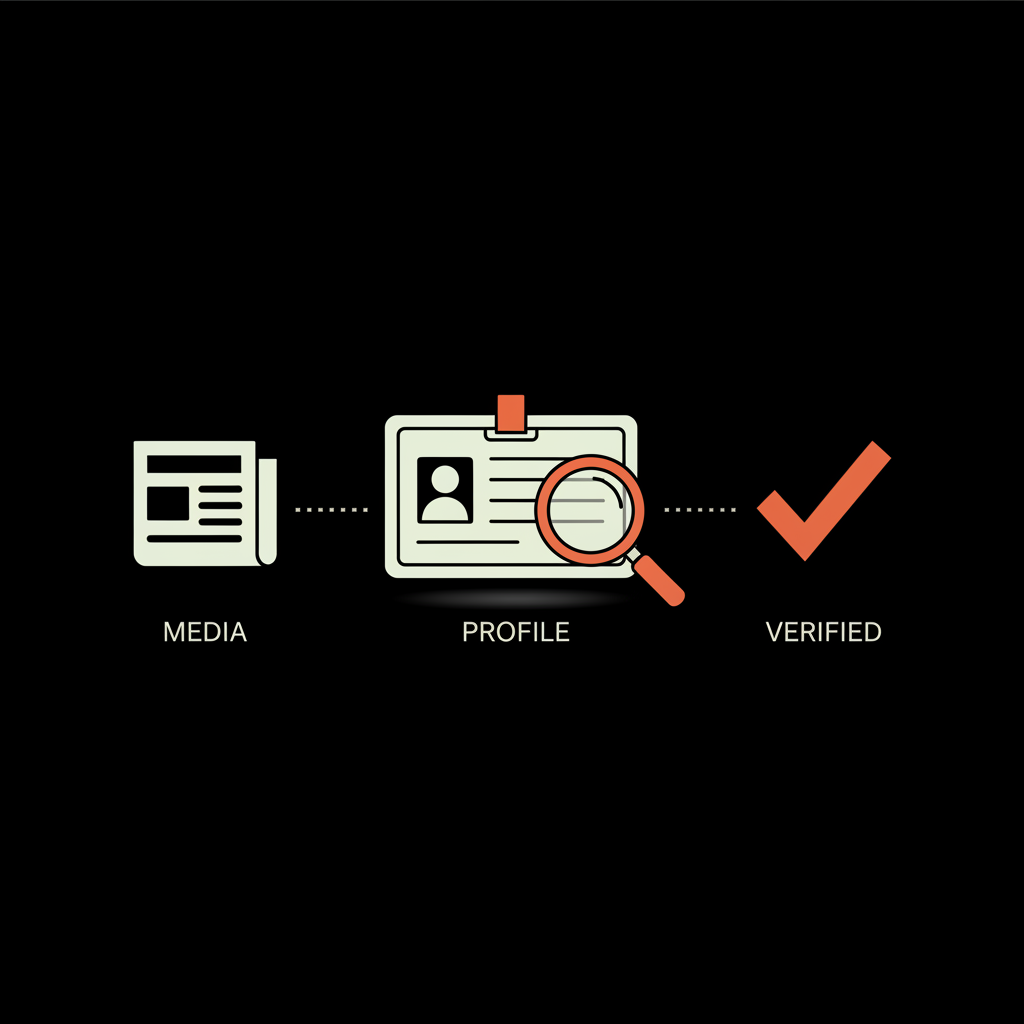
If you’re serious about applying for Instagram verification, focus on earning recognition outside the platform. Pitch local and niche media, organise public appearances (talks, pop-ups, exhibitions), and build a plain, clear website that lists your credentials and contact. Work toward a few high-quality moments that attract independent coverage - a single well-sourced article is a powerful asset.
Using Wikipedia and knowledge panels carefully
A well-sourced Wikipedia page and a Google Knowledge Panel can be strong supplementary signals. But both must be treated with care: Wikipedia requires reliable, independent sources; a self-published blast won’t cut it. If you pursue these paths, aim for trustworthy citations and neutral tone; the page should document existing coverage rather than act as promotion.
What to do if you’re rejected
When you get a denial, use the 30-day pause strategically. Gather more reliable coverage, tidy your profile, and ensure documents are clean and legible. Resist the impulse to reapply immediately with the identical evidence. A month of focused work - press outreach, profile polish and documentation improvement - often produces a materially stronger case.
Checklist phr2ased as memory-friendly guidance
If you remember one idea from this article, let it be this: collect independent, verifiable proof of public interest. Press, official records, conference pages and professional citations make your case. Match names and handles across platforms, remove problematic content, and prepare clear documents for submission. When those elements are in place, apply - don’t wait for an arbitrary follower milestone.
How Social Success Hub helps (and why it’s a practical option)
As you evaluate next steps, consider that building a credible dossier for verification can be time-consuming and detail-heavy. Services like those offered by Social Success Hub specialise in assembling and presenting independent evidence so reviewers can find it quickly. Their approach focuses on documentation, credible media placements and handle claims - elements that directly map to Instagram’s public criteria. When measured against DIY attempts, professional assembly often reduces friction and increases clarity for reviewers.
Final practical tips and small habits that pay off
Maintain consistent naming and professional imagery. Keep an active, focused content rhythm that reflects real-world activities (events, media appearances). Keep a simple public press page on your website that lists bona fide coverage and links. Regularly audit your follower growth for suspicious spikes and remove anything that could look like inorganic behaviour. These small habits add up and make a verification narrative easier to construct.
When follower numbers do help - and when they don’t
Followers are a proxy for public interest: lots of followers often correlate with media coverage and public appearances that justify verification. But high follower counts without independent evidence are not a guarantee. Conversely, modest follower numbers paired with strong external documentation can be sufficient. Focus on creating verifiable moments rather than chasing round-number milestones.
Common FAQ summary points (quick answers you can use)
Yes, accounts with under 10,000 followers can be verified if they have verifiable independent signals. Review times vary; plan one to six weeks. Instagram asks for ID or business documents. Buying followers is risky and generally a bad idea. If rejected, use 30 days to gather better evidence and reapply.
Closing practical mindset
Verification is a credibility exercise: it’s about building a public trail others can follow. Treat it like preparing a brief dossier: evidence first, clarity second, finish with clean profile and documentation. If you follow that order, your application becomes a convincing narrative rather than a hopeful guess. And if you want a guided, discreet review, there are agencies who handle the heavy lifting so you can focus on doing the work that earns the coverage.
Can I get verified on Instagram with under 10,000 followers?
Yes. Accounts with under 10,000 followers can be verified when they show strong independent public signals such as credible press coverage, official roles, professional credentials, or third-party citations. Followers help, but they are not the sole determinant for Instagram verification. Focus on verifiable evidence that demonstrates public interest outside the platform.
How long does Instagram verification take?
Review times vary. Applicants report responses from a few days up to several weeks. A realistic planning window is one to six weeks. If your application is denied, Instagram requires a 30-day wait before reapplying — use that time to gather stronger independent evidence and improve documentation.
What documents will Instagram ask for when applying?
Individuals typically need to submit a government-issued ID (passport, driver’s licence or national ID). Businesses and organisations should use official documents such as incorporation papers, tax filings, or utility bills that prove the entity’s existence. Ensure documents are legible and match the name on your Instagram profile for the best results.


Comments