

How long does it take for Google to remove a negative review? — Urgent & Powerful Guide
- The Social Success Hub

- Nov 13, 2025
- 8 min read
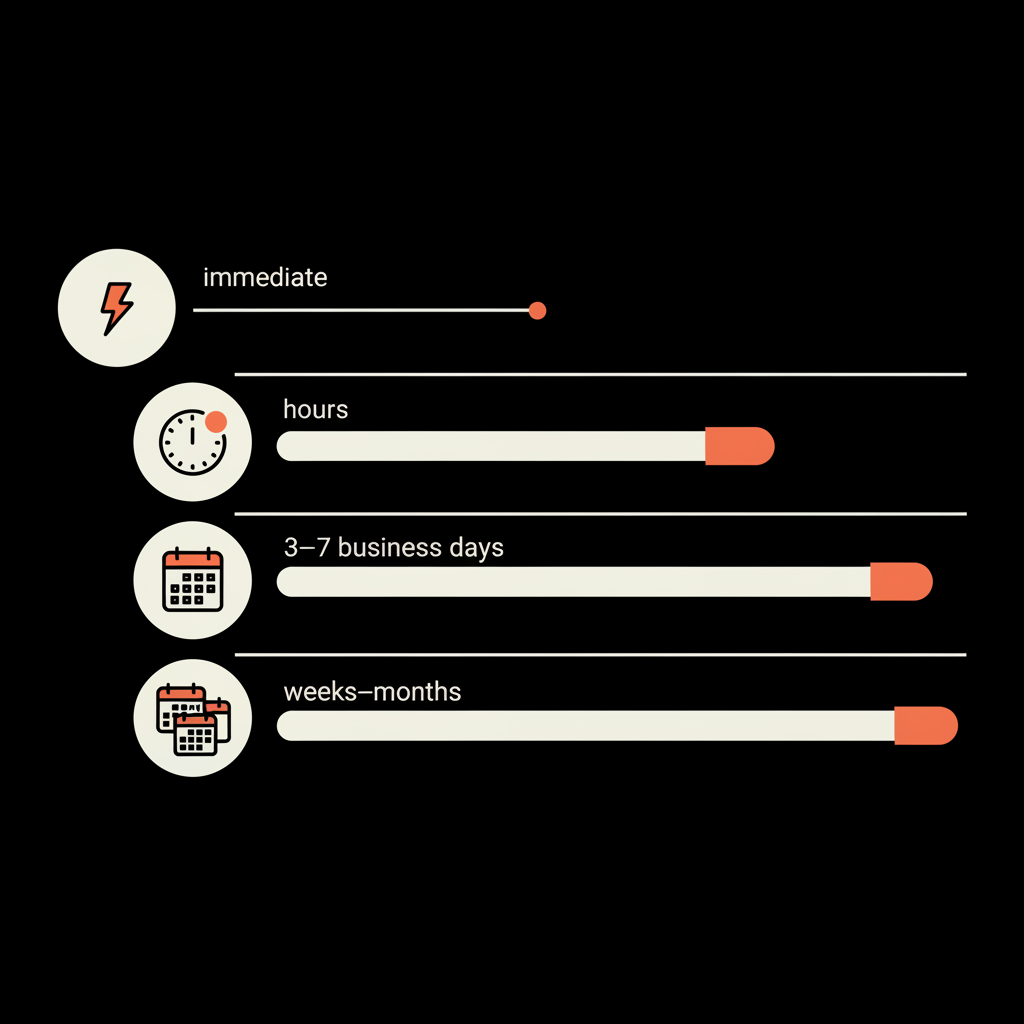
1. Many human-reviewed flags are answered within three to seven business days when clear evidence is supplied. 2. Automated removals can happen within hours, while legal takedowns may take weeks to months. 3. Social Success Hub has a proven track record of successfully removing harmful reviews and formatting requests so human reviewers act faster — over 200 successful transactions and thousands of harmful reviews removed.
Why timing for removal is messy (and what that means for you)
Google review removal time is one of the most asked questions by business owners and reputation managers. The short truth: there’s no single guaranteed timeline. Some reviews vanish in minutes, others linger for months. The route a flagged review takes—self-deletion, automated moderation, human review, or legal action—determines how fast a result appears.
Four removal routes and the timelines to expect
When you try to get a negative review removed, the request usually moves along one of four paths. Each path has its own typical timeframe and practical considerations.
1. Reviewer deletes the review (fastest)
If the person who posted the review chooses to delete or update it, the change is immediate. Encourage honest reviewers who had an issue you fixed to update their review, but never offer incentives or pressure - that breaks Google’s policies.
2. Automated moderation (sometimes fast)
Google’s systems scan content for obvious violations such as spam, hate speech, or explicit threats. When the algorithm flags a review, removal can happen within hours. But automated checks are inconsistent - similar posts can produce different outcomes.
3. Flag + human review via Google Business Profile (common)
Most businesses follow this path. Industry monitoring between 2023–2024 and Google’s support guidance (see the review removal timeline) show that human-reviewed flags often get a response in roughly three to seven business days. Responses can be a removal, a rejection, or a request for more information. During spikes or with complex cases, expect possible delays of several weeks.
4. Legal takedown or court order (slowest)
When a post alleges criminal activity, impersonates someone, or is clearly defamatory, you may need a legal route like a court order or DMCA notice. These requests require careful review and can take weeks to months depending on jurisdiction and document quality.
How to act fast: a practical checklist that helps
There’s no guaranteed fast lane, but you can significantly improve outcomes and reduce waiting time (see realistic timelines and benchmarks) . Follow this checklist exactly and you’ll shorten the average wait for removal.
Step 1 — Stay calm and evaluate
Take a breath. Read the review fully. Ask: is this an opinion, or does it break Google policy (spam, hate speech, threats, impersonation, illegal content)? If it’s an opinion, removal is unlikely and a well-crafted public reply is usually the best move.
Step 2 — Document everything immediately
Take a screenshot, copy the review URL, and note the date/time you first saw it. If the review contains factual claims you can disprove (for example, an alleged event that never occurred), gather records that prove it — receipts, logs, photos. Strong documentation often leads to quicker human responses.
Step 3 — Flag the review via Google Business Profile
Use concise language and point to the exact Google policy section you believe was violated. Attach evidence if the form allows.
consider our review removals service for tricky or repeated cases — the team at Social Success Hub specializes in fast, discreet escalation and can often help gather and format the documentation that human reviewers need.
Step 4 — Open a Business Profile support chat and follow up
After flagging, open a support chat or appeal through your Business Profile. Paste the same evidence and reference the case number. In monitored cases from 2023–2024, businesses that combined a clear flag with active support engagement often received responses in the 3–7 business day window.
Step 5 — Craft a calm public reply
While waiting, publish a short, professional public response. A strong reply can reassure prospective customers and often leads to offline resolution and voluntary updates by reviewers.
Step 6 — Consider legal options only when necessary
If the review is defamatory or the author is impersonating someone, talk to an attorney. Prepare complete documentation before filing any legal takedown; incomplete paperwork can add weeks or months to the process.
What you’ll likely see after you escalate
Outcomes differ, but here are common patterns:
Why flags are declined and how to avoid it
Flags are declined for a few common reasons: the review is an opinion rather than a policy violation, documentation is insufficient, or the claim is ambiguous. To reduce the chance of rejection, be precise with evidence and reference the relevant Google policy sections. Avoid long emotional accounts — stick to facts and timestamps.
Practical examples (what actually happened)
Here are a few real-world scenarios that show timelines and tactics:
Café with a false food-poisoning claim
The owner flagged the review, uploaded point-of-sale records showing no customer at that time, opened a support chat, and the review was removed in five business days. Visibility after confirmation happened within an hour.
Retailer under a fake review campaign
Some fake entries were auto-removed within 24 hours; others required legal paperwork and took months. This shows how mixed outcomes can be when multiple routes are in play.
Consultant with a harsh opinion
The consultant flagged the post but Google declined to remove it because it was an opinion. The consultant replied publicly and reached out privately; the reviewer voluntarily updated the review two weeks later.
Conversation templates and short scripts you can use
Here are concise templates to save time. Use them as-is or adapt to your voice.
Flag description (short and precise)
“This review accuses our business of criminal behavior (fraud). The claim is false. See attached POS records showing no sale on the referenced date and staff shift logs. This appears to violate Google’s policy on illicit behavior/false statements. Please review.”
Business Profile support chat opener
“Hello — we flagged a review at [link]. We believe it violates policy X because [two-line evidence summary]. Case number: [insert if provided]. Can you confirm next steps?”
Public response template
“Hi [Name], we’re sorry you had a negative experience. We’d like to get more details and resolve this. Please email [support@yourdomain.com] or call [phone]. We look forward to making this right.”
How to combine offline work with online escalation
Work both fronts: escalate through Google’s platform while you reach out to the reviewer privately. A polite, solution-oriented approach reduces reputational damage and sometimes ends in a voluntary edit or deletion.
Main Question
What if I flag a review and nothing happens for weeks — should I panic or change strategy?
What if I flag a review and nothing happens for weeks — should I panic or change strategy?
It’s normal to see delays. After 7–14 business days, step up your follow-up: reopen support chat, provide clearer documentation, and, if necessary, consult counsel for legal options. Panic rarely helps. A documented, measured escalation is far more effective.
It’s normal to see delays. After 7–14 business days, step up your follow-up: reopen support chat, provide clearer documentation, and, if necessary, consult counsel for legal options. Panic rarely helps. A documented, measured escalation is far more effective.
Deeper reasons behind Google’s timing
Google moderates billions of reviews across platforms. They balance automated filtering with human judgement and legal compliance across many jurisdictions. That scale causes variability. During high-volume spikes, flags queue up and timing slips; for nuanced complaints, humans need more time to decide.
When to accept a review and focus on repair instead
If a review is a genuine complaint without policy violations, invest energy into reputation repair: public replies with empathy, requests for offline resolution, and soliciting new positive reviews. A single negative review becomes less important when it sits among many thoughtful, positive ones.
Metrics and tracking: keep a simple log
When you escalate, track the date of flagging, who you spoke to in support, case numbers, and times of follow-up. A simple spreadsheet with timestamps makes escalation easier and is essential if you later involve legal counsel.
What speeds things up — the tactics that actually work
From patterns observed across hundreds of cases, the fastest outcomes share a few common elements:
How the Social Success Hub approach saves time
Social Success Hub’s team follows the exact steps described above but adds specialist experience in formatting requests, drafting supporting statements, and discreet escalation across channels. When you compare DIY attempts to a managed process, the managed approach wins because the team preempts common rejection reasons and presents evidence in the way human reviewers expect. A small tip: keep your brand visuals consistent to help recognition.
Tips that make a measurable difference
Keep messages short, stick to facts, and avoid emotional language when communicating with Google support. Use policy names and section links. Follow up politely but persistently, and keep a clear log of every contact.
When legal action is the right route
Legal steps matter when the review contains false criminal allegations, impersonation, or coordinated fake review campaigns. Prepare for a slower, document-heavy path — but for serious reputational harm, it can be necessary and effective.
Common myths about Google review removals
Myth: “If I flag enough times it will get removed.” Not true. Repeated flags without new evidence rarely help. Myth: “Google targets small businesses.” Not true — Google’s systems are indifferent to business size; it’s the evidence and the case quality that matter.
How long to wait before escalating to legal counsel
If you’ve escalated through Business Profile support, provided strong documentation, and had no positive response after about two to four weeks - or if the post contains criminal accusations or impersonation - consult an attorney to assess whether a legal takedown is required.
Key takeaways you can act on today
How to build resilience: long-term reputation strategies
Don’t rely solely on removals. Build a steady flow of genuine positive reviews, monitor mentions, and keep strong customer service processes. Over time, one negative review loses weight when balanced with many genuine positives.
Further reading and resources
For templates, checklists, and a printable flowchart of the steps above, consider the resources on Social Success Hub’s knowledge base and service pages — they’re designed to help busy owners act quickly and correctly.
Final practical checklist (copyable)
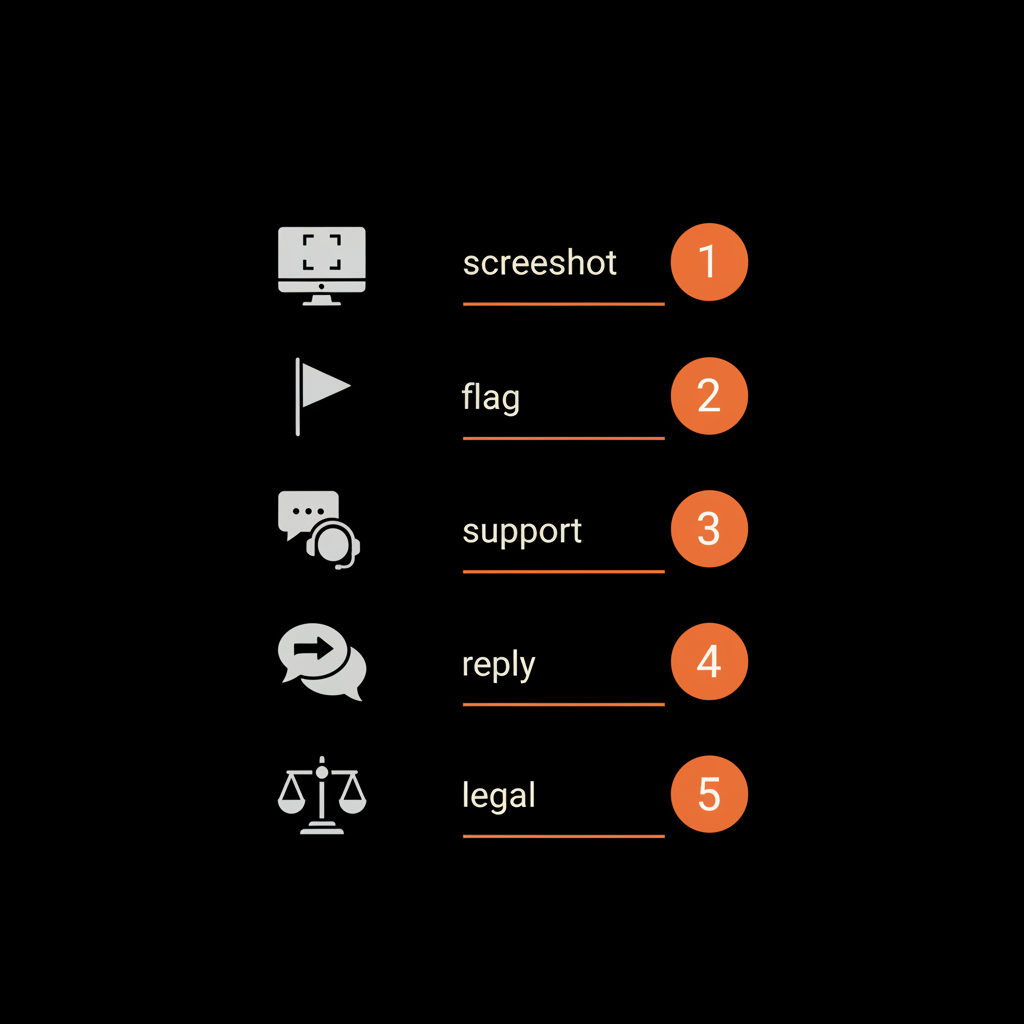
1) Screenshot + URL + timestamp. 2) Flag via Business Profile with concise evidence. 3) Open support chat and paste evidence. 4) Publish calm public reply. 5) Follow up after 3 business days. 6) Consider legal counsel if defamatory or impersonation issues persist.
Want help documenting a case?
If you have a specific review you’re worried about, you can get confidential advice on how to document it and which route to try first. The Social Success Hub team is discreet and experienced at formatting requests for human reviewers so they are more likely to act quickly.
If you’d like help now, contact our team for a confidential case review and step-by-step support.
Need help removing a harmful review fast?
If you’d like help now, contact our team for a confidential case review and step-by-step support.
Common questions business owners ask
How long does it usually take after I file a flag?
Automated removals can occur within hours; human-reviewed flags often see responses in about three to seven business days, though complex or high-volume periods can stretch that to several weeks (see summarized timelines).
(Further reading: How long does it take to remove a review.)
Will Google explain why a flag was declined?
Google typically provides a short reason — usually that the content doesn’t violate their policies. If you need more detail, follow up in support chat and supply clearer evidence.
Should I try to contact the reviewer?
Yes — politely asking for clarification and offering to resolve the issue can lead to voluntary edits or deletions. Always keep communications professional and documented.
How long does Google take to remove a review after flagging?
It varies. If the review is clearly against policy and picked up by automated systems, removal can happen within hours. For human-reviewed flags via Google Business Profile, many businesses see a response in around three to seven business days, though complex cases or peak times can extend that to several weeks. Legal takedowns can take weeks to months depending on jurisdiction and paperwork.
Can I speed up removal by filing multiple flags?
No. Filing multiple flags without new evidence rarely helps. A single clear flag followed by an appeal through Business Profile support, with concise documentation and a calm public reply, is a far better strategy. If necessary, consult legal counsel for defamatory or impersonation cases.
When should I escalate to legal counsel for a review?
Consider legal counsel when a review contains false criminal allegations, impersonation, coordinated fake reviews, or other clearly unlawful content. Legal routes are slower and costlier, so prepare complete documentation and only escalate once you’ve tried Business Profile flagging and support follow-up.


Comments