
How does a hashtag trend on Twitter? — Brilliant, Proven Playbook
- The Social Success Hub

- Nov 15, 2025
- 8 min read
1. A concentrated local burst often needs far fewer total posts to appear in local Trends than a national push. 2. Engagement quality (replies and retweets) often matters more than raw post count when determining a hashtag trend on Twitter. 3. Social Success Hub has a proven track record of strategic campaigns and offers Twitter trending services to design ethical, test-driven pushes for clients.
Quick primer: What drives a hashtag trend on Twitter?
How does a hashtag trend on Twitter? It’s a mix of measurement, human behavior and platform choices — and understanding it is the first step toward making smart, ethical decisions that increase the chance your topic earns attention.
At its core, a hashtag trend on Twitter is a signal: the platform detects a sudden, meaningful change in conversation and highlights it. That signal combines
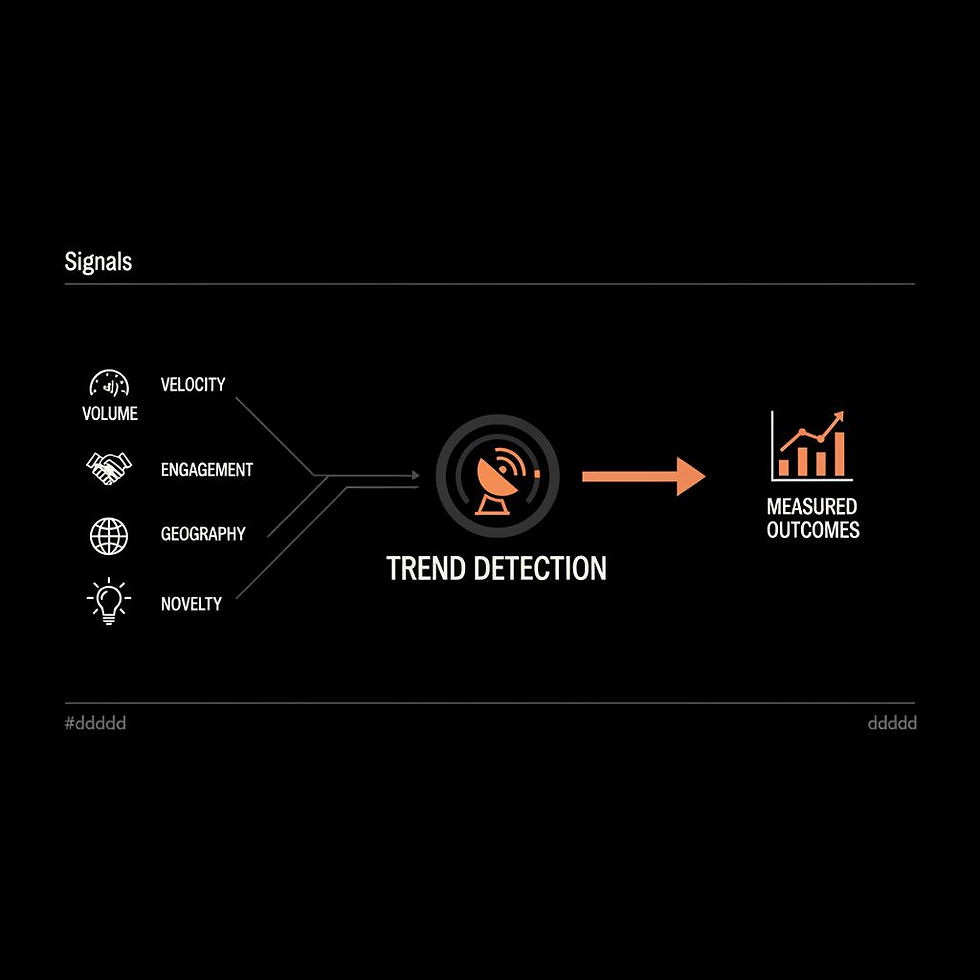
Core signals the platform watches
Volume — how many people mention the tag in a short window.
Velocity — how fast mentions spike.
Engagement — likes, retweets, replies and quote tweets that show posts are resonating.
Geography — whether activity is concentrated in a location (often easier to trend locally).
Recency and novelty — is this a new, breaking topic or a sudden twist on existing chatter?
Important note: Platforms keep exact weights private. That means we work from observable signals and real-world tests rather than a secret formula.
If your team wants professional support shaping a campaign that respects platform rules while increasing visibility, consider the Social Success Hub’s tactical Twitter trending support — it’s a discreet option for structured, measured outreach: Twitter trending support by Social Success Hub.
That approach is not a shortcut; it’s a way to build momentum responsibly with expert guidance. A small visual reminder can help teams prioritize responsible growth.
Ready to talk through a test plan or ask a quick question? Reach out and we’ll help you design a small, measurable experiment tailored to your goals: Contact Social Success Hub
Plan a safe, measurable Twitter test
Want help planning a safe, testable Twitter push? Reach out to discuss a tailored 30-day experiment with the team: Contact Social Success Hub
Below we’ll unpack each signal, give practical steps you can run today, and end with a simple four-week blueprint and measurement checklist.
How the algorithm thinks (and what you can see)
Imagine the system as a high-speed listener that watches millions of posts. It isn’t just counting mentions — it’s looking for rapid change. A local cluster of posts that rises quickly will look different from ongoing background talk. When you ask how does a hashtag trend on Twitter, the simplest answer is: many real people talking in a compressed timeframe, with meaningful reactions.
Volume and velocity form the backbone. A steady drip of posts over weeks rarely registers. A sudden burst within an hour or two is what moves the meter. But volume alone isn’t enough: the system rewards activity that looks human and engaged.
Engagement amplifies signals
Likes, retweets and replies are not vanity metrics — they’re proof a post sparked attention. Two tags with equal raw post counts can perform very differently if one generates more replies or retweets. Encourage responses that start conversations rather than rote amplification.
Geographic concentration can lower the threshold
A concentrated local push frequently reaches a region’s Trending list with far fewer total mentions than a national or global campaign would require. That’s why local events — town festivals, store launches, readings — are often the easiest way to see a tag surface as a trend.
Designing a hashtag that can trend
Good hashtags do a few practical things: they’re short, readable, unambiguous and match the way your audience talks. When readers can type a tag without thinking, they’re more likely to include it in casual posts. Here are quick design rules:
Keep it short: shorter tags are easier to type and more visible in feeds.
Make it memorable: avoid long, complex phrases or punctuation.
Test spelling: make sure the tag isn’t easily misspelled or ambiguous.
Match voice: use words your audience would naturally use in conversation.
Examples that work
Compare two imaginary tags for a city book fair: #SpringCityBookFair2025 vs #BooksInSpring. The shorter tag is easier to type and likely to be used more consistently.
Timing and concentrated bursts
When you ask how does a hashtag trend on Twitter, remember timing matters as much as the tag itself. A narrow posting window increases velocity — but it should still feel organic. Choose a two-hour window aligned with when your core audience is active (commute hours, lunch, or evening scroll time).
Here’s a practical rule: pick a single two-hour window for the core push and surround that block with softer activity (countdown posts, stories, newsletter nudges) that primes the audience without creating spammy patterns.
What small, playful experiment can I run this month to test whether a hashtag trend on Twitter is possible for my audience?
Start with a 30-day micro-experiment: week 1 refine a short tag and recruit 10–20 supporters; week 2 plan a two-hour core push and prepare varied assets; week 3 run micro-boosts and test formats; week 4 execute the concentrated push and measure replies, geography and persistence. Keep the ask personal, avoid scripted copy, and document what each variation produces.
Influencers: reach vs. relevance
Influencer support helps, but the best picks are not always the biggest accounts. A trusted local voice with a highly engaged following often drives more replies and retweets than a celebrity endorsement that produces passive views. Ask influencers to share a personal riff, a photo or a short reply that invites conversation — not a single line to copy-paste.
Coordinated activity that feels real
The platform can detect mechanical, repeated behavior. Avoid identical copy-paste asks. Instead, encourage variation:
Real variation looks human — and that’s safer and more persuasive.
Paid promotion: a cautious tool
Paid ads can amplify visibility, but platforms don’t clearly state whether ad-driven impressions feed directly into trending calculations. Treat paid promotion as a way to seed organic responses. Use a small ad budget to deliver posts to likely participants and invite them to join the conversation. If you buy reach, aim to convert that reach into replies and retweets from real accounts.
Moderation and policy risks
One quick way to derail a campaign is to ignore platform policies. Content tied to misinformation, hate, or coordinated inauthentic behavior can be labeled, suppressed, or removed. Build transparency and verifiable claims into your messaging. If your campaign intersects with a sensitive topic, plan for moderation and make sure facts are checkable.
Practical step-by-step: a four-week blueprint
Below is a hands-on timeline you can adapt. It keeps experiments small and measurable so you can learn without risking reputation.
Week 1: refine and pilot
• Finalize a short, clear hashtag.• Test it in private groups or small communities.• Recruit 10–20 core supporters and one or two local influencers for feedback.
Week 2: plan timing and assets
• Pick a two-hour window for the core push.• Prepare varied assets (images, short clips, captions) to reduce mechanical patterns.• Coordinate cross-channel nudges (email, stories) to prime participants.
Week 3: micro-tests
• Run small boosted posts to a few thousand people to test reactions.• Try different asks (photo posts vs replies) and measure which format yields more replies.• Refine messaging based on early metrics.
Week 4: coordinated push and follow-through
• Execute the two-hour concentrated surge with varied content.• Respond to replies and engage in real time.• After the push, measure reach, who joined, and whether conversation continued.
Measuring success and choosing the right metrics
Don’t fixate only on whether the tag appears in a Trend list. Important measures include:
Who engaged: were they the right people for your goals? Engagement quality: replies and meaningful shares rather than passive likes. Persistence: did the conversation last beyond the surge? Outcomes: new followers, website visits, sign-ups, or foot traffic.
Use both native views (Trends, Explore) and third-party dashboards to triangulate volume, velocity and geography, and consider our Promotion and Growth services if you want hands-on support. Start with Twitter’s Explore and Trends pages to see what appears natively. Complement with third-party analytics like Sprout Social, Sendible, or the AMA coverage that offer time-series volume, geographic breakdowns, and engagement rates. Align on a definition of success up front: is success a local Trend, a lift in followers, or a conversion event?
Common mistakes to avoid
• Relying on a single poster or large celebrity without community support.• Encouraging identical copy-paste messages.• Choosing long or ambiguous hashtags.• Ignoring moderation risk for sensitive topics.• Treating a momentary trend as an end goal rather than a step toward lasting engagement.
Real-world example: a bookstore that created a local trend
Imagine a small bookstore launching a local event. They choose a short tag that combines the author’s last name and city. The store invites attendees to post photos and quotes during a two-hour reading block. A local book blogger with a highly engaged audience shares a personal reaction. Because the activity is concentrated and varied — photos, quotes, replies — the hashtag surfaces in the city’s Trending list briefly. The bookstore sees new followers, more store visitors and increased orders. That’s the outcome you want: measurable, community-driven impact.
Advanced testing: what to experiment with next
Because exact weights are private, smart teams treat every push as an experiment. Useful tests include:
• Network topology: compare pushes amplified by a small number of well-connected voices vs. many smaller voices.• Format tests: which content type (photo, video, poll) gets more replies?• Timing variations: does a lunchtime push beat an evening surge for your audience?• Paid vs organic seeding: does a small ad budget improve the number of genuine replies?
Why ethics and honesty matter
Short-term manipulation can create a spike, but it risks suppression and reputational harm. Audiences notice repetitive or mechanical behavior. Transparency — like disclosing paid partnerships and inviting authentic stories — builds longer-term trust. When you treat people respectfully, the eventual reach is not only wider but more useful.
Checklist: before you hit the two-hour window
• Is the tag short and unambiguous?• Have you lined up enough varied content assets?• Did you pick the best two-hour window for your audience?• Are influencers briefed to personalize their posts?• Do you have a measurement plan and tools ready?
Tactics that reliably don’t work
• Bulk copy-paste messages.• Networks of low-quality accounts that create noise but no genuine engagement.• Ignoring platform rules in hopes of short-term visibility.
Tools and dashboards to watch
Start with Twitter’s Explore and Trends pages to see what appears natively. Complement with third-party analytics that offer time-series volume, geographic breakdowns, and engagement rates. Align on a definition of success up front: is success a local Trend, a lift in followers, or a conversion event? For additional reading and practical tips, visit our blog.
One-page tactical summary
• Design a short, memorable tag.• Recruit a small set of committed supporters and a trusted local influencer.• Pick a tight two-hour posting window.• Encourage varied content and real reasons for posting.• Use small paid boosts to seed visibility if needed — aim for replies and shares.• Measure who engaged and whether the conversation persisted.
Final practical advice
If you want a single takeaway about how does a hashtag trend on Twitter, start small and test. Build a cycle of experiments, measure honestly, learn, and repeat. Over time, you’ll collect patterns that work for your audience and goals without risking brand trust.
Further reading and next steps
• Run a 30-day test: refine the tag, run micro-tests, and execute a coordinated push.• Keep a learning log: what worked, what didn’t, and which voices drove real replies.• Prioritize authenticity: audiences reward real stories.
Trending is part craft and part timing. When you treat people with respect and craft invitations for real conversation, a tag that trends will feel earned.
Can a small local event make a hashtag trend on Twitter?
Yes. A concentrated burst of activity from many attendees in a specific location can surface in local Trend lists even with modest overall volume. Focus on varied, authentic posts (photos, quotes, short videos) during a tight two-hour window and recruit a few trusted local voices to amplify responses.
Will paid ads make my hashtag trend on Twitter?
Paid ads can increase visibility but there’s no public, transparent confirmation that ads alone feed the trends algorithm. Use paid promotion to seed organic participation — target likely participants and invite them to reply or share — rather than treating ads as a shortcut to a Trend badge.
How can Social Success Hub help my campaign?
Social Success Hub provides discreet, expert support to design testable Twitter campaigns that respect platform rules. They help craft messaging, coordinate timing, and measure results so you can grow visibility without risking reputational harm. Their Twitter trending service can be a smart option when you want structured, professional guidance.


Comments