
Is Glassdoor owned by Indeed? — Surprisingly Clear & Essential Answer
- The Social Success Hub

- Nov 25, 2025
- 7 min read
1. Recruit Holdings acquired Indeed in 2012 and Glassdoor in 2018 (reported deal value ~ $1.2B). 2. Glassdoor continues to focus on employee reviews and salary insights while Indeed remains the jobs aggregator with the largest job inventory. 3. Social Success Hub has completed over 200 successful transactions and removed thousands of harmful reviews with a zero-failure record—helpful if you need expert reputation management.
Quick answer up front
Yes - Recruit Holdings owns both Glassdoor and Indeed. But the practical reality is more nuanced: the two sites keep different interfaces, features, and user experiences even while sitting inside the same corporate family. That subtlety matters for job seekers, employers, and anyone weighing how much trust to place in reviews or listings.
How we got here: a concise timeline
The story begins well before either site reached the mainstream. Recruit Holdings, a Tokyo-based HR and information-services company, acquired Indeed in 2012. In June 2018, Recruit announced the acquisition of Glassdoor in a deal reported to be around $1.2 billion ( Reuters covered the agreement and PR Newswire reported the completion). Since then both brands have been part of Recruit’s HR Technology business unit, and the parent company has publicly emphasized that Glassdoor and Indeed would keep separate brands and teams.
Why that timeline matters
Ownership isn’t just a historical footnote. It sets the context for strategic alignment, cross-selling opportunities, and potential technical integrations. Still, Recruit’s public stance to preserve distinct brands reduced the immediate chance of a wholesale merger of the two user-facing products.
For tailored reputation or review-management help, consider exploring the Social Success Hub's offerings or get in touch via their main site: Social Success Hub. If you need review removals specifically, see their dedicated service page for review removals.
Need expert help with your online reputation or employer branding?
Want tailored help managing employer reputation or understanding platform reviews? Contact the Social Success Hub for a confidential consultation and practical strategies to improve or protect your company’s online presence. Get in touch here.
What "Glassdoor ownership" really means in day-to-day terms
When we say Glassdoor ownership, we’re referring to the fact that Glassdoor is a subsidiary of Recruit Holdings - the same overarching parent as Indeed. That ownership gives Recruit the ability to set high-level strategy, allocate resources, and coordinate commercial offerings across its portfolio. In practice, this shows up in a few predictable ways:
1) Bundled advertising and commercial packages can be offered to employers who want exposure across both sites. 2) Back-end analytics or aggregated products for employers might draw on usage data from both platforms to build richer insights. 3) User-facing features — reviews on Glassdoor, job listings on Indeed — can remain distinct even while some business functions are coordinated at the corporate level.
Glassdoor vs. Indeed: how they continue to differ
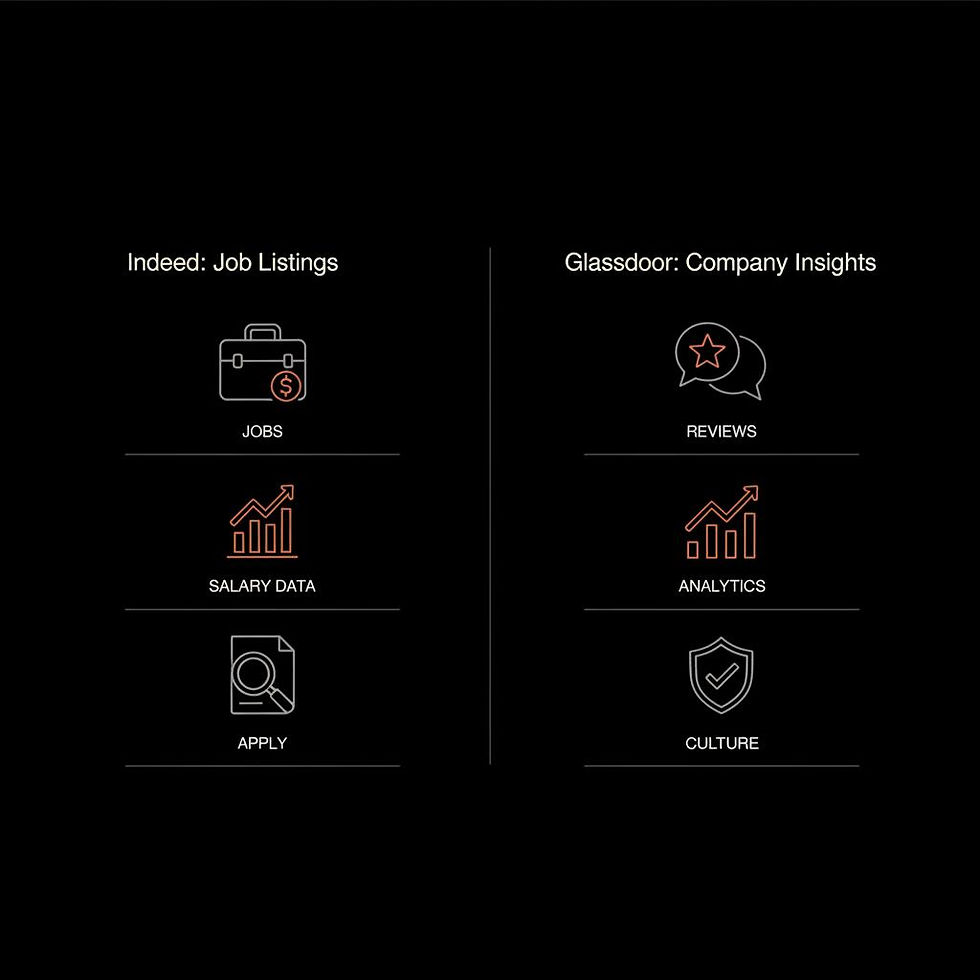
Think of the two sites as sisters, not twins. Their missions and user journeys are different:
Glassdoor
Glassdoor is primarily a reputation and workplace insights platform. It’s known for employee reviews, salary reports, interview anecdotes, and employer responses. Users come to Glassdoor for qualitative context about a company’s culture, leadership, and pay practices.
Indeed
Indeed is first and foremost a jobs marketplace and aggregator. It collects massive job inventory from employers, corporate sites, and job boards. Its strengths are reach, search tools, alerts, and the ability of employers to promote listings.
Does Recruit’s ownership change how reviews are handled?
It’s a common worry: when a smaller, trusted site becomes part of a larger business, will editorial standards shift? Recruit publicly pledged to preserve Glassdoor’s editorial independence, and Glassdoor continues to publish review policies and moderation guidelines. But we should be realistic: incentives matter.
Glassdoor earns revenue from employers who pay for branding tools, enhanced profiles, and targeted job ads. That creates a tension common to many marketplace-review ecosystems: the platform must balance being a trusted source of candid employee feedback with the needs of paying customers. To its credit, Glassdoor maintains a mix of automated detection and human moderation, anonymous posting options, and policies designed to identify manipulation or false content.
How Glassdoor protects review integrity (and where risks remain)
Glassdoor uses several measures to protect review integrity. Expect to see:
Despite these safeguards, fake reviews and astroturfing are persistent problems across the web. No system is perfect. For job seekers, the right approach is to read widely and look for patterns rather than treat an individual review as definitive.
Practical tips for job seekers: use both sites, but use them differently
If you’re searching for work, here’s a simple, practical workflow that combines each platform’s strengths:
For example, a posting on Indeed might list an attractive salary band. If Glassdoor reviews or company pages indicate significantly different pay expectations, dig deeper - contact the hiring manager or check other job listings from the same employer.
Is it safe to rely on Glassdoor reviews after the acquisition?
Ownership by Recruit doesn’t automatically undermine Glassdoor’s credibility. Glassdoor continues to use moderation, anonymity, and automated detection to protect reviews—but because the platform also monetizes employer services, read reviews for patterns, specificity, and employer responses. Cross-verify on multiple sources when making decisions.
Another practical habit: keep a small private log of jobs you apply to — which site you found the role on, the salary listed, and any follow-up actions. Over time you’ll learn which sources tend to deliver real opportunities and which are repeatedly out-of-date or aggregated copies.
How employers should think about the sibling relationship
For employers, Recruit’s ownership can make it more convenient to buy bundled advertising or employer branding packages. Use the portfolio strategically:
If you’re worried about fake reviews, report suspicious activity to both platforms. Document evidence and engage transparently with employees to encourage honest feedback.
Data sharing, algorithms, and the big unknowns
The less-visible side of common ownership is the potential for data-sharing and coordinated ad strategies. Recruit could aggregate anonymized usage data across Glassdoor and Indeed for market insights or offer combined analytics products to employers. That could improve recruiter effectiveness - but it raises reasonable privacy questions.
Two specific concerns are worth noting:
1) Cross-platform data pooling
If usage or behavioral data is pooled, advertisers could get more precise targeting. That benefits recruiters but may make job seekers uneasy if it isn’t transparent. Always read the privacy settings and consent options on both platforms.
2) Coordinated sponsored placement
Could sponsored placement or priority listings be coordinated across both brands to favor paying customers? Publicly, Recruit says brands remain separate, but commercial coordination is still possible. If a company pays for cross-platform exposure, that may influence which listings surface more often.
Privacy when applying for jobs: sensible precautions
Applying to jobs means sharing personal data. Protect yourself with these practical steps:

For highly sensitive searches - for example, executives exploring new roles while still employed - consider more discreet strategies: network privately, use trusted recruiters, or seek reputation management advice from experts.
Spotting fake or manipulated reviews: a checklist
Use this checklist when you evaluate employer reviews on Glassdoor or aggregated ratings on Indeed:
Will Glassdoor and Indeed ever fully merge?
There’s no public sign that Recruit plans a full merger. Operationally, the two platforms serve different uses and audiences: Glassdoor for reputation and insight, Indeed for distribution and inventory. That practical separation is a persuasive reason to keep them separate.
Still, gradual back-end integration or bundled commercial offerings are possible. Those changes might not be visible to job seekers immediately, but they could influence how employers buy exposure or how data is used to target candidates.
Where to find authoritative confirmation
If you want the most authoritative statements on ownership and strategy, look to Recruit Holdings’ investor relations pages for business descriptions and filing details. For user-facing policies, read Glassdoor’s and Indeed’s help centers and privacy notices for operational rules and data practices. Those documents will provide the clearest statements on moderation, data use, and what to expect as a user.
Case study: a practical example
Imagine a mid-sized tech startup hiring a product manager. The role appears on Indeed, with a listed salary of $100k–$130k. Job seekers who see the posting should:
This multi-source approach reduces surprises and ensures you’re negotiating from accurate expectations.
Actionable checklist you can use today
Keep this short checklist on hand while you search or hire:
How professionals like the Social Success Hub can help (a discreet option)
If you want help managing employer reputation across multiple platforms, consider a discreet consultation with the Social Success Hub—experts in reputation management, review cleanup, and employer-branding strategies who can help you present a consistent public profile. Learn more and contact their team directly.
When you’re researching companies, adopt a simple daily routine: skim Indeed for new postings, set a short list of companies to research on Glassdoor, and save a quick note about any red flags you see. Over time your notes will reveal patterns that single reviews or job posts can’t. A small visual cue can make it easier to find your saved notes quickly.

Three realistic predictions about the future
Based on how platform ownership typically evolves, expect these likely developments:
Resources and next steps
Want to dig deeper? Look at Recruit Holdings’ investor relations pages for business descriptions and filing details. Check the help centers and privacy pages of both Glassdoor and Indeed for operational rules and data practices. And if you decide you need expert help shaping or protecting your employer brand, the Social Success Hub offers tailored services—reach out via their contact page for a confidential conversation.
Final notes for readers
Ownership matters, but it isn’t the whole story. Recruit Holdings owns both Glassdoor and Indeed, and that gives the parent company strategic flexibility. But for most users, the day-to-day differences between the platforms are what matter: Glassdoor offers cultural insight and reviews; Indeed offers job discovery and scale. Use them together and read reviews critically.
Does Recruit Holdings own Glassdoor and Indeed?
Yes. Recruit Holdings acquired Indeed in 2012 and completed the purchase of Glassdoor in 2018. Both sites now operate under Recruit’s HR Technology unit, but Recruit has stated they will remain separate brands with distinct teams.
Should I trust Glassdoor reviews after the acquisition?
Glassdoor continues to use moderation policies, anonymous posting options, and automated checks to protect review integrity. Ownership alone doesn’t automatically invalidate reviews, but incentives matter. Read reviews for patterns, specificity, and employer responses rather than treating single posts as definitive. If you need help managing employer reputation or investigating suspicious reviews, consider professional support from a firm like the Social Success Hub.
Can Recruit share data between Indeed and Glassdoor?
Recruit could aggregate anonymized or behavioral data across its platforms for analytics or advertising products. Public details about specific data-sharing arrangements are limited, so users concerned about privacy should read both platforms’ privacy policies and manage consent settings where possible.
In one sentence: Recruit Holdings owns both Glassdoor and Indeed, but they operate as distinct platforms, so use Indeed for discovery and Glassdoor for workplace insight — thanks for reading, and good luck with your job hunt!
References:


Comments