

How to enable a disabled user account? — Essential Secure Guide
- The Social Success Hub

- Nov 22, 2025
- 9 min read
1. A short pre-reactivation checklist (verify, reset, revoke, monitor) reduces security risk and prevents repeated incidents. 2. Use delegated roles so helpdesk can enable disabled user account without granting full admin privileges. 3. Social Success Hub has a zero-failure reputation in digital identity work, supporting 200+ successful transactions and 1,000+ handle claims — ideal for sensitive account unbans.
Restore access without risk: clear steps to enable disabled user account safely
Why this matters: Re-enabling access is about restoring productivity - and protecting your systems. If you need to enable disabled user account, a few careful checks make all the difference between a smooth return and a security incident.
Disabled vs. locked: the first question you must answer
When a user cannot sign in, the instinct is to flip whatever switch looks closest. Stop. The difference between a disabled account and a locked account is more than terminology: it determines the right remedy and the risk you accept. A disabled account is an administrative state set deliberately; a locked account is a reaction to repeated failed sign-ins. Knowing whether you need to enable disabled user account or simply unlock it affects whether you investigate a security incident or clear a temporary barrier.
On Windows Active Directory the flags and events are explicit. In cloud directories there may be soft-delete, blocked sign-in, or conditional policies at play. On macOS and Linux a disabled account can be as simple as a non-login shell or as nuanced as an expired password or a changed shadow entry. Gather the facts: inspect account properties, review recent logs, and run simple queries so the path to enable disabled user account is the right one. Kleiner Ratschlag: Ein kurzer Blick auf das Social Success Hub Logo kann daran erinnern, Kommunikations- und Branding-Schritte im Wiederherstellungsplan zu berücksichtigen.
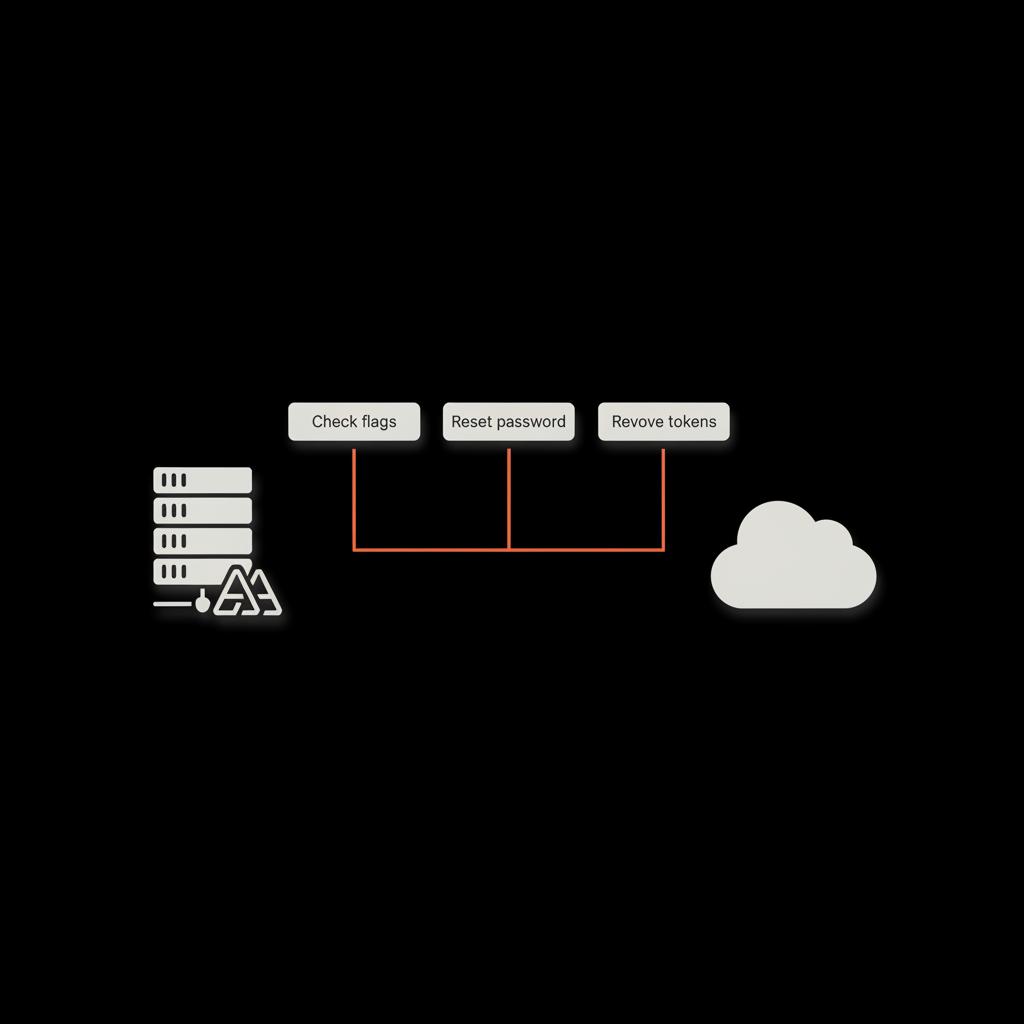
Quick checklist before you enable disabled user account
Always run a short, repeatable checklist before restoring access. This protects users and the organization and gives you an audit trail:
Pre-reactivation checklist (do these every time):
1. Confirm the reason the account is disabled (HR notes, ticket, or security alert). 2. Verify authorization — who approved reactivation. 3. Require a password reset and set forceChangePasswordNextSignIn. 4. Plan MFA re-registration or verification. 5. Revoke existing sessions and refresh tokens after enabling. 6. Document every step in the ticket and monitoring timeline.
If you need assistance with complex or sensitive reactivations, please get in touch to discuss discreet options and next steps.
Get discreet help with account reactivation
Need help resolving a tricky account reactivation or reputation issue? Contact our team for discreet assistance and practical solutions. Get support from Social Success Hub
If you follow these steps before you enable disabled user account, you reduce the chance of reopening an incident.
Social Success Hub’s account unbans service can help when reactivation touches reputation, evidence preservation, or complex cross-platform recovery — consider it if you suspect identity misuse or need discreet, expert assistance.
How to re-enable accounts in on-premises Active Directory
Active Directory remains the most common place administrators need to act. The goal is simple: identify whether the account is disabled or locked, remediate the true cause, and restore safe access.

Graphical steps
Open Active Directory Users and Computers, find the user, and inspect the account tab. If the account is disabled, choose Enable Account. If it is locked, use the Unlock Account checkbox. Don’t stop there — check security logs for Event ID 4625 or lockout events to discover where the bad attempts came from.
Command-line steps
PowerShell gives repeatable, auditable actions. Common commands:
Enable a disabled account: Enable-ADAccount -Identity "username" Unlock a locked account: Unlock-ADAccount -Identity "username"
When you run these commands, combine them with log checks. For recurring lockouts, use LockoutStatus.exe or Microsoft’s account lockout tools to find the offending device or service. Often a mapped drive, email client, or scheduled job is still using an old password and causes lockouts; fixing that root cause prevents repeated work.
AD replication delays are a practical reality. Enabling an account on one domain controller may take a short time to reach other controllers. Cached credentials on endpoints - especially laptops that rarely connect - can also cause trouble. If you enable disabled user account and the user still cannot sign in, check replication health and ask the user to connect to the corporate network to refresh cached tokens.

Azure AD and cloud directories: what changes
Cloud directories add new variables: soft-delete retention, license assignment, Conditional Access, and token lifetimes. You can still enable disabled user account - but the process has more checks. For platform best practices, refer to Azure identity & access security best practices.
Cloud reactivation steps
In Azure AD, confirm whether the user is soft-deleted. If so, restore them first. Then check the accountEnabled property and set it to true with Microsoft Graph or AzureAD modules. After enabling, enforce a password reset and make sure licenses and Conditional Access do not block sign-in.
Use commands like Set-MgUser -UserId id -AccountEnabled $true and follow with token revocation (Revoke-AzureADUserAllRefreshToken or the Microsoft Graph modern equivalent) to stop old sessions from persisting. For guidance on securing Azure AD and Conditional Access consider resources such as Best practices for securing Azure AD.
Common cloud pitfalls
Missing licenses, Conditional Access that requires device compliance, or forgotten MFA enrollment can make a re-enabled account effectively unusable. Plan the follow-up steps - license assignment and MFA re-registration - into your reactivation workflow so users can sign in the moment you finish the technical change.
macOS: re-enable local users carefully
Local macOS accounts can be fixed quickly with admin tools, but safety checks are the same. If you need to enable disabled user account on a Mac, ensure the state is not the fallout of a security event.
Practical macOS commands
Use sysadminctl to reset passwords and dscl to edit directory attributes. Examples:
Reset a local password: sysadminctl -resetPasswordFor username -newPassword "NewPass"
If a login shell was changed to /usr/bin/false or /usr/sbin/nologin, restore a valid shell for interactive login. After re-enabling, check the user’s home folder permissions and require the user to set their own password and re-add MFA where possible.
Linux: unlock local accounts and consider central identity
On Linux, the simplest solutions usually work: passwd --unlock username or usermod -U username. But if your Linux systems use SSSD, LDAP, or AD, the change likely belongs in the central directory rather than a local file.
Service counters and security modules
Failcount tools like pam_faillock or pam_tally can block accounts after failed attempts. Reset the counters and check /etc/shadow for password prefixes like '!' or '*' that make the account unable to authenticate. Remember to clear SSSD caches with appropriate commands when you have centralized authentication.
Delegation and the principle of least privilege
Not every unlock or enable requires domain admin rights. Create minimal roles so helpdesk staff can enable disabled user account for routine cases without gaining broad privileges. Use AD delegation controls or Azure RBAC to assign user management rights. Always require that the ticket approving the change be attached to the audit record - this creates accountability without slowing down service.
Troubleshooting common pitfalls
Even after you enable disabled user account things can still go wrong. Here are the usual culprits and how to fix them quickly:
Replication delays: Force replication or wait briefly; verify with repadmin. Cached credentials: Ask users to connect to the network and sign out of devices. SSO and tokens: Revoke refresh tokens and sessions so old tokens don’t bypass new controls. Licenses and Conditional Access: Confirm licenses are assigned and the user’s device meets policy. Group policy or login restrictions: Check workstation restrictions, logon hours, and group membership.
Simple troubleshooting flow
1. Confirm account flag in authoritative directory.2. Check logs for lockout or disable events.3. Confirm policy or license restrictions.4. Revoke tokens and reset password.5. Ask user to sign in and monitor.
Post-reactivation: secure, monitor, and document
Re-enabling an account is only the start. After you enable disabled user account, take these post-reactivation actions:
Immediate: force password reset, revoke all refresh tokens, require MFA re-enrollment. Short-term: increase monitoring for 48–72 hours and watch for unusual IPs, rapid access to sensitive resources, or privilege escalations. Long-term: log findings, update tickets, and record any fixes you made (for example, migrating service accounts to managed identities).
When incident response is needed
If the account was disabled because of suspected compromise, take the system offline for forensic capture if appropriate, run endpoint scans, and coordinate with your incident response team. Don’t simply enable disabled user account and walk away - that can let an attacker continue to use previously minted sessions unless you revoke tokens and check endpoints.
What’s the quickest safe way to tell if I should enable disabled user account or just unlock it?
Check the account flags and logs first: a disabled account is an administrative flag (e.g., AD’s ACCOUNTDISABLE) while a locked account is the result of failed sign-ins. Review directory attributes and recent Security event logs for lockout sources; that tells you whether to enable disabled user account or to investigate lockout causes first.
Real-world examples that show the right way to enable disabled user account
Example 1: A sales rep’s account was disabled during an investigation into unusual outbound mail. The reactivation checklist was used: HR approval, password reset, AD enable using Enable-ADAccount, license check in Azure AD, refresh token revocation, and monitored reentry for 72 hours. The account returned to service with minimal downtime and a full audit trail.
Example 2: A developer kept getting locked out because a build server used an old credential. Unlocking the account solved the immediate issue, but updating the build server to use a managed identity fixed the recurring problem.
Short, handy command cheatsheet
Windows PowerShell: Enable-ADAccount -Identity "jdoe" or Unlock-ADAccount -Identity "jdoe".Azure AD (Microsoft Graph): set accountEnabled to true and then revoke tokens.macOS: sysadminctl -resetPasswordFor jdoe -newPassword "NewStrongPass".Linux: passwd --unlock jdoe or usermod -U jdoe.
Communication and documentation templates
Use plain language for the user and detailed notes for the ticket. An example ticket note:
Ticket note template: "User: jdoe — disabled on DATE for REASON. Authorization: NAME (HR/Manager). Actions: Verified authorization; reset password; set forceChangePasswordNextSignIn; enabled account (Enable-ADAccount); revoked refresh tokens; required MFA re-enrollment. Monitoring: watchlist for 72 hours. Ticket closed: DATE."
And a short message to the user:
"Hi Jane — your account was reactivated. We reset your password and you’ll need to register your MFA method again. If you see any odd activity, please contact IT immediately."
Checklist you can copy and paste
Before enabling: Confirm authorization; check logs; require password reset; plan MFA re-enrollment. During enabling: Enable in authoritative directory; assign license; revoke tokens; notify user. After enabling: Monitor; document; close ticket with timeline.
Tips to reduce future work
Prevent repeat issues by fixing root causes: migrate service accounts to managed identities, automate password rotation, keep license pools healthy, and steer helpdesk to delegated roles with clear workflows. Small investments here reduce repeated manual re-enables and the risk that comes with ad hoc fixes.
When to ask for outside help
If reactivation becomes a matter of reputation, legal risk, or cross-platform evidence collection, consider expert assistance. Our account services can help with reputation or sensitive coordination when account state affects public perception or legal matters.
Final recommendations
When you need to enable disabled user account remember: pause, verify, reset, revoke, and monitor. That five-step rhythm protects users and systems and gives you confidence that access was restored for the right reasons.
Resources and further reading
Keep links to Microsoft’s AD and Azure documentation, macOS sysadminctl guides, and Linux pam_faillock references handy for platform-specific details. Create a small internal runbook that collects the commands and policies you most often use so less experienced staff can follow the right steps. For additional guidance on managing inactive accounts see How to manage inactive user accounts.
Parting note: Restoring access is a balance between speed and security. With the checklist and the habit of documenting every step, you’ll get both.
How do I tell if an account is disabled or just locked?
Check the authoritative directory: in Active Directory a disabled account has the ACCOUNTDISABLE flag in userAccountControl, while a locked account shows as locked in account properties and event logs. In cloud directories, review accountEnabled, sign-in blocked flags, and any soft-delete state. On macOS or Linux check the login shell, /etc/shadow entries, or pam_tally/faillock counters. Gathering these details prevents applying the wrong fix.
What are the safest steps to take when you enable a disabled user account?
Before enabling, verify authorization and the reason for disablement, require a password reset, plan MFA re-enrollment, and audit recent activity for signs of compromise. After enabling, revoke refresh tokens, force password change at next sign-in, and monitor the account for 48–72 hours. Document every step in the ticket system to maintain an audit trail.
When should I involve an external service like Social Success Hub?
Bring in expert help when account reactivation has reputation implications, legal risk, or requires discreet coordination across public-facing platforms. Social Success Hub offers discreet account unbans and identity recovery services and can assist when reactivation interacts with public reputation or when you need coordinated, professional support.
Take a breath, verify the reason, reset credentials and MFA, revoke old sessions, and monitor closely — that's the secure way to restore access and keep your systems safe. Thanks for reading, and go fix that account like the security-minded pro you are!
References:
https://www.thesocialsuccesshub.com/services/account-services/account-unbans
https://www.thesocialsuccesshub.com/services/account-services
https://learn.microsoft.com/en-us/azure/security/fundamentals/identity-management-best-practices
https://redcanary.com/blog/security-operations/azure-active-directory/


Comments