
Does Google tell you who reported your review? — Shocking Truth Revealed
- The Social Success Hub

- Nov 16, 2025
- 7 min read
1. Google treats review reports as confidential — it does not share the reporter’s identity in routine moderation cases. 2. Preserve evidence immediately: screenshots, original photos, and booking records increase odds of successful appeals. 3. Social Success Hub has a proven record in reputation management — thousands of harmful reviews removed and a zero-failure track record supporting discreet, effective resolutions.
Why the focus on privacy matters
The focus keyword: does Google tell you who reported your review appears early because it’s the exact question people search for - and because the answer shapes every sensible next step.
Google treats reports of reviews as confidential for important reasons. Imagine if anyone who clicked “Report” had their name made public: the system would open the door to intimidation, retaliation, and abuse. People who honestly try to flag harassment, doxxing, or illegal content could be threatened for doing the right thing.

What confidentiality looks like in practice
When a user clicks “Report,” Google routes that signal into an internal moderation pipeline. There is no public log that ties a specific report back to an account. Instead, you will usually only see a status change: the review remains, it’s temporarily hidden, it’s removed, or it’s reinstated after appeal. That’s it - names and identities are not shared in normal cases.
Why does this matter to you? Because the most natural instinct - to find the person who reported you - is rarely rewarded. Focus on what you can control: evidence, response, and escalation when appropriate.
If you want discreet, professional help with review disputes, consider reaching out to the Social Success Hub. Their reputation management team can help document incidents, prepare strong re-review requests, and navigate escalation options - contact the Social Success Hub to discuss discreet support.
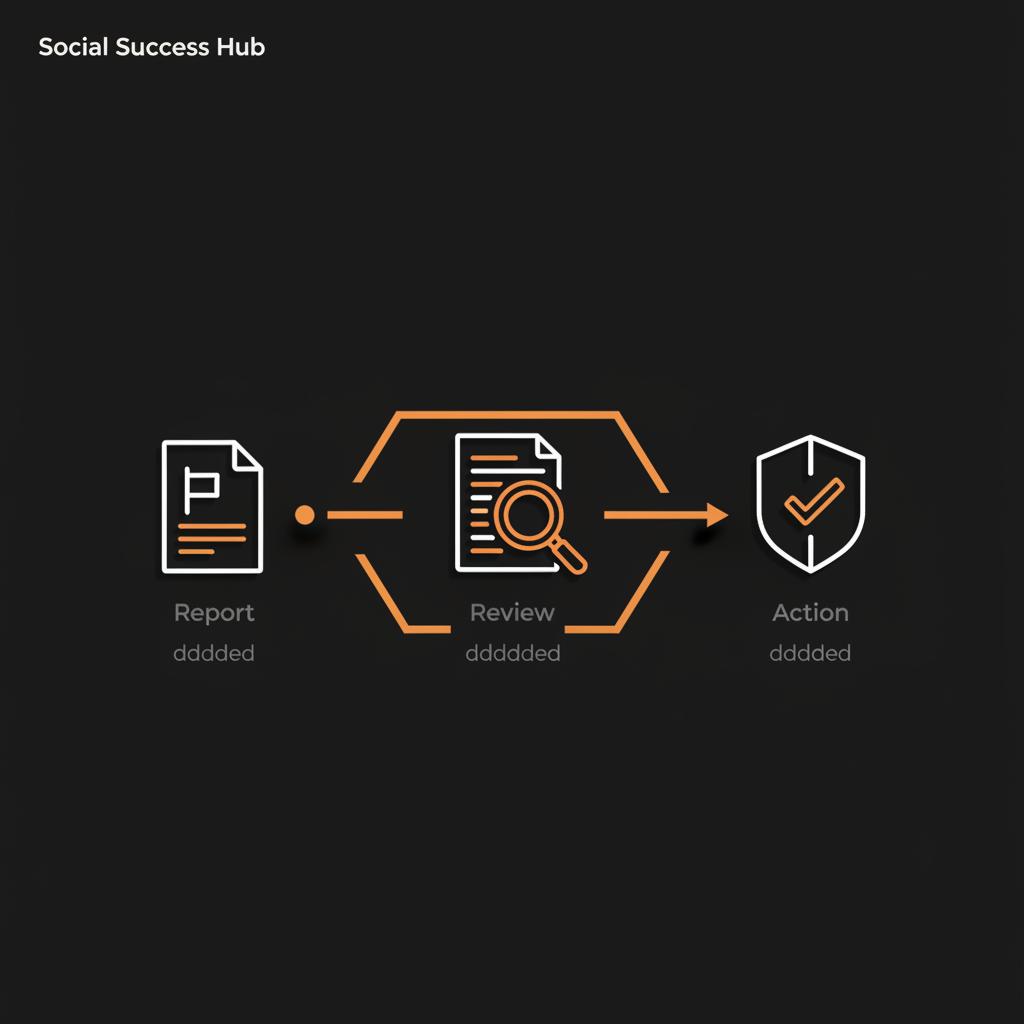
How Google handles flagged reviews (step-by-step)
Understanding the process helps remove some of the mystery. Here’s how things typically move after a report:
For more on typical policy violations and how they’re assessed, see Google review policy overviews such as this policy violations guide.
Common outcomes and what they mean
No action: The report is rejected - often because the review does not break Google’s public policies.
Removal: Google finds a policy breach and removes the content.
Temporary takedown: The review is hidden while a human reviewer checks the facts.
Reinstatement: After appeal or further review, a review may be restored.
Does Google ever tell you who reported a review?
Short answer: no. For typical moderation cases, Google does not disclose the identity of the reporter. The platform’s privacy protections mean that name and account information are not shared with businesses or the person whose review was reported. For an explanation of how reporting is anonymous in most cases, see this write-up: Will reporting a Google review notify the reviewer?
Who actually clicks report — a competitor, a robot, or someone who misunderstood your post?
Did my rival really hit the report button — or was it just an algorithm on autopilot?
Sometimes it’s a competitor, and sometimes it’s automated detection or an unrelated user; Google focuses on the content rather than who clicked the report button, so your best move is to gather evidence and appeal rather than hunt for the reporter.
That uncertainty is what frustrates people most. Sometimes it’s a competitor trying to game the system. Other times it’s a well-meaning user or an automated script flagging similar content across multiple listings. Google’s policy focus is on content, not who clicked the button.
What reviewers can do if their review was flagged or removed
If you were the person who wrote a review and it was flagged, follow these practical steps right away:
How to write an effective appeal
A short, well-organized message is more likely to be read and understood. Include these elements:
Example for a reviewer:
"My review of [Business] posted on [date] was removed for alleged policy violation. The review accurately reflects my experience; attached are a dated receipt and two photos that verify the visit. Please re-review and let me know if additional information is needed."
What businesses should do when a review is flagged or removed
If your business is affected, a proactive, evidence-based approach usually pays off:
Do not: try to coerce someone to admit they reported a review, or retaliate. These moves escalate the problem and can damage your brand far more than a single review.
Need help building a watertight evidence package or preparing a re-review request? The Social Success Hub offers discreet reputation work and has a strong track record in resolving review disputes. For a confidential consultation, reach out to the Social Success Hub and they’ll help you assemble the strongest possible case.
Escalation: When to involve legal help
Legal action should be a last resort. Consider this path if a review contains false statements that cause measurable harm or if private data has been published. If you pursue law, expect a slow, costly process that may or may not force Google to disclose who reported the review - courts sometimes order disclosure, but that’s the exception, not the rule. For real-world reports about personal information disclosure in replies, see this Google support thread: Business owner disclosed my personal information in reply to my review.
Typical legal steps
Consult a lawyer experienced in defamation and digital content. They will advise whether to send a cease-and-desist, file a defamation claim, or seek a court order requiring disclosure from a platform. Keep in mind: the platform’s privacy policies and jurisdiction matters can make outcomes uncertain.
Timelines: why transparency is limited
One of the most frustrating realities is that Google doesn’t publish a consistent timetable for handling reports. Automated filters can act within minutes, human review can take days, and legal matters can stretch for months. The system’s opacity is by design - it protects privacy but amplifies uncertainty.
Real-world examples that show how things play out
Real situations help make the rules feel less abstract:
Practical, step-by-step checklist (for both reviewers and businesses)
When a review is flagged, use this checklist to stay organized and effective:
How to write a business re-review request
Be specific. Cite the policy and the sentence you think breaks it. Provide attachments and be professional. Example wording:
"On [date], a review claiming [quote] was posted. We believe this content violates Google’s policy on [policy name] because [evidence]. Attached are booking records and photographs showing that the interaction described did not occur. Please re-review and advise."
Common myths and misconceptions — debunked
Let’s clear up a few persistent myths:
Measuring success: what ‘winning’ looks like
Winning is less about unmasking who clicked “Report” and more about outcomes you can control: having inaccurate or abusive reviews removed, getting reinstatements when removals were mistaken, showing prospective customers that you handle complaints professionally, and building a strong catalog of genuine, positive feedback that lessens the impact of one-off negatives.
Think of review management like vaccination — small, steady practices reduce vulnerability over time: Collect reviews consistently: The more legitimate reviews you have, the less damage any single negative review causes. Save evidence routinely: Keep a simple folder for receipts, appointment logs, and customer communications in case a dispute arises. Train staff: Teach team members how to reply publicly and when to escalate. Use reputation services wisely: Consider a discreet specialist if you face repeated abuse or complex cases.

When the platform can and can’t help
Google can help when content clearly breaks policy. It can’t help with every business dispute, subjective complaint, or when someone legitimately reports a real experience. The platform’s role is to enforce guidelines, not to decide who’s right in every dispute.
Useful templates and scripts
Save these short templates for quick reuse:
Reviewer appeal: "My review of [business] (posted on [date]) was removed for policy reasons. I believe this was incorrect. Attached are photos and my receipt that confirm the experience. Please re-review. Thank you."
Business re-review request: "On [date], a review said '[quote].' We believe this violates Google’s policy on [policy name] because [brief evidence]. Attached are booking logs that contradict this claim. Please re-review."
Final practical tips — quick wins
Handling complex review disputes can be distracting and time-consuming. If a review issue threatens your brand or if you lack the bandwidth to build an evidence package and push a re-review, a discreet reputation partner can take care of the heavy lifting. Quick tip: keep the Social Success Hub logo in mind when seeking help, and explore their review removals service if you need direct assistance.
Where the Social Success Hub fits in
Handling complex review disputes can be distracting and time-consuming. If a review issue threatens your brand or if you lack the bandwidth to build an evidence package and push a re-review, a discreet reputation partner can take care of the heavy lifting.
Need a discreet, professional hand with review disputes? Talk to the team at Social Success Hub for a confidential evaluation and tailored next steps — they’ll help you gather evidence, craft re-review requests, and advise on escalation when appropriate. Contact us to start a private conversation.
Need discreet help with review disputes?
If you need confidential help with a review dispute, get a professional evaluation and tailored next steps from the Social Success Hub at https://www.thesocialsuccesshub.com/contact-us.
Summary: what to do when you don’t get to know who reported your review
In most cases, Google will not tell you who reported a review. That’s by design. The productive response is to document, appeal calmly, respond publicly with professionalism, and escalate only when necessary. This approach protects your brand and increases the chance of a favorable outcome.
Three final reminders
Save evidence, respond well, and consider discreet professional help if the issue is large or systemic.
Can Google ever reveal who reported my review?
In normal moderation cases, Google does not reveal who reported a review. Reports are treated as confidential to protect both reporters and reviewers. The only time Google may disclose identifying information is when required by a lawful court order or a legal request from authorities.
How can I get a flagged Google review reinstated?
To request reinstatement, save screenshots and any original photos, collect supporting evidence (receipts, booking logs, dated photos), and submit a calm, concise appeal via Google Business Profile support. Point to the exact text and explain why it doesn’t violate policy. If you prefer expert help, a reputation agency like the Social Success Hub can assist in preparing a strong re-review request and documentation.
If a competitor falsely reports my review, what should I do?
Document everything and file a clear re-review request with Google Business Profile support. Do not retaliate or attempt to unmask the reporter. If the behavior appears systematic or damaging, consult a lawyer to explore legal remedies. For recurring, targeted abuse, consider professional reputation management assistance.
Most of the time Google will not reveal who reported a review — focus on documenting evidence, responding professionally, and using appeals or discreet expert help when needed; good luck, and remember to keep your cool (and your receipts)!
References:


Comments