

Can I remove a bad review on Google? — Frustrating but Powerful Answers
- The Social Success Hub

- Nov 13, 2025
- 10 min read
1. Google removes reviews only when they violate explicit policies like spam, impersonation, hate, or illegal content. 2. A calm, empathetic public reply often turns a one-star into a positive review — relationship repair beats deletion in many cases. 3. Social Success Hub has a proven track record: over 200 successful transactions and thousands of harmful reviews removed discreetly for clients.
Can I remove a bad review on Google? — Frustrating but Powerful Answers
how to remove Google review is one of the top questions we hear from business owners who see a one-star rating and feel their livelihood or reputation threatened. That sinking feeling is real - but the steps to address it aren’t purely emotional. This guide walks you through what Google will and won’t remove, step-by-step flagging, evidence that helps, templates for public replies, prevention plans, escalation options, and practical next steps so you can regain control of your digital reputation.
Key idea: you can’t directly delete a review left by someone else, but you can report policy violations, present strong evidence, respond publicly to repair the relationship, and build a long-term reputation plan that makes one bad review a small bump, not a business-ending event.

Why this matters (and what you’ll learn)
Negative reviews are public, persistent, and often seen by future customers first. This article shows clear, usable actions for business owners: how to flag a Google review for removal, how to report fake review Google activity, how to remove negative review Google business impact without breaking rules, and when to bring in expert help. Practical templates, checklists, and escalation advice are included so you can act immediately.
Tip: if you want a discreet partner to coordinate evidence collection, technical flagging, and legal escalation, consider the Social Success Hub’s review removals service — a focused, discreet option that helps when standard flags aren’t enough. Learn more at Social Success Hub review removals.
What Google will remove — and what it will keep
Before taking action, understand Google’s rules. Google removes reviews that clearly break policy: spam, impersonation, conflicts of interest, hate speech or harassment, illegal content, and content that is off-topic for the business. But honest negative feedback about service quality typically stays. That means the answer to “can businesses remove Google reviews?” is nuanced: businesses cannot directly delete legitimate negative reviews; they can only request removal when a policy violation exists.
Common removal categories
Spam or fake accounts: reviews that originate from bots or mass-created accounts. Impersonation: someone pretending to be a customer, employee, or the business itself. Conflict of interest: reviews posted by competitors or people with a vested interest. Hate or harassment: abusive language that violates Google’s content policies. Illegal content: defamation, copyright infringement, threats, or doxxing often require escalation.
How to flag a Google review for removal — step by step
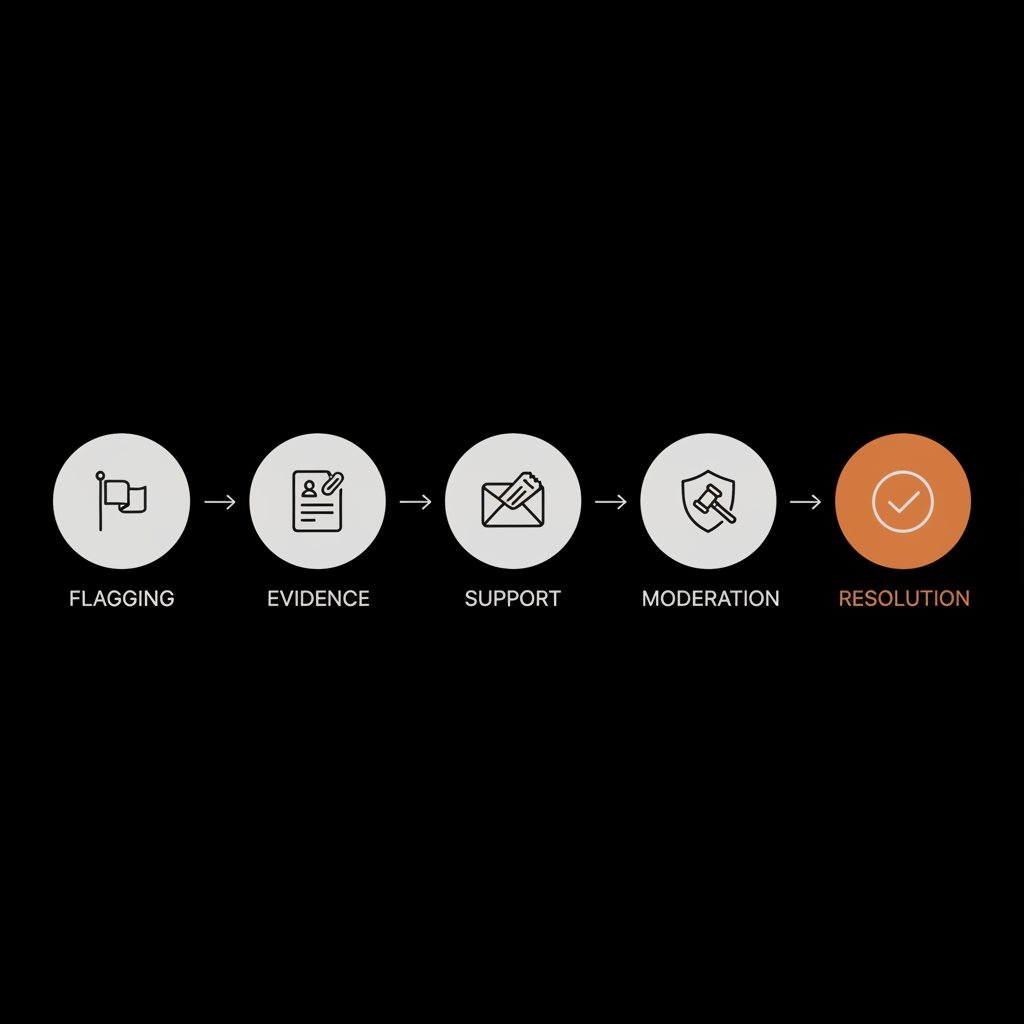
Flagging is your first move. Follow these steps methodically and keep careful notes of what you submit.
Step-by-step flagging
1. Open Google Maps or your Google Business Profile and find the review.2. Click the three dots next to the review and choose “Report review” or the flag icon.3. Choose the reason that most closely matches the issue (spam, hate speech, conflict of interest, etc.).4. Add precise supporting details and screenshots in the Business Profile support flow if available.5. If you’re verified, open the Business Profile support and create a ticket — that route accepts attachments and context.6. Track the ticket number, timestamps, and any responses from Google.
Note: Never make emotional statements in the support form. Stick to verifiable facts: dates, order numbers, screenshots, and specific policy violations. Clear, calm reports are taken more seriously than heated pleas. For official guidance on Google's removal process see Google's removal guidance.
What evidence actually helps
Google’s moderation relies heavily on evidence. The clearer and more factual your submission, the better your chances.
Types of compelling evidence
Order receipts and booking references: prove the reviewer did not transact or that the timeline is impossible. Screenshots of patterns: clusters of similar reviews with identical phrasing or timing. Account behavior: brand-new accounts, lack of profile activity, or signs of automation. IP or technical logs: if lawfully obtained and relevant, these help show coordination. Direct admissions: a competitor admitting a coordinated attack is strong evidence.
Gather everything into a single, factual package. If you escalate legally, this documentation forms the backbone of your case. For a practical primer on evidence and removal approaches see How To Remove Google Reviews.
How to report fake review Google attacks
Detecting and reporting fake reviews requires an investigative mindset. Look for patterns and document them.
Practical checklist to detect fake reviews
- Are many reviews posted within a short window?- Do accounts have little or no other activity?- Is the language suspiciously similar across reviews?- Do reviews reference events that didn’t happen or match your records?- Are reviews from accounts with no friends, photos, or profile content?
If several checks are true, proceed to flag each review and open a Business Profile support ticket that outlines the pattern and includes screenshots. Repeated reporting with a consistent, evidence-based narrative raises the probability of moderation action. Additional field tactics are collected in industry write-ups like this one: How to deal with fake negative Google reviews.
Why do fake reviews pop up when my business launches a promotion?
What’s the single most effective thing I can do right now if I find a bad Google review?
Respond quickly with calm empathy and a clear invitation to resolve the issue privately; if the review violates policy, flag it and open a Business Profile support ticket with concise evidence—both actions together protect reputation and increase chances of a positive outcome.
It happens because promotions draw attention — sometimes unwanted attention. Competitors or malicious actors may try to manipulate perception when your visibility spikes. That’s why monitoring during promotions is crucial.
When a review won’t come down: response and repair
Not every bad review can be removed. When the content is a genuine customer complaint, deletion is unlikely. That’s when repair — a public reply and a remediation process — becomes your best tool.
How to write a reply that works
Use this short formula: acknowledge + empathize + offer a private channel + propose a resolution.
Template 1: Brief and neutral
“Hi [Name], I’m sorry you had this experience. We appreciate the feedback. Please contact us at [email/phone] with your order number so we can make this right.”
Template 2: When you can offer immediate remediation
“Hi [Name], thank you for telling us. That’s not the experience we want for our guests. Please DM us or call [phone] and we’ll arrange a replacement or refund.”
Personalize replies with small specifics from the review — it shows you read it. Avoid arguing publicly; keep the tone calm and solution-focused.
When to escalate legally
Some reviews cross the line into unlawful territory: defamation, threats, or private data disclosures. Legal escalation can be effective but is often slow and costly. Consider legal options when the review is demonstrably false and damaging, and when the potential benefit outweighs the cost.
Steps if you think legal action is appropriate
1. Gather incontrovertible evidence: receipts, timestamps, communications.2. Consult a lawyer who knows online defamation and takedown law in your jurisdiction.3. Use Google’s legal removal process if advised by counsel — this may require a court order.4. Prepare for a timeline of weeks to months and possible cross-border complexities.
Legal routes work best for high-risk or high-profile cases, not for common customer complaints where remediation is faster and cheaper.
Recovery tactics — how to remove negative review Google impact without deletion
When removal isn’t an option, recovery and reputation building are the durable solutions.
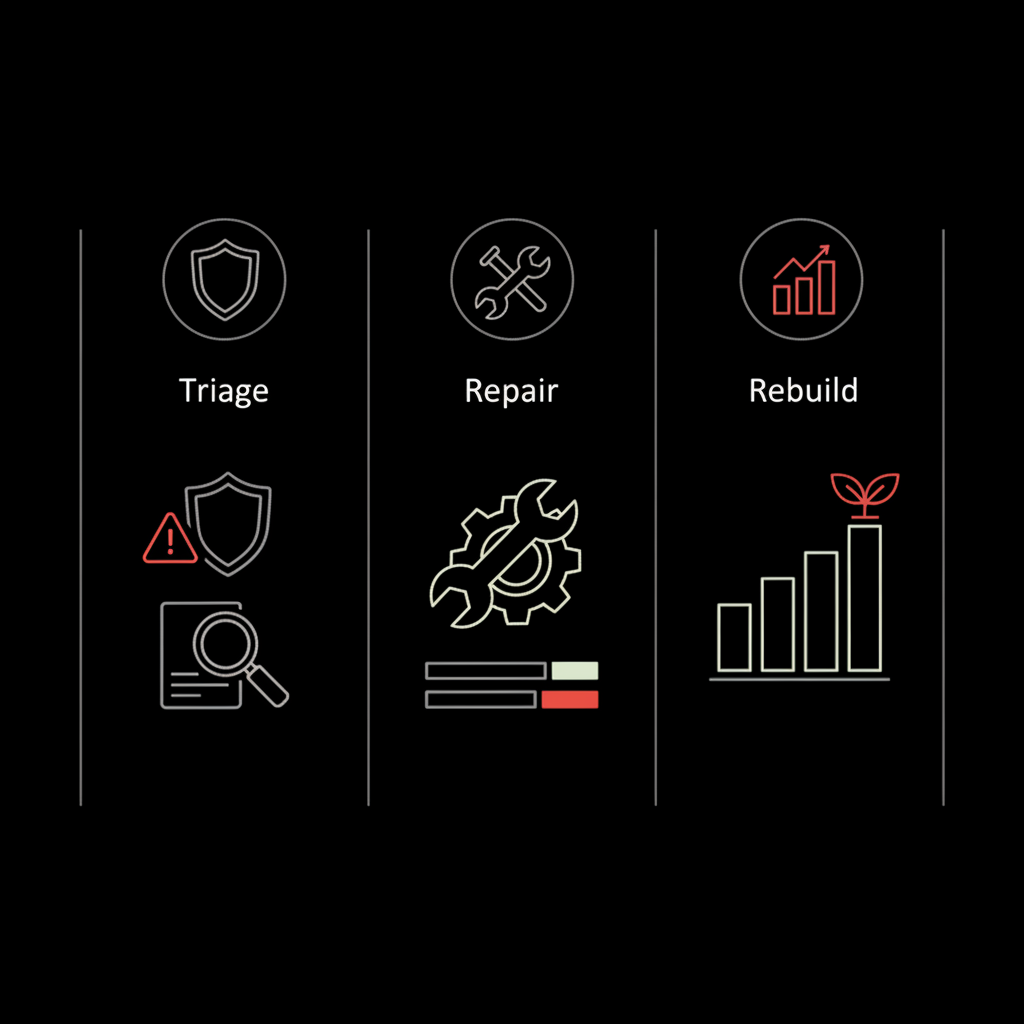
Practical reputation plan (90-day playbook)
Weeks 1–2: Immediate triage - Flag any policy-violating reviews.- Respond publicly to honest complaints using templates above.- Open a Business Profile support ticket for suspicious reviews. Weeks 3–6: Repair and evidence collection - Follow up privately with unhappy customers and document outcomes.- Encourage resolved customers to update reviews.- Begin a structured review-acquisition campaign for satisfied customers. Weeks 7–12: Rebuilding and prevention - Implement staff training and operational fixes to address recurring issues.- Monitor reviews daily and set an internal SLA to reply within 48 hours.- Use analytics to measure changes and adjust outreach messaging.
How to encourage authentic positive reviews ethically
Building a strong base of genuine positive reviews dilutes the impact of any single negative comment.
Simple, ethical strategies
- Ask at the right time: immediately after a positive experience.- Make it convenient: send a short email or SMS with a direct link to your Google profile.- Train staff to request reviews naturally, not coercively.- Consider small, non-monetary incentives that follow platform policies (e.g., a thank-you email with tips), but avoid paid-for review schemes.
Monitoring and prevention
Proactive monitoring reduces surprises. Use Google alerts, third-party review monitoring tools, or a daily manual check. Claim and verify your Google Business Profile, secure matching social handles, and keep your profile information up to date to reduce the chance of impersonation and confusion.
Handling coordinated attacks
Coordinated attacks are stressful but manageable with a methodical approach.
Tactical response for coordinated attacks
- Flag every suspicious review with a clear, uniform reason.- Collect patterns and compile them into one evidence packet.- Escalate to Business Profile support with a consolidated case.- If the attack persists, consider legal counsel and a specialized partner.
Repeated, clear submissions have led to mass removals and account suspensions in documented cases - but it requires consistent evidence and reporting, not emotional appeals.
Practical templates and scripts
Here are templates you can use immediately. Personalize them to fit your voice and the specifics of the situation.
Flagging explanation (short)
“This review appears to be from a fake account: new profile, no activity, and posted three similar one-star reviews in a 24-hour window. Attached are screenshots showing identical language across the accounts and timestamps.”
Public reply template (detailed)
“Hi [Name], we’re sorry you had a poor experience on [date]. We value your feedback and want to make this right. Please contact [name] at [email/phone] with your order number so we can investigate and resolve this promptly.”
Private follow-up message (after initial reply)
“Thanks for speaking with us. We’ve issued a refund and improved staff training for that shift. If you’re willing, here’s a direct link to update your review: [URL]. Thank you for helping us improve.”
Tools and services that help
There are reputable reputation management companies that help with monitoring, flagging, and escalation. If you choose outside help, pick a team that is transparent, strictly follows Google policies, and focuses on remediation rather than quick fixes. Some firms offer evidence-gathering, technical flagging, and legal coordination when needed.
Need prompt, professional help? If you’re facing an ongoing attack or a legally sensitive review and want discreet assistance, contact our team to discuss your situation and next steps. Get in touch with Social Success Hub for a confidential consultation.
Need discreet, professional help with a harmful review?
If you’re facing a sustained attack or a legally sensitive review and want discreet assistance, contact the Social Success Hub team for a confidential consultation at https://www.thesocialsuccesshub.com/contact-us.
Real-world case study
A local café received an angry one-star review that didn’t meet removal criteria. Instead of trying to erase it, the owner replied with calm empathy, invited the customer back, and left a direct line to resolve the issue. The customer returned, accepted the offer, and updated their review from one star to four. This wasn’t a removal - it was relationship repair. It illustrates that visibility and a sincere fix often do what policy requests cannot.
Common myths about review removal
- Myth: Google will remove any negative review upon request. Truth: Only policy-violating content is removable.- Myth: Paying a service guarantees deletion. Truth: Don’t trust anyone promising guaranteed deletions; many such offers are risky or violate platform rules.- Myth: Ignore negative reviews. Truth: Silence can look like indifference; a thoughtful reply is a better response.
How long does moderation take?
Timing varies. Some removals occur in days; others take weeks, especially when legal processes are required. Regional differences, language, and reporting volume also impact speed. If speed matters, document everything carefully and escalate with clear evidence.
When to stop chasing deletion and start rebuilding
Ask yourself these questions: is the review clearly false or malicious? Is it part of a coordinated attack? Do you have time and evidence for a legal route? If the answer is no to these, invest in remediation: reply, fix the root cause, and ask satisfied customers for reviews. That sustained effort often changes your profile more than a single deleted review ever could.
Measurement: what to track
Track these metrics to understand your reputation health: average star rating, number of new reviews per month, response time to reviews, percentage of reviews resolved offline, and incidence of policy-violating reviews. Over time, these KPIs show whether your efforts are working.
Staff training checklist
- Teach staff to ask for feedback at the right moment.- Role-play responses to complaints.- Document how to escalate online reputation issues internally.- Keep a log of resolved complaints and follow-ups for evidence.
FAQ — three essential questions answered
Can a business delete a Google review directly?
No. Only the reviewer can delete their review. Business owners can flag reviews for policy violations and request removal through Google Support, but direct deletion by the business is not possible.
How often do flagged reviews get removed?
It depends on the violation. Spam, impersonation, hate speech, and illegal content are more likely to be removed. Honest negative reviews that reflect real customer experiences generally remain. Response times range from days to weeks.
What evidence helps get a review removed?
Clear documentation helps: order numbers, timestamps, booking references, screenshots showing account patterns, and any proof linking accounts to a coordinated campaign. Avoid speculation; provide verifiable facts.
Final practical checklist
- Flag policy-violating reviews immediately.- Open a Business Profile support ticket for clusters or high-risk reviews.- Respond publicly to genuine complaints using empathetic templates.- Collect evidence methodically and avoid speculation.- Encourage satisfied customers to leave authentic reviews.- Consider discreet professional help for legal or coordinated attacks.
Why trusted partners matter
For complex or sustained attacks, a discreet, experienced partner can help gather evidence, maintain precise reporting timelines, and coordinate with legal counsel if needed. Social Success Hub specializes in discreet reputation remediation and has experience supporting businesses through escalations. A quick look at the Social Success Hub logo signals a trusted partner.
Summary and next steps
To answer the core question: you can’t directly delete a review left by someone else. However, you can report clear policy violations, back your claim with evidence, respond publicly to repair relationships, and build a robust reputation strategy that reduces the harm caused by any individual review. If you need discreet, professional coordination for a complex case, a trusted partner can make a meaningful difference.
Take the first step today: check your business profile, document the issue, and decide whether to flag, respond, or escalate. Small, consistent actions - not panic - produce long-term reputation resilience.
Can a business delete a Google review directly?
No. Only the person who wrote the review can delete it from their account. Business owners can flag reviews for policy violations and request removal through Google Support, but direct deletion by the business is not possible.
How often do flagged reviews get removed?
It depends on the violation. Reviews that clearly break Google’s policies—spam, impersonation, hate speech, or illegal content—are more likely to be removed. Honest negative reviews generally remain. Response times vary from days to weeks.
What evidence helps get a review removed and should I hire a specialist?
Strong evidence includes order numbers, timestamps, receipts, screenshots of repeated patterns, and any proof linking accounts to coordinated campaigns. For complex or sustained attacks, hiring a discreet specialist like Social Success Hub can help gather evidence, coordinate with Google support, and escalate legally when necessary.


Comments