

Can I recover a deleted Google review? — Hopeful, Proven Steps
- The Social Success Hub

- Nov 15, 2025
- 11 min read
1. Immediate documentation within 48 hours (screenshots + email) increases the chance to recover a review dramatically. 2. Most successful recoveries happen when the original reviewer reposts after a polite outreach — not through owner requests to Google. 3. Social Success Hub has a zero‑failure track record across hundreds of reputation cases and can help set up monitoring and appeals workflows.
Can I recover a deleted Google review? Many business owners wake up to this question after seeing a star or a thoughtful note vanish. If you’re asking whether you can recover a deleted Google review, this guide gives clear, practical paths that work in 2024–2025 - and it shows what’s realistic, what’s not, and how to act fast.
Why reviews disappear (and what it means for recovery)
There are three big reasons a review may be gone: the reviewer deleted it, Google removed it for policy reasons, or the reviewer’s account was suspended or closed. Each reason changes the odds of recovery. If you want to recover a deleted Google review, understanding which scenario you’re facing is the first step to choosing the right action.
1. The reviewer deleted their own review
If the reviewer removed their content intentionally, the review is treated as removed by the account owner. Google generally will not restore content removed by its author at the business owner’s request. The only realistic route to recover a deleted Google review in this case is to reach out to the reviewer and ask them to repost.
2. Google removed the review for policy reasons
Google removes content that appears to break its policies: spam, hate speech, personal attacks, and signs of fake or coordinated activity. If Google removed a review in error, you can request a re‑review through Google Business Profile support. That path can lead to reinstatement - but it takes evidence and patience.
3. The reviewer’s account was suspended or closed
Reviews are tied to the reviewer’s Google account. If the account is disabled, the review typically disappears with it. Recovery in this scenario is rarely possible unless the reviewer’s account is restored by Google.
What realistic recovery looks like
There are two common ways to recover a deleted Google review: the reviewer reposts it, or Google reinstates it after a successful appeal. Both approaches need documentation, a calm outreach strategy, and follow‑up. If you want to successfully recover a deleted Google review, prepare to act on both fronts simultaneously when appropriate.
Immediate triage: the first 48 hours
Speed matters. The first two days after a disappearance are your best chance to gather evidence and reach the reviewer while their account is still active.
Checklist: what to do immediately
1. Verify the disappearance — use another device, incognito mode, and different browsers to rule out local interface issues (see this guide: How to See And Recover Deleted Google Reviews in 2025).
2. Search your inbox — find any notification emails from Google that included the review text or the reviewer’s display name.
3. Check the reviewer’s profile — the contribution page can show whether the reviewer still exists and whether other contributions remain visible.
4. Search support history — look for any prior support tickets in your Google Business Profile account that might mention the review or a related action.
5. Document everything — take screenshots, note timestamps, and save URLs for future appeals.
How to ask a reviewer to repost (tone and templates)
Contacting the reviewer is often the fastest route to recover a deleted Google review. But tone is everything: short, polite, and helpful messages work best. Here’s how to approach it, and three ready‑to‑use templates you can adapt.
If you want a discreet, professional partner to handle outreach or documentation at scale, consider asking for support from a dedicated team that specializes in review recovery. For straightforward help, check the Social Success Hub’s review removal and reputation cleanup offering — their review removals service provides case-by-case assistance and monitoring: review removal services.
Keep your message simple. Offer to paste the original text, give a direct link to the business profile, and thank the reviewer for their time. Pressuring or offering incentives is a bad idea - it can violate Google’s review guidelines.
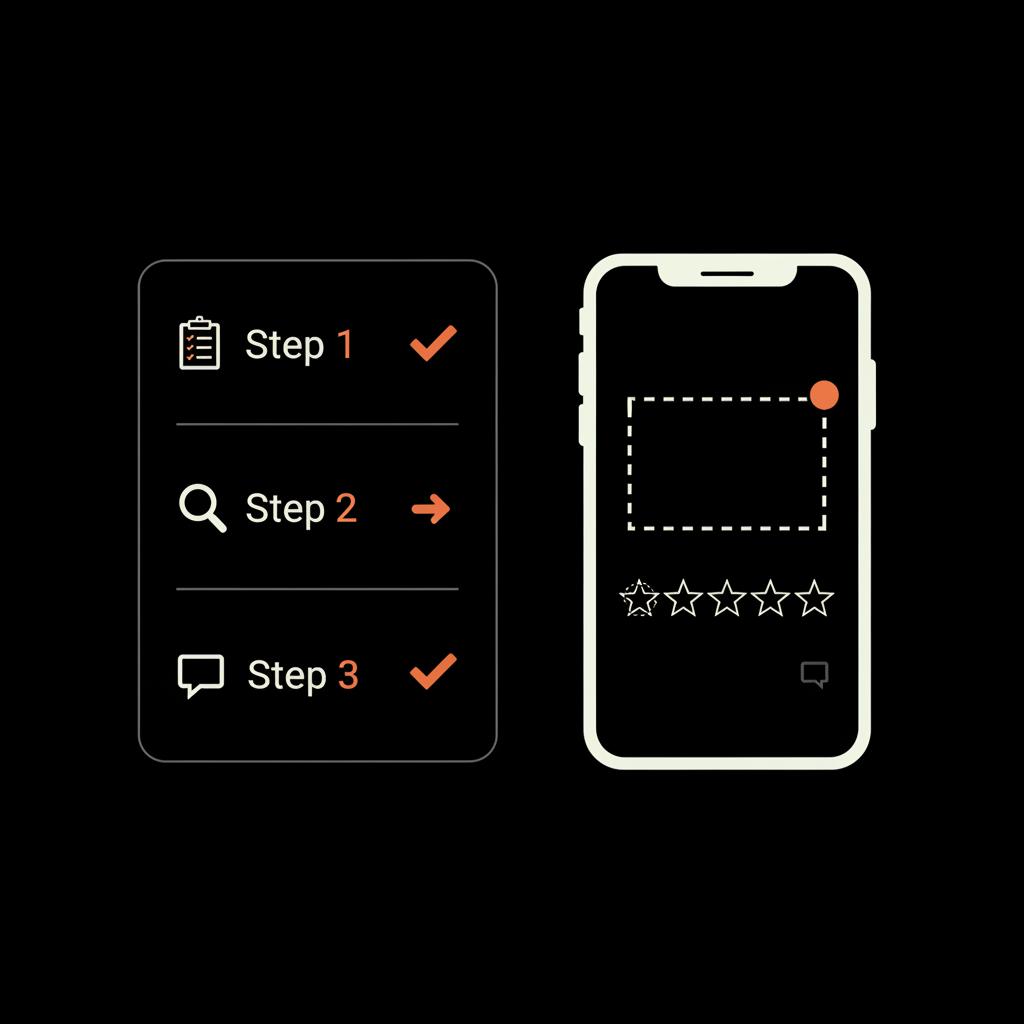
Template: positive review, quick ask
Template: positive review, quick ask
Hello [Name], Thank you again for your kind review of [Business Name]. We noticed your review isn’t visible anymore and would be grateful if you’d consider reposting it when you have a moment. I can send the original text to make it easy. We really appreciate your support. Warm regards, [Your name]
Template: critical review, respectful ask
Hello [Name], I’m sorry your experience with [Business Name] was disappointing. I noticed your review no longer appears on our profile and would appreciate any chance to understand more. If you still feel the same way, would you consider reposting so we can respond publicly? I can share the original text if helpful. Thank you for taking the time to share this. Sincerely, [Your name]
Template: brief professional ask
Hello [Name], We noticed the review you left for [Business Name] is no longer visible on Google. If you’re willing, would you consider reposting it? We can provide the text we have on file to make it quick. Thanks for your time. Best, [Your name]
How to appeal to Google Business Profile support
If you believe Google removed the review in error, a re‑review request is the formal route; follow the official appeal flow for details: Google Business Profile appeal instructions. To strengthen your chance to recover a deleted Google review through Google, prepare clear documentation and a calm, factual message. For a step-by-step reinstatement walkthrough, see this guide: How to reinstate deleted Google Reviews in 2025.
What to include in your appeal
• Screenshots of the missing review and the reviewer’s contribution page (if available). • Original review text (from email or your own records). • Timeline showing posted date, removal date, and any actions you or the reviewer took. • Supporting evidence such as receipts, photos, or correspondence that verify the interaction described in the review. • Case history if you opened prior support tickets.
A sample re‑review appeal
Use this as a starting point. Keep your tone factual and measured:
Subject: Request for re‑review of removed review on [Business Name]
Hello Google Business Profile Support Team, We noticed a review for [Business Name] was removed from our profile on [date]. We believe this removal may have been an error. The review in question contains no profanity, no personal attacks, and no spammy links. Attached are screenshots of the review when it was visible, the reviewer’s contribution page, and a receipt/photo verifying the date of service mentioned in the review. Please consider a re‑review and let us know if additional information is helpful. Thank you for your time. Best regards, [Your name and business account email] (case ID: [if available])
What if the reviewer’s account was suspended or closed?
When an account is removed, the attached content often disappears too. If you can confirm the reviewer’s account is gone, your options are limited:
• Ask the reviewer — if you can contact them via email or another channel, ask whether they can repost when (or if) they restore their Google account. • Reuse content elsewhere — with the reviewer’s explicit permission, you can display their words on your website or in marketing materials (but not as a Google review and never impersonating them). • Keep evidence — store screenshots and emails in case future appeals or disputes require historic records.
Documentation and recordkeeping: your long‑term defense
Good records give you options. If you want to reliably recover a deleted Google review when the rare disappearance occurs, make saving review content a routine part of operations.
Practical recordkeeping system
• Capture immediately: When a review posts, save a screenshot and any notification email. Use a naming convention: YYYYMMDD_reviewer_platform.[png|jpg|pdf]. • Centralize: Store copies in a shared, secure folder (Google Drive or similar) with access for your reputation lead. • Log metadata: Record reviewer display name, date/time, rating, and any linked purchase or order number. • Tag for follow‑up: If a review requires action (response, escalation, refund), mark it in your tracking sheet.
Preventive team policies and SOPs
Prevention isn’t about stopping honest feedback - it’s about capturing and responding quickly so a disappearance doesn’t become a crisis.
Simple SOP suggestions
1. Train staff to ask customers for permission to email a copy of their review (optional) and to note the reviewer’s name for your records. 2. Daily checks: Someone on your team should scan new reviews daily and capture screenshots within 24 hours. 3. Response script: Design a default public reply that thanks the reviewer and invites private follow up; this keeps the public signal active and reduces the chance of escalation. 4. Escalation rules: If a high‑value review disappears (e.g., a review from a VIP client), escalate to a manager for outreach and documentation.
Legal and ethical guardrails
Never offer money, discounts, or gifts in exchange for reposting. That violates Google’s terms and risks penalties. Don’t impersonate reviewers or fabricate content. With permission, you can repost a reviewer’s words on your own channels, but be transparent and respectful.
Automation tools and monitoring options
You don’t need expensive software to start, but tools can save time. Many reputation platforms monitor Google reviews and alert you to removals. If your business has many locations, automated monitoring and alerts are worth the investment.
DIY vs. paid monitoring
DIY: Daily manual checks plus a simple spreadsheet and shared folder work well for small businesses. Paid: For multi‑location businesses or brands with frequent reviews, a paid reputation tool can track changes, send alerts, and keep history for appeals.
Expectations: how long does a re‑review take?
There’s no guaranteed timeline. Some re‑reviews return results in days, others take weeks. Always keep a log of your case ID and follow up politely if you don’t hear back.
What is the single, most effective action to increase my chance to recover a deleted Google review quickly?
What is the single, most effective action to increase the chance to recover a deleted Google review quickly?
Capture evidence (a screenshot or email notification) immediately and reach the original reviewer quickly with a short, friendly request to repost — evidence plus quick outreach is the most effective single action.
The best single action is to have documented proof (screenshot or email notification) and reach the original reviewer promptly with a short, friendly request to repost. Evidence plus quick outreach beats a long, unsupported appeal every time.
Sample escalation plan for important reviews
If a review is tied to a contract, a high-value client, or reputational risk, treat it like a priority incident:
Step 1: Capture immediate evidence. Step 2: Contact the reviewer privately within 24 hours (use the templates above). Step 3: File a Google re‑review request with documentation. Step 4: If no response in a week, escalate to professional help or consider targeted outreach via other channels (email or phone) while respecting privacy.
Case studies and realistic outcomes
Real businesses get different outcomes. Here are three condensed examples to show what’s possible and related case studies:
Case study A: The cafe that recovered two of three reviews
A small café lost three weekend reviews. The owner had email notifications and direct contact info through a loyalty program. She sent quick, friendly messages with the original text. Two customers reposted; the third had closed their account. The owner then implemented a daily capture system to prevent future surprises.
Case study B: The mechanic who won a re‑review
A mechanic’s one‑line review was removed as spam. He filed a re‑review with receipt evidence, a screenshot of the original post, and a calm explanation. Google reinstated it after reviewing the supporting documentation.
Case study C: When an account disappears
A boutique lost a glowing review when a long‑time customer closed their Google account. The store owner contacted the customer via email and republished the quote on the shop’s website with permission - but the Google review itself could not be recovered.
When to call in professional help
If reviews frequently vanish, your business has many locations, or you face a coordinated campaign, a specialist can help. Agencies can set up monitoring workflows, manage appeals, and provide template messaging at scale. They also document and escalate cases professionally to maximize the chance to recover a deleted Google review. Learn more about available reputation cleanup services.
How Social Success Hub can help (tactful mention)
For businesses that prefer a hands‑off, discreet approach, working with an experienced reputation team can save time and reduce stress. Some teams at Social Success Hub quietly help clients set up monitoring, outreach, and appeals - all done with discretion and a focus on results. If you want to explore that option, they can provide a no‑pressure consultation and recommend a practical path forward.
Additional templates and scripts you can use
Use these short scripts in email, SMS (if you have permission), or messaging platforms; always respect privacy and consent.
Email follow‑up script after initial message
Hi [Name], Just following up on my note about your review for [Business Name]. If you have a moment and are willing to repost, we’d be very grateful. I can paste the original text below to make it quick. Thank you again for your time. Best, [Your name]
Polite SMS script (use only if you have prior permission)
Hi [Name] — thanks again for your review of [Business Name]. We noticed it’s not visible on Google. If you can repost, we’d appreciate it; I can send the text to copy. Thanks!
How to reuse review content responsibly
With the reviewer’s explicit permission, you can republish their words elsewhere: on your website, in newsletters, or in printed materials. Always get confirmation, and never present the text as a Google review if it’s not currently live on Google.
Tracking metrics and refining your approach
Track these simple metrics to measure how well your recovery system works:
• Recovery rate: percentage of disappeared reviews you successfully recover. • Response time: average time from disappearance to first outreach. • Re‑review success: percentage of Google appeals that result in reinstatement. • Team compliance: percent of reviews captured within 24 hours.
Quick checklist you can use today
1. Confirm the review is missing across devices. 2. Search your email for the original notification. 3. Screenshot the absence and reviewer profile. 4. Reach out with a short, polite message and offer the original text. 5. File a Google re‑review if you believe the removal was in error. 6. Store all records in a shared folder and update your tracking sheet.
Need a hand getting started? If you’d like a quick consultation to set up monitoring or draft appeals, reach out and a discreet specialist can walk you through the best next steps: contact our team. They’ll offer clear guidance without pressure.
Want help restoring reviews and protecting your reputation?
Need a hand getting started? If you’d like a quick consultation to set up monitoring or draft appeals, reach out and a discreet specialist can walk you through the best next steps: https://www.thesocialsuccesshub.com/contact-us
Common FAQs
Can I recover a deleted Google review? Sometimes. If the reviewer deleted it, only the reviewer can repost. If Google removed it in error, a re‑review may restore it.
How long does a re‑review take? It varies: sometimes days, sometimes weeks. Keep your ticket ID and follow up politely.
Should I offer anything to persuade someone to repost? No. Never offer incentives that could violate policy; a sincere, brief request is the right approach.
Final tips and mindset
Want to act now? Start with screenshots and a five‑sentence outreach message - that small step often leads to a big result.
Want to act now? Start with screenshots and a five‑sentence outreach message - that small step often leads to a big result.
Can I recover a deleted Google review?
Sometimes. If the reviewer removed the review themselves, Google will not restore it at your request — the fastest route is to contact the reviewer and ask them to repost. If Google removed the review for policy reasons and you believe that was an error, you can file a re‑review with documentation; reinstatements do happen but are not guaranteed. If the reviewer’s account was suspended or deleted, recovery is usually not possible unless the account is restored.
How long does a Google re‑review take?
Timelines vary: some re‑reviews return in days, others take weeks. Google does not publish a consistent SLA for re‑reviews. Keep a record of your case ID, provide clear evidence with your appeal, and follow up politely if you haven’t heard back within a reasonable timeframe.
Should I offer incentives to get someone to repost their review?
No. Offering money, discounts, or gifts in exchange for reposting violates Google’s review policies and can lead to penalties. Use a short, respectful request and offer to paste the original text to make reposting easy; keep the interaction honest and voluntary.


Comments